Animation by Alex Kessling
Saturday, October 16, 2021
Should we be drinking milk?
In recent years, there's been a lot of debate about whether drinking the milk of other animals is good for us. But how do the arguments for and against drinking dairy milk stack up?
For a more in-depth look, see BBC Future’s ‘Why humans have evolved to drink milk’ and 'Is it better to drink cow’s milk or a dairy-free alternative?'.

Wednesday, October 13, 2021
The link between climate change, seaweed and ice cream
Seaweed - we’ve been using it for centuries in food and toiletries. It can help to keep toothpaste and ice cream soft.
But in some parts of the world, supply has been affected by climate change.
Now people in Zanzibar are learning new methods of farming through the help of outreach projects like Milele Zanzibar Foundation and the Panje Project.
A video for People Fixing the World by Celestina Olulode, Esther Namuhisa, and Nicholaus Mtenga.
But in some parts of the world, supply has been affected by climate change.
Now people in Zanzibar are learning new methods of farming through the help of outreach projects like Milele Zanzibar Foundation and the Panje Project.
A video for People Fixing the World by Celestina Olulode, Esther Namuhisa, and Nicholaus Mtenga.
Climate change: 'Adapt or die' warning from Environment Agency
By David Shukman
Science editor
BBC Climate
Science editor
BBC Climate
Hundreds of people could die in floods in the UK, the Environment Agency has warned in a hard-hitting report that says the country is not ready for the impact of climate change.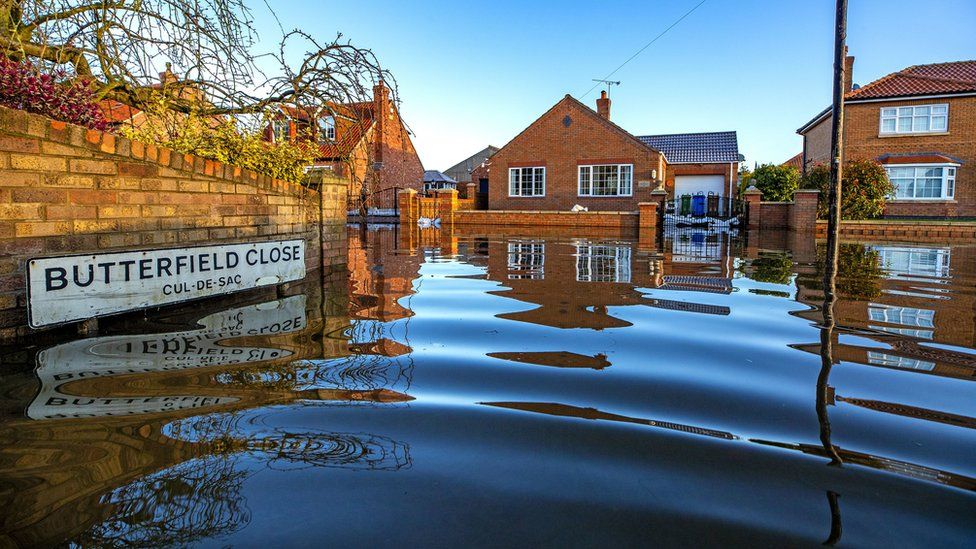
Earlier this year in Germany, dozens of people died in floods.
"That will happen in this country sooner or later" unless the UK becomes more resilient to increasingly violent weather, the agency concludes.
Emma Howard Boyd, chair of the agency, said: "It is adapt or die."
The apocalyptic tone is deliberately intended to startle governments, companies and communities into preparing for global warming effects such as higher sea levels and more extremes of rainfall and drought.
The new report, seen by the BBC ahead of its publication on Wednesday, assesses the country's readiness to cope with the many different risks of climate change.
In its response, environment department Defra said it was taking key measures to protect the UK from the effects of global warming.
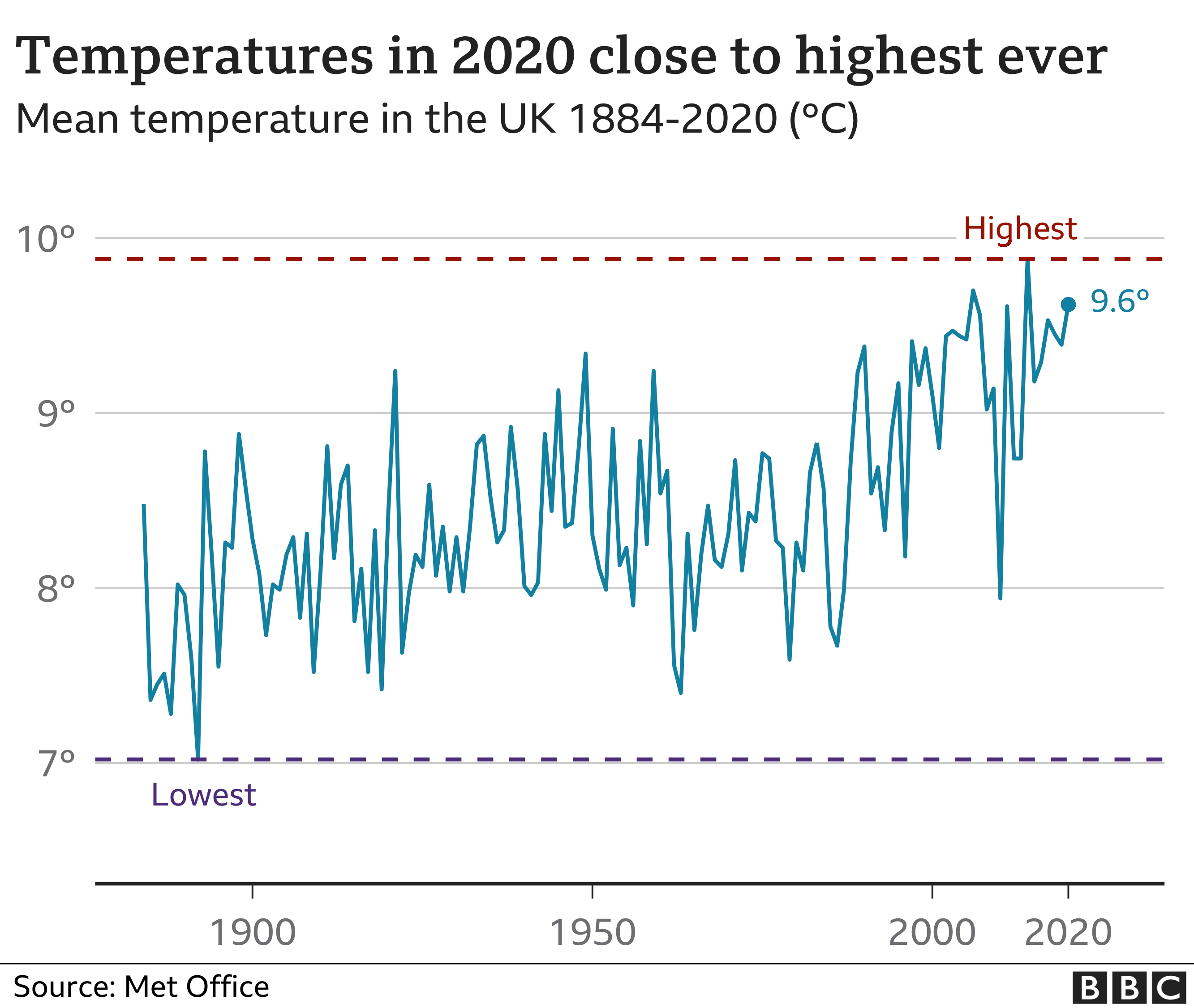
We are currently heading for an increase in the global average temperature of just under 3C by the end of the century.
But the agency projects that even a smaller rise of 2C would have severe consequences:
Winter rainfall up by 6% by the 2050s and 8% by the 2080s (compared with 1981-2000)
Summer rainfall down by about 15% by the 2050s
London's sea level up by 23cm by the 2050s and 45cm by the 2080s
By the 2050s, peak river flows could be up 27% while summer flows could be down as much as 82%
An extra 3.4 billion litres of extra water needed every day before 2050, on top of the 15 billion used now
According to Ms Howard Boyd: "We can successfully tackle the climate emergency if we do the right things, but we are running out of time to implement effective adaptation measures.
"Some 200 people died in this summer's flooding in Germany. That will happen in this country sooner or later, however high we build our flood defences - unless we also make the places where we live, work and travel resilient to the effects of the more violent weather the climate emergency is bringing."
COP26 climate summit - The basics
Climate change is one of the world's most pressing problems. Governments must promise more ambitious cuts in warming gases if we are to prevent greater global temperature rises.
The summit in Glasgow is where change could happen. You need to watch for the promises made by the world's biggest polluters, like the US and China, and whether poorer countries are getting the support they need.
All our lives will change. Decisions made here could impact our jobs, how we heat our homes, what we eat and how we travel.
Monday, October 11, 2021
MAAT (Portugal) worried about environmental problems
Maat wants to raise environmental awareness with the 2021 exhibitions
10 dez, 2020 - 19:20 • Maria João Costa

MAAT-View from river Tagus (Lisbon-Portugal)
The Museum of Art, Architecture and Technology presented a program for 2021 focused on the climate emergency. Two exhibitions and an installation to be presented starting in March address the environmental threat.
For next year, and allowing for any unforeseen problems due to the pandemic, the MAAT team has programmed two major exhibitions and an installation. "They are long exhibitions", explains Beatrice Leanza, who points out that "short exhibitions are not ecological". It is with an eye on environmental preservation that the program was also designed.
Sunday, October 10, 2021
Nobel in physics: Climate science breakthroughs earn prize
By Paul Rincon
Science editor, BBC News website
Three scientists have been awarded the 2021 Nobel Prize in Physics for their work to understand complex systems, such as the Earth's climate.
Syukuro Manabe, Klaus Hasselmann and Giorgio Parisi were announced as the winners at an event in Stockholm.
Research by Manabe and Hasselmann led to computer models of the Earth's climate that can predict the impact of global warming.
The winners will share the prize money of 10 million krona (£842,611).
It is incredibly difficult to predict the long-term behaviour of complex physical systems such as the climate. Computer models that anticipate how it will respond to rising greenhouse gas emissions have therefore been crucial for understanding global warming as a planetary emergency.
The climate models that have built on the winners' research form a crucial part of the evidence on which leaders at COP26 will base their decisions.
Japan-born Syukuro Manabe, 90, who is senior meteorologist at Princeton University in New Jersey, demonstrated how increased levels of carbon dioxide in the atmosphere could lead to increased temperatures at the surface of the Earth. In the 1960s, he led the development of physical models of the climate.
Roughly a decade later, Klaus Hasselmann, 89, from the Max Planck Institute for Meteorology in Hamburg, Germany, created a computer model that linked together weather and climate. His work answered the question of why climate models can be reliable despite weather being changeable and chaotic.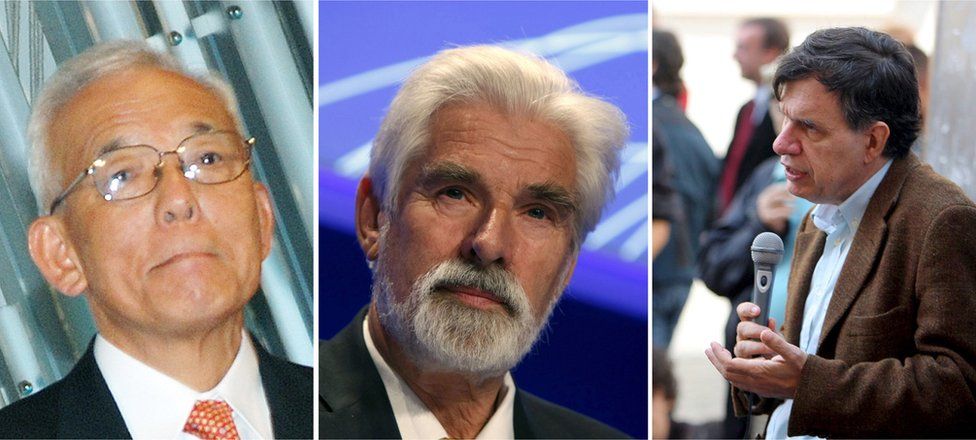
Science editor, BBC News website
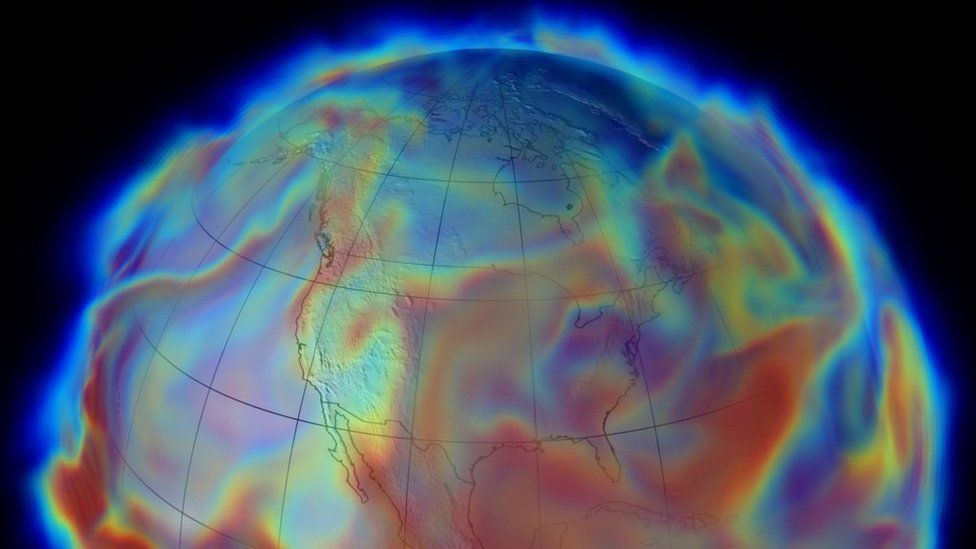
Computer analysis of the Earth's climate is important for informing efforts to tackle global warming
Syukuro Manabe, Klaus Hasselmann and Giorgio Parisi were announced as the winners at an event in Stockholm.
Research by Manabe and Hasselmann led to computer models of the Earth's climate that can predict the impact of global warming.
The winners will share the prize money of 10 million krona (£842,611).
It is incredibly difficult to predict the long-term behaviour of complex physical systems such as the climate. Computer models that anticipate how it will respond to rising greenhouse gas emissions have therefore been crucial for understanding global warming as a planetary emergency.
- A really simple guide to climate change
- What will climate change look like near me?
- Four ways climate change links to extreme weather
The climate models that have built on the winners' research form a crucial part of the evidence on which leaders at COP26 will base their decisions.
Japan-born Syukuro Manabe, 90, who is senior meteorologist at Princeton University in New Jersey, demonstrated how increased levels of carbon dioxide in the atmosphere could lead to increased temperatures at the surface of the Earth. In the 1960s, he led the development of physical models of the climate.
Roughly a decade later, Klaus Hasselmann, 89, from the Max Planck Institute for Meteorology in Hamburg, Germany, created a computer model that linked together weather and climate. His work answered the question of why climate models can be reliable despite weather being changeable and chaotic.
L-R: Syukuro Manabe, Klaus Hasselmann and Giorgio Parisi
Facebook to act on illegal sale of Amazon rainforest
By Joao Fellet and Charlotte Pamment
BBC Brasil
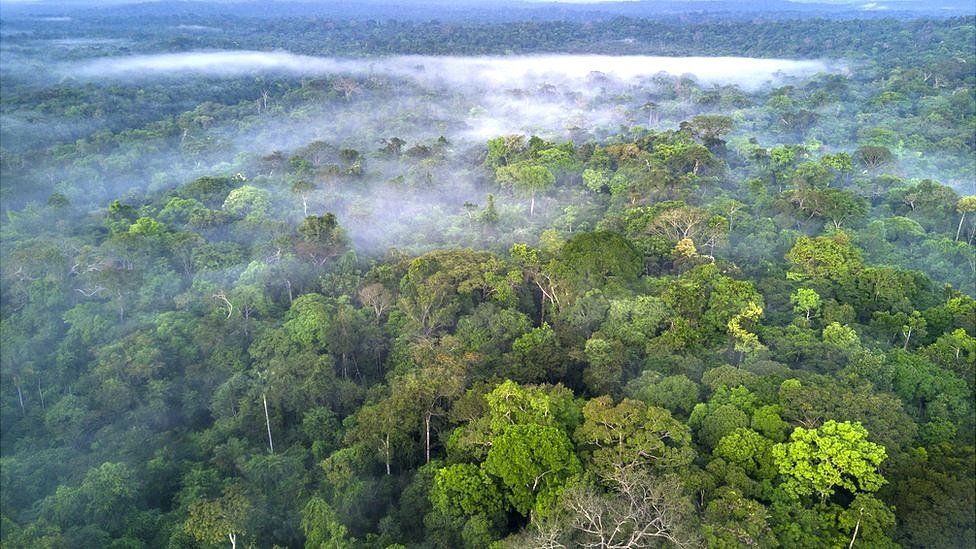
The Amazon rainforest is home to one in 10 known species on Earth
Facebook says it will begin clamping down on the illegal sale of protected areas of the Amazon rainforest on its site.
Illegal deforestation exposed

Many of the plots were inside protected areas, including national forests and land reserved for indigenous peoples.
Read More
The social media giant changed its policy following a BBC investigation into the practice.
The new measures will apply only to conservation areas and not to publicly owned forest.
And the move will be limited to the Amazon, not other rainforests and wildlife habitats across the world.
According to a recent study from the think tank Ipam (Instituto de Pesquisa Ambental da Amazonia), a third of all deforestation happens in publicly-owned forests in the Amazon.
Facebook said it would not reveal how it planned to find the illegal ads but said it would "seek to identify and block new listings" in protected areas of the Amazon rainforest.
Illegal deforestation exposed
In February, the BBC Our World documentary Selling the Amazon revealed that plots of rainforest as large as 1,000 football pitches were being listed on Facebook's classified ads service.
Alvim Souza Alves was trying to sell land for about £16,400
Read More
Monday, February 04, 2019
Saving Pangolins from Extinction
By Dr Dan Challender
Conservation scientist at the University of Oxford, Chair of the IUCN SSC Pangolin Specialist Group, and advisor to the Pangolin.

Pangolins could go extinct before most people even know they exist. Image taken by Maria Diekmann.
Pangolins are in crisis, with all eight species threatened with extinction. This means that an entire taxonomic Order, the Pholidota, faces going the way of the dodo. Fortunately, pangolins are starting to receive the attention and conservation action that they deserve and there is cause for optimism.
Pangolins are truly unique. There are no other species quite like them in the animal kingdom. They are the world’s only truly scaly mammals, being covered in hundreds of individual scales comprised of keratin – similar to our hair or fingernails. Despite their uniqueness, we do not know a lot about them. The few things we do know are that they are characteristically shy, solitary and primarily nocturnal, and endearingly, roll up into an impregnable ball when threatened. Of the eight extant species, four occur in sub-Saharan Africa and four inhabit parts of Asia, from Pakistan to China and the Philippines.
Despite little knowledge of the animals, pangolins have been consumed by man throughout history and overexploitation is the main threat to the species. The Bornean Giant Pangolin (Manis paleojavanica) went extinct about 40,000 years ago, likely as a result of overexploitation following the arrival of humans, and pangolin populations in many parts of the world are facing the same threat today. For instance, estimates from China suggest populations there have been reduced by 94% since the 1960s. Pangolin meat has been and is still eaten as a local source of protein across Africa and Asia and is also consumed as a luxury good in parts of Asia. Pangolin scales have been used for endless applications, in particular as an ingredient in traditional Asian medicine to purportedly treat a variety of ailments, which continues today. Pangolin skins were also traded in the hundreds of thousands between the 1970s and 1990s, primarily to the U.S and Mexico, for the manufacture and retail of leather goods including belts, boots and handbags.

Credits to BBC News- Natural world
Saturday, December 31, 2016

Thursday, April 07, 2016
The island in Cancun built on recycled plastic bottles

A British man in the Mexican tourist area of Cancun is looking to get legal recognition for the island home that he has built almost entirely out of recycled materials.
War threatens world's largest gorilla
Numbers of the world's largest type of gorilla, the Grauer's gorilla, have fallen dramatically.

The gorilla is now considered "critically endangered" which means they might soon be totally wiped out.
Where do they live?
The gorilla lives in the eastern part of the Democratic Republic of Congo, in central Africa.
The number of gorillas there has fallen from 17,000 in 1994 to just 3,800 today.
Why is it happening?
War in the the Democratic Republic of Congo has affected the number of Grauer's gorillas living there.
The forests where they live are being destroyed because of the fighting.
They have also been illegally hunted for their meat because in some areas there is not enough food to eat.
From CBBC Newsround
Cutting food and carbon waste-lines for healthy climate
Reducing food waste and changing the way people consume calories will help deliver a sustainable food system and reduce emissions, a study suggests.

An estimate one third of all food produced remains uneaten
The global demand for food could more than double by the middle of the century, yet an estimated one third of produce is lost or wasted each year.
By cutting this waste will help food security and reducing agriculture's climate burden, the researchers added.
The findings appear in the journal Environmental Science & Technology.
As the global human population is set to reach in excess of nine billion people by the middle of this century, up from the current seven billion, the importance of reducing food loss and waste in order to deliver food security is well documented.
However, a team of scientists have also considered what steps need to be taken to tackle food production's contribution to global carbon emissions.

Shifts in lifestyle and diet is increasing the global impact of the food sector
Prof Jurgen Kropp from the Potsdam Institute for Climate Impact Research, Germany, one of the study's co-authors said that previous studies had highlighted that "agriculture was playing an increasingly important role when it came to carbon dioxide emissions".
"We have worldwide lifestyle changes where people are moving towards a meat-rich diet and we need more food, of course," he told BBC News.
"The more rich a country becomes, there is a move towards more meat-rich diets and, of course, more calorie-rich diets.
"For one calorie of meat, you have to utilise one to eight calories of cereal. It is an inefficient form of food production," he observed.
"On the other hand, rich countries are wasting more food. A lot of the food we are producing at the moment, we do not see on our plates."
Prof Kropp added that this trend was projected to have a considerable impact on the global carbon budget by the middle of the 21st Century.
They calculated that about 10% of global greenhouse gas emissions from agriculture could be traced back to food waste by 2050.
However, the team examined past datasets and used future scenarios to identify pathways that could deliver improvements in food security and CO2 emissions.

As people around the globe shift to more meat-rich diets, emissions from agriculture continue to rise
The team observed: "The global food requirement changed from 2,300 [calories per person each day] to 2,400 [calories per person each day] during the past 50 years, while the food surplus grew from 310 [calories per person each day] to 510 [calories per person each day]."
Over the same period, the team found that greenhouse gas emissions associated with food surplus increased from 130 million tones of CO2 equivalent per year to 530 million tonnes - an increase of more than 300%.
Future scenarios did not make comfortable reading. They calculated that emissions associated with the food wasted may "increase tremendously" to up to 2.5 giga-tonnes of CO2 equivalent per year.
Prof Kropp added: "As many emerging economies like China or India are projected to rapidly increase their food waste as a consequence of changing lifestyle, increasing welfare and dietary habits towards a larger share of animal-based products, this could over proportionally increase greenhouse-gas emissions associated with food waste [while] undermining efforts for an ambitious climate protection.
"Avoiding food loss could pose a leverage to various challenges at once, reducing environmental impacts of agriculture, saving resources used in food production, and enhance local, regional, and global food security."
From BBC News Science / Environment
Sunday, April 03, 2016
'Drastic' Antarctic melt could double global sea-level rise
Global sea levels could rise by more than double the current best estimate, according to a new analysis of climate change in Antarctica.

The latest model suggests that Antarctic melting could double projections of sea-level rise
The modelling assessment says that Antarctic melting alone could contribute more than a metre to sea level by the end of this century.
By 2500, according to the study, the same source could cause levels across the world to rise by 13m.
The authors say that rapid cuts in carbon emissions could limit this risk.
Competing ideas
In 2013, the Intergovernmental Panel on Climate Change (IPCC) predicted that, without any restrictions on carbon emissions, the seas around the world likely rise by up to 98cm by 2100.
However, the IPCC estimates contained a minimum contribution from Antarctica.
Other analyses since then have projected bigger increases, with a recent studysuggesting that the oceans were rising faster than at any time in the past 2,800 years and by 2100 they could be up to 1.31m higher.
The exact level of Antarctica's impact on these projections has been vigorously debated. Late last year, a research paper suggested that projections of a contribution of a metre or more were not plausible.
But this new study argues that by 2100 the world could see 1.14m of sea-level rise from Antarctica alone.
Additions to the model
The scientists say that their model is able to provide a more accurate prediction because it incorporates the impacts of some physical processes for the first time.
While other models have focussed on the impact of warmer waters melting the ice shelves from below, this new study also includes the effect of surface melt-water and rain trickling down from above and fracturing supporting ice, hastening its slide to the sea.
The model also calculates the impact of the disintegration of floating ice shelves. If this happens, it will reveal walls of ice so tall that they cannot support their own weight.
The scientists involved expect that these extra factors will kick in over the coming decades, as warming from the atmosphere (not just from warmer waters below) becomes the dominant driver of ice loss.

The collapse of ice cliffs could be a significant factor in the new projection
"One reason that other models didn't include the atmospheric warming is because it hasn't started to happen just yet," said co-author Dr David Pollard from Penn State University, US.
"In Antarctica, around the edges at sea level, it's just beginning to get up to the melt point in summer.
"With that warming, the flanks of Antarctica will start to melt drastically in about 50 to 100 years - and then it will start to kick in according to our model."
The authors believe that they have demonstrated the accuracy of the new model by correctly replicating sea-level rise in warm periods, millions of years into the past.
"Recently, we looked at the long-standing problem posed by geological evidence that suggests sea level rose dramatically in the past, possibly up to 10 to 20 metres around 3 million years ago, in the Pliocene," said Dr Pollard.
"Existing models couldn't simulate enough ice-sheet melting to explain that."
'Right questions'
If the world continues to emit "business as usual" levels of carbon dioxide over the coming decades, the scientists argue that sea-level rise will be double what has already been estimated for the coming 100 years.
"If these processes do kick in and they end up being as important as we think that they could be, then they really do have a big impact," said Prof Robert DeConto from the University of Massachusetts, Amherst.
"West Antarctica is responding very soon in these simulations and that ends up having a big impact on North America in particular."
Other researchers have praised the development of the new model for including impacts such as surface melt water and ice-cliff collapse, but they are uncertain about the conclusions.
"I have no doubt that on a century to millennia timescale, warming will make these processes significant in Antarctica, as well as Greenland, and drive a very significant Antarctic contribution to sea-level rise," commented Prof David Vaughan of the British Antarctic Survey.
"The big question for me is, how soon could this all begin, and could it be early enough to drive substantially higher sea levels by 2100? I'm not sure, but these guys are definitely asking the right questions."
The authors believe that there is "good news" in their report. If global emissions of carbon are curtailed significantly then the extra factors that substantially boost Antarctic melting will be avoided.
Seas will continue to rise, but not at the runaway rates suggested by this paper,which has been published in the journal Nature.
From BBC news-Science/ Environment
Saturday, April 02, 2016
Number of wild tigers could treble
The number of tigers living in the wild could rise in the next 20 years.

At the moment there are only around three-thousand wild tigers living in Asia. The WWF believe that's 97% fewer than there were 100 years ago. Now experts say that number could treble if action is taken to protect their habitats.

Tigers can be found in 13 different countries around the world
Tiger populations have been affected by hunting, poaching and the loss of their habitats, to make way for roads, railways and towns.
Four of the sub-species of tigers are thought to be endangered and two are listed as 'critically' threatened.

Tigers are poached for their skin, which some people use as decoration or rugs
But experts in the US say the population could grow.
A team at the University of Minnesota in the US have studied satellite images of places where tigers live, like forests.
The technology has helped identify specifically where tigers are losing their habitat.
They say that if the animals are given special 'corridors' or areas to make their territory bigger, the numbers could treble.
Dr Anup Joshi said: " Enough wild habitat remains to allow a range-wide doubling of the wild tiger population."
"The global population could approach a trebling in the next two decades." he added.
From CBBC Newsround
Friday, April 01, 2016
Climate predicts bird populations
Populations of the most common bird species in Europe and the US are being altered by climate change, according to an international study.

Bee-eaters seem to be benefitting from climate change, increasing their population in Europe in recent years
For the first time researchers showed climate to be having a similar, significant impact on bird populations in large, distant areas of the world.
Their study used population-predicting models and three decades of field data, gathered by bird-watching volunteers.
The findings are published in the journal Science.
Led by Durham University scientists, the team developed models that related each species' habitat to long-term climate patterns.
Using annual climate records - from 1980 to 2010 - these models were able to predict where a species had experienced an improvement or a decline in suitable climate.

Climate is remapping habitat for many familiar birds, such as the wren
"We then had this amazing data set collected by thousands of volunteers over decades - where people have gone out and counted birds across different countries in Europe and the United States," explained lead researcher Dr Stephen Willis.
"We can use that to see to what extent our predictions match what people are finding on the ground."
The outlook is different for each species. Increasing temperatures in the UK, for example, allow some species to expand their range and increase their population, while the same temperature patterns have made the UK a less suitable habitat for others.
But the overall trends, this study shows, are strikingly similar in the US and Europe; populations are increasing in species predicted to benefit from climate change and decreasing in those predicted to be negatively affected.
"One important thing is that we're looking at the most common birds," said Dr Willis. "These birds are doing a lot of good in the countryside - eating crop pests and helping our ecosystems work.
"So we need to understand how they'll respond."
Shifting flocks

The American robin has declined in some southern states, but increased further north.
The research shows how the climate is gradually remapping the avian habitat across two continents.
In Europe, for example, birds such as the wren have been increasing in northern areas as winters become milder, but declining in some southern countries. The American robin has declined in some southern states, but increased further north.
"This is really the first time anyone's ever looked at changes in climate across two really extensive parts of the world," said Dr Willis. "So we're getting an idea that [the impacts of] climate change on wildlife are more far-reaching than individual countries."
David Noble from the British Trust for Ornithology, who was also involved in the study, told BBC News that the findings highlighted the value of such extensive data sets generated by volunteers.
"The similarities in results between the two continents, despite very big differences in their landscapes, geographic barriers and patterns of vegetation, are compelling evidence for the climate change effects," he added.
Dr Willis agreed, saying: "This is work carried out by thousands upon thousands of volunteers; it really demonstrates the power of citizen science."
The study was carried out in partnership with the RSPB and United States Geological Survey (USGS).
From BBC News- Science/ Environment
Monday, March 28, 2016
Ash tree set for extinction in Europe
The ash tree is likely to be wiped out in Europe, according to a review of the evidence.

The chalara dieback has devastated ash trees across Europe
The trees are being killed off by the fungal disease ash-dieback along with an invasive beetle called the emerald ash borer.
According to the research, published in the Journal of Ecology, the British countryside will never look the same again.
The paper says that the ash will most likely be "eliminated" in Europe.
This could mirror the way Dutch elm disease largely wiped out the elm in the 1980s.
Ash trees are a key part of the treescape of Britain. You don't have to go to the countryside to see them. In and around towns and cities there are 2.2 million. In woodland, only the oak is more common.
However, according to a review led by Dr Peter Thomas of Keele University and published in the Journal of Ecology, "between the fungal disease ash dieback and a bright green beetle called the emerald ash borer, it is likely that almost all ash trees in Europe will be wiped out - just as the elm was largely eliminated by Dutch elm disease".
Ash dieback, also known as Chalara, is a disease that was first seen in Eastern Europe in 1992. It now affects more than 2 million sq km, from Scandinavia to Italy.
UN: 2015 record year for global renewables investment
Global investment in renewable energy hit a record US$285.9bn (£202.3bn) in 2015, beating the previous high of $278.5bn set in 2011, a study shows.

The solar and wind industries remain the driving force behind the growth in investment in the global renewable energy sector
The 10th Global Trends in Renewable Energy Investment also showed that investment in developing nations exceeded that in developed countries.
In another first, more new renewables capacity than fossil-fuel generation came online during 2015.
But it warned that much more had to be done to avoid dangerous climate change.
The assessment, produced by the Frankfurt School-Unep Collaborating Centre for Climate and Sustainable Energy Finance and Bloomberg New Energy Finance, showed that the developing world committed a total of US$156bn (up 19% on 2014 levels) in renewables (excluding large hydro) while developed nations invested US$130bn (down 8% from 2014 levels).
"A large element in this turnaround was China, which lifted its investment by 17% to US$102.9bn, or 36% of the world total," the report observed.
However, other developing nations also contributed as six of the top 10 investors were developing nations.
In the foreword, UN secretary-general Ban Ki-moon said the report's findings increased confidence that a low-carbon world was obtainable.
He wrote: "We have entered a new era of clean energy growth that can fuel a future of opportunity and greater prosperity for every person on the planet."
However, he warned that in order to avoid dangerous climate change required an "immediate shift away from fossil fuels".

At the Paris climate talks, nations agreed to decarbonise the global economy by the end of the 21st Century
UN Environment Programme Finance Initiative's Eric Usher, one of the assessment's co-authors, said the findings were, overall, positive and seemed to indicate that a shift was occurring.
"Renewables investment is at a new high, and investment is shifting geographically with developing countries investing more than developed countries for the first time (55%/45%)," he observed.
However, he did add that there were areas that caused concern when the focus shifted to regional or national levels.
"There is a still a lot of uncertainty, especially within Europe, with a degree of policy backtracking or the phasing down of support for the (renewables) industry," he told BBC News.
Fellow co-author Ulf Moslener, head of research at the Frankfurt School-Unep Centre, said the latest figures indicated that shifts in attitude, as well as structure, were occurring.
"This level of investment means... more than half of the capacity added to the global energy mix is renewables-based," he said.
Prof Moslener added that renewable generation was still dwarfed by fossil fuel-based sources, and only accounted for 10% of the global mix.
"That shows us that we are quite far from having a system that is based on renewables," he told BBC News.
Lead author Angus McCrone, chief editor at Bloomberg New Energy Finance, said that although global oil prices had fallen sharply recently, the cost of generating electricity via renewables had also decreased significantly, adding that there were also other factors that made the industry attractive to investors.
"One advantage that renewables has is that it can be built very quickly," he explained.
"If you are a power-hungry emerging market in Africa or South America, for instance, you can put up a wind farm in six to nine months, or a solar plant in three to six months.
"However, if you want to put up a coal-fired power station, it is going to take three or four years. A nuclear power plant is going to take substantially longer than that."
Friday, March 25, 2016

Thursday, March 24, 2016
Turtles in trouble as warming beaches turn eggs female
Can you imagine if the temperature decided whether you were born a girl or a boy?

From CBBC Newsround

Well that's exactly what happens with turtles.
But experts in Australia are now worried that rising temperatures over time could cause chaos for turtle populations by creating too many female turtles.
Researchers investigating the impact of rising temperatures on sea turtles are travelling to some of the most remote beaches in Australia to work out which populations are at risk of being feminised into extinction.
In a phenomenon being seen worldwide, warming temperatures are resulting in an increasing number of turtle eggs hatching female.
The race is now on to work out which rookeries are most at risk in Australia, with a University of Western Australia (UWA) team focused on turtle breeding areas on the Kimberley coast.
"This is very fundamental research, and will give us insights fifty years ahead about whether sex ratios will change, where distributions might shift to, and what impact climate change is going to have," team leader Nicki Mitchell said.
The tipping point for sex determination in turtles is thought to be just over 29 degrees Celsius. If the beach sand is any warmer the incubating eggs will hatch female, however if it is any cooler, the hatchlings will be male.
The problem is that beaches are heating up across much of the globe, and that could have big implications for turtle rookeries.
Researcher Blair Bentley said whole populations could be at risk.
"If it keeps getting warmer there are going to be more females being produced, and over time the males will keep dying at a greater rate than they are being replenished, so it's what's called demographic collapse," he said.
"There might still be males in the population, but there'll be far more females, and reproductive success will go down significantly."
Subscribe to:
Posts
(
Atom
)