To my dear visitors and commenters

Hi, everybody! I've noticed with lots of joy and happiness, that thousands of comments have been written in my posts. It's wonderful that so may people around the world appreciate my work. Therefore, I want to thank you for that and ,at the same time I want to ask you to be this blog's followers. It's fast and easy! Make it be even more visited and spread all over the world! I'm a woman, a teacher of English in Portugal, and I've been away for quite a long time because of my father's health. Unfortunately he died from Covid19 a few months ago. Now I felt it was time to restart my activity in this and other blogs I owe. I've recently created a new one in a partnership with a street photographer, Mr. Daniel Antunes. He's fabulous! https://pandpbydandd.blogspot.com I'd like you to visit it and, who knows, become our followers. The poems, chronicles and thoughts are all mine. Thank you so much! Kisses :-)

Search This Blog

Showing posts with label environment and development. Show all posts

Sunday, February 07, 2016

Taiwan earthquake: Felled building 'reinforced with tin cans'

Rescuers in Taiwan are working to find more than 100 people still missing more than 24 hours after the island was hit by a powerful earthquake.
At least 124 people are missing after the collapse of the 17-storey block, officials say.
Rupert Wingfield-Hayes saw evidence that concrete used to construct the building was reinforced with tin cans.
From BBC News

Wednesday, January 20, 2016

Global fishing catch significantly under-reported, says study

The amount of fish taken from the world's oceans over the last 60 years has been underestimated by more than 50%, according to a new study.

fish
Global fish take based on official figures underestimates the actual catch size according to this study

Researchers say that official estimates are missing crucial data on small scale fisheries, illegal fishing and discarded by-catch.
The authors argue that global fishing catches are now declining rapidly because stocks have been exhausted.
But other researchers have questioned the reliability of the new study.
The UN's Food and Agriculture Organisation (FAO) is the body that collates global statistics on fishing from countries all over the world.
According to their official figures, the amount of fish caught has increased steadily since 1950 and peaked at 86 million tonnes in 1996 before declining slightly to around 77 million tonnes in 2010.
But researchers from the University of British Columbia argue that the official figures drastically under-report the true scale of fishing.
They argue that the figures submitted to the FAO are mainly from large scale "industrial" fishing activities and do not include small scale commercial fisheries, subsistence fisheries as well as the discarded by-catch and estimates for illegal fishing.
The scientists say their "catch reconstruction" method give a far more accurate picture of the scale of the impacts of fishing around the world.
They say that reconstructed catches, that include estimates and data on the under-reported activities, show that the world took 53% more fish from the seas than the official figures indicate.
They argue that around 32 million tonnes of fish go unreported every year - more than the weight of the entire US population.
"The catches are all underestimated," said lead author Prof Daniel Pauly.
"The FAO doesn't have a mandate to correct the data that they get - and the countries have the bad habit of reporting only what they see - if they don't have people who report on a given fishery then nothing is reported. The result of this is a systematic underestimation of the catch and this can be very high, 200-300% especially in small island states, in the developed world it can be 20-30%."
Prof Pauly gave the Bahamas as an example where there was no reporting of fish caught by small scale fishers. But when the researchers dug a little deeper and went to the big hotels and resorts, they found invoices from small scale fishermen who sold their catch directly.
Not only have more fish been taken from the seas than have been reported say the authors, but the decline in fish caught since the mid 1990s has been far greater than the official figures show.
fish
A graph showing the differences between the official figures and the reconstructed catch
From BBC Science/Environment

Sunday, January 17, 2016

Carbon emissions 'postpone ice age'

The next ice age may have been delayed by over 50,000 years because of the greenhouse gases put in the atmosphere by humans, scientists in Germany say.

Ice Age Earth
Earth has been through a cycle of ice ages and warm periods over the past 2.5 million years
They analysed the trigger conditions for a glaciation, like the one that gripped Earth over 12,000 years ago.
The shape of the planet's orbit around the Sun would be conducive now, they find, but the amount of carbon dioxide currently in the air is far too high.
Earth is set for a prolonged warm phase, they tell the journal Nature.
"In theory, the next ice age could be even further into the future, but there is no real practical importance in discussing whether it starts in 50,000 or 100,000 years from now," Andrey Ganopolski from the Potsdam Institute for Climate Impact Research said.
"The important thing is that it is an illustration that we have a geological power now. We can change the natural sequence of events for tens of thousands of years," he told BBC News.
Earth has been through a cycle of ice ages and warm periods over the past 2.5 million years, referred to as the Quaternary Period.
This has seen ice sheets come and go. At its maximum extent, the last glaciation witnessed a big freeze spread over much of North America, northern Europe, Russia and Asia.
In the south, a vast expanse of what are now Chile and Argentina were also iced up.

Saturday, October 10, 2015

Flammable foam hits the streets of Bangalore-India

Absolutely unbelivable!

An invasion of toxic waste has floated on to the streets of Bangalore and while it looks like fresh snow there is nothing pleasant about this fluffy white cloud.
Toxic foam from the Indian city's giant Bellandur Lake was made after pollution in the lake was disrupted by rain showers.
Bellandur is highly polluted by a consistent flow of raw sewage and chemical waste which builds up and lays underneath the surface of its water.


The foam comes from the vast and highly polluted Bellandur Lake.

  • It is caused by ammonia, phosphate and low dissolved oxygen in the water
  • The white mixture has also been known to catch fire due to the grease in it
  • Bangalore residents have started up a Facebook page to save the lake

  • From MailOnline ( Daily Mail)


  • Sunday, September 13, 2015

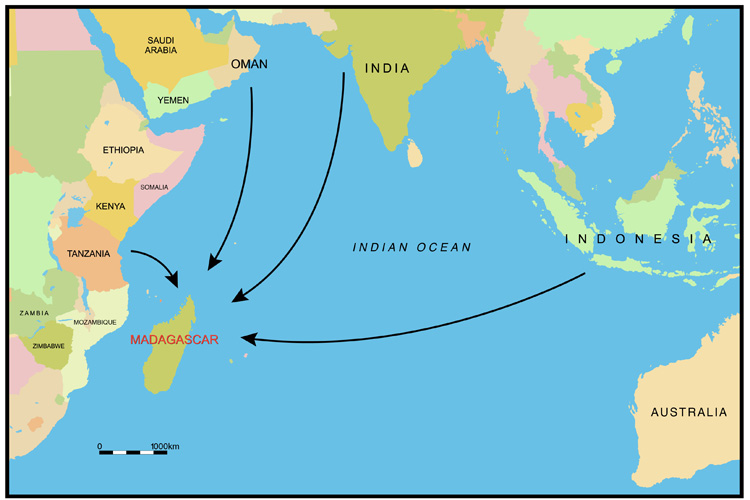
    Madagascar's carbon credits plan

    At the World Forestry Congress 2015 - held in Durban, South Africa - it was said that the rate of deforestation across Africa is four times the world average.

    One of the most vulnerable countries is Madagascar, which has lost thousands of hectares of its unique forest to illegal logging and urbanisation over the past 50 years.
    But things there are changing because of several ongoing projects, which could not only slow the rate of deforestation, but potentially bring in millions of dollars for the country and its people.

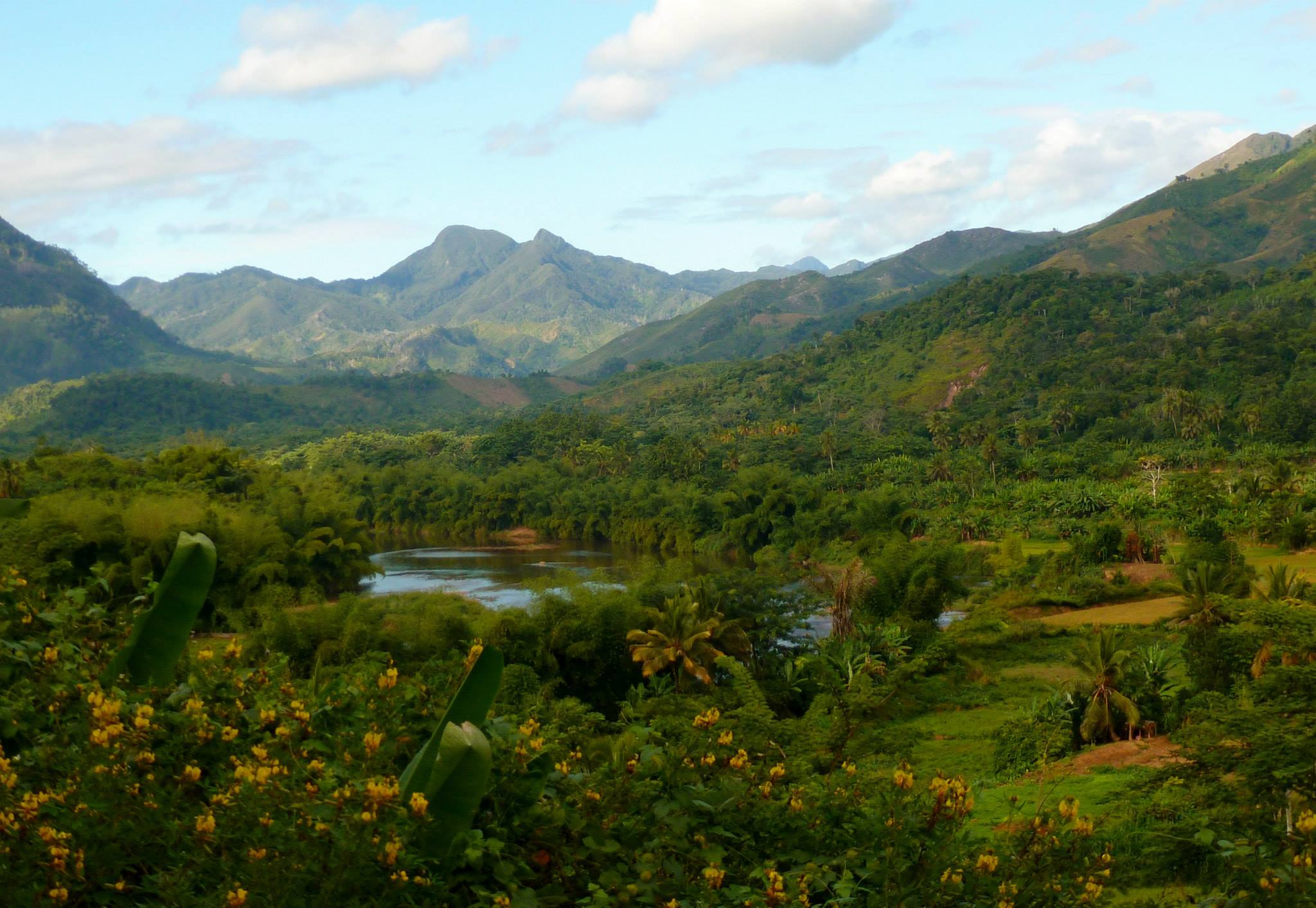
    The island of Madagascar has a massive array of plant life, the majority of which is found nowhere else on earth.
    The rainforests are a major draw for tourists however, they also hold allure for scientists hoping to discover something new and hopefully profitable.
    From BBC News- Business

    Thursday, July 23, 2015

    Lisbon Zoo welcomes new inhabitants


    Unusually, two flamingos were born at the Lisbon Zoo recently. It is usually just one a year but this time they have two instead. The Lisbon Zoo definitely has the best living and procreating conditions, not only for flamingos, but for dozens of other important species among the which we may find really endangered species and others at risk of extinction such as elephants, rhinos, the Persian leopard,the spiked turtle, the golden parakeet, and many others including African Impalas, the marmoset Emperor, and so on. This Zoo is really worth a visit for the hundreds of species it keeps and grows, the warm climate we can find in Lisbon, the dolphins and sea lions shows held daily, the lung it is in a cosmopolitan city like Lisbon and the many attractions it provides due to the exchange programms to which it is associated and that allows tourists and common visitors to enjoy at any time of year.
     Every animal's habitat is carefully chosen and taken care so that every species can easily breed and live nearly with the same natural conditions they have in the wild. The Lisbon Zoo keeps the only Okapi calf born in Europe.
    Mª Dulce Branquinho


    Friday, July 17, 2015

    Fifty sharks spotted swimming in West Sussex, England

    Up to fifty sharks have been spotted swimming in waters near Selsey in West Sussex.


    In June, a few sharks had been spotted at Medmerry, and half a dozen were also spotted in nearby PSRB Pagnam Harbour, but the huge number was unprecedented.
    Mr Hughes told the Chichester Observer: "We do not know if the spectacle is going to repeat itself.
    “Those wanting to look for the sharks can view from the new footpaths around the perimeter of Medmerry.
    “Anyone new to the area should pick up a trail map and get advice from the RSPB Pagham Harbour visitor centre at Sidlesham.” ( From The Mirror)

    Sharks Seen Swimming In UK Estuary

    The sharks were identified as smooth hound sharks, which can grow to around 1.5 metres in length.
    The RSPB's Peter Hughes, who filmed the event on Thursday, said: "It was astonishing. There were just these huge fish everywhere in knee-deep water.
    "We knew in time that Medmerry was going to be a great place for wildlife, but I don’'t think anyone expected this. We assume they were coming in to feed on the crabs and other marine life that have made their home at Medmerry."
    Footage courtesy of RSPB warden Peter Hughes
    From CBBC Newsround

    Friday, July 03, 2015

    ‘Irreversible change’ to sea life from CO2

    A major report warns that life in the seas will be irreversibly changed unless CO2 emissions from industrial society are drastically cut
    Twenty-two experts in the journal Science say the oceans are heating, losing oxygen and becoming more acidic - all in response to our carbon dioxide.
    The scientists in Germany have been studying an event five million years ago that could throw light on today's challenges.
    From BBC Science


    Thursday, June 18, 2015

    Pope Francis blames 'human selfishness' for global warming

    Pope Francis has blamed human selfishness for global warming in his long-awaited encyclical calling for action on climate change.

    Pope Francis
    The Pope calls for a radical change in behaviour to save the planet for future generations

    In the letter, he urges the rich to change their lifestyles to avert the destruction of the ecosystem.
    Environmentalists hope the message will spur on nations ahead of the UN climate conference in Paris in December.
    But parts of the document, leaked earlier this week, have already been criticised by some US conservatives.
    It has been dismissed by two Republican presidential candidates.

    Humans to blame

    The encyclical, named "Laudato Si (Be Praised), On the Care of Our Common Home", aims to inspire everyone - not just Roman Catholics - to protect the Earth.
    The 192-page letter, which is the highest level teaching document a pope can issue, lays much of the blame for global warming on human activities.
    Pope Francis writes that: "We have come to see ourselves as her lords and masters, entitled to plunder her at will.
    "The violence present in our hearts, wounded by sin, is also reflected in the symptoms of sickness evident in the soil, in the water, in the air and in all forms of life."
    null
    The letter highlights the loss of biodiversity in Amazonian rainforests and the melting of polar glaciers
    He criticises what he calls a "collective selfishness", but says that there is still time to stop the damage, calling for an end to consumerism and greed.

    'Moral approach'

    Vatican spokesman Federico Lombardi launched the pontiff's second encyclical at a news conference on Thursday.
    The teaching is more evidence of a pontiff determined to act as a catalyst for change, and a powerful diplomatic player on the world stage, says the BBC's religious affairs correspondent Caroline Wyatt.
    The release comes six months before international leaders gather in Paris to try to seal a deal to reduce carbon emissions.
    UN Secretary-General Ban Ki-moon welcomed the document, saying climate change was a "moral issue requiring respectful dialogue with all parts of society".

    Wednesday, June 17, 2015

    Bioenergy can deliver cleaner future, says global report

    A global bioenergy assessment has said biofuels could meet up to a third of the world's transportation fuel needs by the middle of the century.

    Short rotation coppice willow (Image: BBC)
    Bioenergy crops, like willow, could play a key role in delivering a low carbon future, the report says
    The report - involving experts from 24 nations - said bioenergy had the potential to be a key driver in delivering a low-carbon future.
    It added that concerns that growth in the sector would increase food insecurities were misplaced.
    The details were outlined in Brussels as part of EU Sustainable Energy Week.
    The report, Bioenergy and Sustainability, was led by researchers from the Sao Paulo Research Foundation, Brazil.
    The authors said: "Bioenergy derived from plants can play an essential role in satisfying the world's growing energy demand, mitigating climate change, sustainably feeding a growing population, improving socio-economic equity, minimising ecological disruption and preserving biodiversity."


    Energy definitions


    •Biomass - biological material that can be used as a fuel or for industrial production, such as wood, plant or animal products
    •Bioenergy - energy generated by combusting solid, liquid or gas fuels made from biomass        feedstocks
    (Source: UK Bioenergy Strategy)

    null


    The 779-page study considered the current bioenergy landscape, technologies and practices and considered their social, economic and environmental impacts.
    The publication looked at liquid biofuels, bioelectricity and heat, and biogas. It also considered areas such as energy security, food security as well as climate and environmental security.
    "The resources and technologies are within our reach but achieving the critical contributions needed from modern bioenergy call for political and individual will," the authors observed.
    Close scrutiny
    Although it was once hailed by politicians and environmentalists as the green alternative to fossil fuels, bioenergy - particularly biofuels - has come under close scrutiny in recent years.
    Questions have been raised about the level of greenhouse gas savings it delivered, especially when rainforests were being felled to allow biofuel crops to be planted instead.
    Concerns were also raised about food security as people asked whether it was more profitable to plant energy crops rather than food crops on arable land.
    This was reflected at a policy-making level. In 2012, the EU changed its policy on biofuels, encouraging production from waste materials rather than from food crops. It imposed a 5% cap on food-based biofuel allowed to be used in transportation fuel.


    In the same year, the UN called for a renewed debate on the merits and impacts of biofuels and the CEO of a global food producer said that the growth in the global biofuels sector was increasing food prices.
    However, the assessment published on Wednesday in Brussels challenged this assertion by suggesting that modern bioenergy could "help improve food security by optimising land productivity and agricultural management".
    It added: "About 70-80% of food insecurity problems occur in rural [areas] where energy insecurity or energy poverty are also concentrated."
    "Bioenergy can be a driver to transform the way we use resources and land," it concluded.
    "Inefficiently used land, extensive pastures, degraded lands and excess agricultural capacity and residues can be used for energy production and to bring added value and resilience into agricultural economies and human wellbeing."

    From BBC Science / Environment

    Wednesday, October 08, 2014

    Hairy pigs introduced to restore heathland and attract wildlife

    Conservationists have revealed the latest weapon in their fight to preserve and restore threatened heathland in Dorset, England.

    Normally it would be an expensive piece of machinery but this time it is something more unusual - a rare breed of hairy pig.
    The Mangalitsa pigs will spend a year eating all the rotting plants and wood from the top of the land to get it back to it's natural state.
    James Warren is the pig's keeper and told us why they are special.


    Heathland in Dorset

    The RSPB has recruited the help of some unusual volunteers to help restore heathland and give nature a home on one of its reserves.
    For the first time the charity has introduced a herd of six Mangalitsa pigs to ‘pig out’ at its Arne nature reserve, in Dorset, to help restore a seven hectare site back to its natural healthland through wild grazing.
    This is the first time that the RSPB has enlisted the help of this breed of pig, a more environmentally friendly option than machinery, to undertake a restoration project on one of its reserves.
    Unlike traditional pigs found in the UK, the Mangalitsa pig is unusual as it grows a hairy ‘fleece’ much like a sheep and is the only pig in England to have this distinctive long coat.
    The six rare breed pigs will be joined by six Berkshire pigs as they get their snouts stuck into the land at Arne that is covered in bracken and pine needles – six inches deep in places – for around six months.
    Fluffy pigs

    Mini bulldozers

    Once complete the hope is that the ‘mini bulldozers’ will have created a perfect habitat for species like the Dartford warbler, stonechats, smooth snake, nightjar and sand lizard.
    Mark Singleton, RSPB Dorset reserves operations manager, said: “This is the first time that the RSPB has used pigs to graze on one of its reserves. It is an experimental project that we hope will produce fantastic results for nature at our Arne reserve.
    “Usually we would hire diggers and other machines to remove all of the pine needles from the site but that would have negative impact on the environment. We are hoping these pigs are able to do the same job in a much more environmentally friendly way, and are much more fun.
    “Last year’s State of Nature report highlighted that nature in the UK is in trouble, 60% of species have declined in the past 50 years. This project is one of many that the RSPB is carrying out to tackle this problem and try to reverse these declines.”
    Imported into the UK in 2006, the Mangalitsa pig can be found making its home in farms, woodland and even on occasions in homes as they are easily house trained.
    These pigs aren’t alone in the RSPB’s conservation grazing projects. At RSPB Minsmere, Konik ponies help management of habitats by controlling scrub encroachment, creating a mosaic of different vegetation types. Exmoor ponies are assisting at RSPB Broadwater Warren, while Manx sheep have grazed at many reserves around the UK.
    David Burton, senior advisor at Natural England, said: “There are many benefits to conservation grazing. Grazing animals helped shape many of our semi-natural habitats, which developed rich and diverse wildlife communities.
    “Our grasslands, meadows, moorland and heathland habitats were all shaped by human activity and grazing is often the most effective and sustainable way to maintain them and their huge variety of plants and wildlife.”
    Nested at the base of the Purbeck Hills, RSPB Arne is a peninsular that juts out into Poole harbour. Visitors can enjoy spectacular scenery and beautiful views while marveling at the abundance of wildlife that the heath, woodland and harbour have to offer.

    Giving Nature a Home

    Giving Nature a Home is the RSPB’s campaign, aimed at tackling the housing crisis facing the UK’s threatened wildlife. The charity is asking people to provide a place for wildlife in their own gardens and outside spaces – whether it by planting pollen-rich plants to attract bees and butterflies, putting up a nestbox for a house sparrow, or creating a pond that will support a number of different species. The charity hopes to inspire people across the UK to create a million new homes for nature.

    How you can help

    Nature in the UK is in trouble and some of our more familiar garden species are amongst those suffering serious declines. We can all help by giving nature a home where we live.

    From BBC newsround and RSPB
    http://www.wwww.rspb.org.uk/news/383408-were-using-pig-power-to-give-nature-a-home

    Wednesday, September 24, 2014

    Leaders gather to commit to action on climate change

    Climate change has been a huge issue for a long time now - with many people worried about melting glaciers - huge pieces of ice - causing rising sea levels.

    Melting glacier, Greenland

    Melting glacier, Greenland

    World leaders, including US President Barack Obama, have held a special meeting, to try to stop the problem getting worse.
    During the meeting, the President warned that a failure to act on climate change is a "betrayal" of future generations.
    Climate change meeting
    120 world leaders gathered at the summit at the U.N. headquarters in New York
    He said climate change was moving faster than efforts to address it, and the US and China had a responsibility to lead other nations.
    China has now pledged to take firm action on climate change for the first time.
    The summit, which took place in New York, was the first major gathering of high-level leaders since 2009.

    What is climate change?

    Scientists say a rise in man-made greenhouse gases has resulted in some shrinking of glaciers, sea levels going up slightly and the temperature of some seas around the world rising. Greenhouse gases are produced by many things including burning fossil fuels like oil, natural gas and coal.


    Satellite image showing water temperatures  in the Pacific Ocean
    Satellite image showing water temperatures in the Pacific Ocean

    Animals Under threat

    Animals like polar bears, seals and penguins could be under threat if there isn't enough food as a result of changing conditions. Small islands may be also be lost, if sea levels rise in the future.
    Polar Bear in the Arctic Barents Sea region
    Polar Bear in the Arctic Barents Sea region

    "The world must set on a new course"

    Leonardo DiCaprio, who has been appointed as a United Nations representative on climate change, told the UN audience that climate change was not ''a fiction''.
    The Hollywood actor said there was ''evidence that accelerated climate change is here, right now''.


    Hollywood actor, Leonardo DiCaprio said: ''I believe that mankind has looked at climate change as if it was a fiction''

    The meeting was hosted by UN Secretary General Ban Ki-moon.
    As he closed the summit, Mr Ban hailed the meeting, saying "never before have so many leaders gathered to commit to action on climate change".
                              UN Secretary General Ban Ki-moon
    UN Secretary General Ban Ki-moon asked world leaders to take action
    He said: "Today, we must set the world on a new course," said UN Secretary-General Ban Ki-moon "I am asking you to lead".
    Many protestors demonstrated outside the meeting. They're angry at some businesses who they claim can use too many fossil fuels. Protestors want them to use cleaner, more environmentally friendly fuels for the future.
    From CBBC newsround

    Sunday, September 21, 2014

    Street protests demanding urgent action on climate change have attracted hundreds of thousands of marchers in more than 2,000 locations worldwide.


    The People's Climate March is campaigning for curbs on carbon emissions, ahead of the UN climate summit in New York next week.
    In Manhattan, organisers said some 310,000 people joined a march that was also attended by UN chief Ban Ki-moon.
    Earlier, huge demonstrations took place in Australia and Europe.
    "This is the planet where our subsequent generations will live," Mr Ban told reporters. "There is no 'Plan B' because we do not have 'Planet B'."
    The UN Secretary General was accompanied by primatologist Jane Goodall and the French Ecology Minister, Segolene Royal.
    New York hosted the largest of Sunday's protests, drawing more than half of the 600,000 marchers estimated by organisers to have taken part in rallies around the world.
    Manhattan march
    In Manhattan, Ban Ki-moon (in blue hat) was flanked by primatologist Jane Goodall (to his right) and French ecology minister Segolene Royal
    Manhattan echoed to the sound of chants, horns and drums as the colourful protest progressed through the streets.
    Organisers of the Manhattan event said it surpassed the largest previous protest on climate change.
    They said the massive mobilisation was aimed at transforming climate change "from an environmental concern to an everybody issue".
    Business leaders, environmentalists and celebrities joined the demonstration.
    Hollywood actor Leonardo DiCaprio also took part, having been appointed as a UN representative on climate change last week.
    Marchers at climate change demonstration in New York
    Many of the marchers in New York wore costumes associated with indigenous people

    READ THE WHOLE ARTICLE

    Thursday, September 04, 2014

    Blast fishing destroying Tanzania's marine habitats

    The rich marine life off Tanzania's coast is coming under threat because of blast fishing - a technique using explosives that some fishermen use to maximise their catch.

    Pirogue sailing in the Indian Ocean off Tanzania
    ''Blast fishing destroys the fish habitats under water where fish reproduce and that has had a big impact, especially on us who use ring nets to fish," a 32-year-old fisherman says.
    "The number of fish has drastically reduced we are not able to catch many fish like before," he said as prepared his wooden boat to go fishing in the calm and beautiful waters of the Indian Ocean.
    Small fishing vessels like his dot the coastline that hugs Tanzania for thousands of kilometres.
    Fisherman pulling nets on a wooden boat off Tanzania

    Fisherman who use ring nets say their catches have been affected .Some say they face intimidation if they report those using dynamite


    A fishing vessel in the waters off Tanzania
                 Coral reefs in peril
    According to Smart Fish, a fisheries programme funded by the European Union, Tanzania is the only country in Africa where fishing using explosives still occurs on a large scale.
    Although it is illegal, it occurs along the entire Tanzanian coastline, from Mtwara to Tanga, and off nearby islands. There have also been reports of blast fishing off north Zanzibar.
    Baraka Mngulwi, the assistant director of the government's Fisheries Resource Protection department, says the explosives are often taken from mines and demolition and road construction firms, or made at home.
    The explosives are usually lit with small fuses and tossed overboard.
    The underwater shock waves produced by the explosion stun the fish, rupturing their swim bladders - the organ which helps control their buoyancy.
    So they float to the surface and are then scooped up by waiting nets.
    A trader at Dar es Salaam fish market, Tanzania
    People find it difficult to identify which fish have been caught using explosives
    Experts say one blast is enough to kill all fish and other living organisms within a 20m (66ft) radius - up to 400 fish can be netted in each explosion.
    In the process, the underwater coral systems, home to countless marine species, are reduced into rubble.
    Michael Markovina, a SmartFish officer, says coral reefs left in the wake of a series of blasts resemble a shelled city.
    "If this illegal practice is not stopped, gradually Tanzania could easily end up with a wasteland of ocean," he says.
    Damaged coral reefs lead to an instant decline in fish species diversity and quantity - and in the long-term the ecosystem is unlikely to recover.
    Blast fishing in Tanzania:
    • Began in the 1960s, was brought under control in the 1990s but has surged in recent years
    • 25% of all marine species are associated with coral reefs
    • Each blast kills all fish and other living organisms within a 20m radius, completely destroying the coral reef habitat and there is no natural recovery
    • Explosives are cheap and easily accessible, usually sourced from mining, demolition and road construction enterprises, or made using artificial fertilisers and diesel
    • Banned in 2003 with a minimum sentence of five years for dynamite fishing and 12 months for possession of explosives
    Source: SmartFish
    line
    It is very difficult to track down the illegal fishermen because there is a very secretive and apparently sophisticated network in place.
    Blast fishing victim Mwanya Sleimanm, a resident of Tanzania's Mafia Island in the Indian Ocean
    A former dynamite fisherman, Mwanya Sleiman, who now campaigns against the practice says he lost both his hands in an accident."They were ripped off when an explosive I was setting up blew off in my hands. I used to light the explosives with fuses and toss them into the ocean," Mwanya Sleiman, 50, told the BBC.


    READ MORE  (From BBC News-Africa)

    Wikipedia

    Search results