To my dear visitors and commenters

Hi, everybody! I've noticed with lots of joy and happiness, that thousands of comments have been written in my posts. It's wonderful that so may people around the world appreciate my work. Therefore, I want to thank you for that and ,at the same time I want to ask you to be this blog's followers. It's fast and easy! Make it be even more visited and spread all over the world! I'm a woman, a teacher of English in Portugal, and I've been away for quite a long time because of my father's health. Unfortunately he died from Covid19 a few months ago. Now I felt it was time to restart my activity in this and other blogs I owe. I've recently created a new one in a partnership with a street photographer, Mr. Daniel Antunes. He's fabulous! https://pandpbydandd.blogspot.com I'd like you to visit it and, who knows, become our followers. The poems, chronicles and thoughts are all mine. Thank you so much! Kisses :-)

Search This Blog

Showing posts with label The importance of oceans. Show all posts

Sunday, April 03, 2016

'Drastic' Antarctic melt could double global sea-level rise

Global sea levels could rise by more than double the current best estimate, according to a new analysis of climate change in Antarctica.

Ice melt
The latest model suggests that Antarctic melting could double projections of sea-level rise

The modelling assessment says that Antarctic melting alone could contribute more than a metre to sea level by the end of this century.
By 2500, according to the study, the same source could cause levels across the world to rise by 13m.
The authors say that rapid cuts in carbon emissions could limit this risk.

Competing ideas

In 2013, the Intergovernmental Panel on Climate Change (IPCC) predicted that, without any restrictions on carbon emissions, the seas around the world likely rise by up to 98cm by 2100.
However, the IPCC estimates contained a minimum contribution from Antarctica.
Other analyses since then have projected bigger increases, with a recent studysuggesting that the oceans were rising faster than at any time in the past 2,800 years and by 2100 they could be up to 1.31m higher.
The exact level of Antarctica's impact on these projections has been vigorously debated. Late last year, a research paper suggested that projections of a contribution of a metre or more were not plausible.
But this new study argues that by 2100 the world could see 1.14m of sea-level rise from Antarctica alone.

Additions to the model

The scientists say that their model is able to provide a more accurate prediction because it incorporates the impacts of some physical processes for the first time.
While other models have focussed on the impact of warmer waters melting the ice shelves from below, this new study also includes the effect of surface melt-water and rain trickling down from above and fracturing supporting ice, hastening its slide to the sea.
The model also calculates the impact of the disintegration of floating ice shelves. If this happens, it will reveal walls of ice so tall that they cannot support their own weight.
The scientists involved expect that these extra factors will kick in over the coming decades, as warming from the atmosphere (not just from warmer waters below) becomes the dominant driver of ice loss.
ice melt
The collapse of ice cliffs could be a significant factor in the new projection
"One reason that other models didn't include the atmospheric warming is because it hasn't started to happen just yet," said co-author Dr David Pollard from Penn State University, US.
"In Antarctica, around the edges at sea level, it's just beginning to get up to the melt point in summer.
"With that warming, the flanks of Antarctica will start to melt drastically in about 50 to 100 years - and then it will start to kick in according to our model."
The authors believe that they have demonstrated the accuracy of the new model by correctly replicating sea-level rise in warm periods, millions of years into the past.
"Recently, we looked at the long-standing problem posed by geological evidence that suggests sea level rose dramatically in the past, possibly up to 10 to 20 metres around 3 million years ago, in the Pliocene," said Dr Pollard.
"Existing models couldn't simulate enough ice-sheet melting to explain that."

'Right questions'

If the world continues to emit "business as usual" levels of carbon dioxide over the coming decades, the scientists argue that sea-level rise will be double what has already been estimated for the coming 100 years.
"If these processes do kick in and they end up being as important as we think that they could be, then they really do have a big impact," said Prof Robert DeConto from the University of Massachusetts, Amherst.
"West Antarctica is responding very soon in these simulations and that ends up having a big impact on North America in particular."
Other researchers have praised the development of the new model for including impacts such as surface melt water and ice-cliff collapse, but they are uncertain about the conclusions.
"I have no doubt that on a century to millennia timescale, warming will make these processes significant in Antarctica, as well as Greenland, and drive a very significant Antarctic contribution to sea-level rise," commented Prof David Vaughan of the British Antarctic Survey.
"The big question for me is, how soon could this all begin, and could it be early enough to drive substantially higher sea levels by 2100? I'm not sure, but these guys are definitely asking the right questions."
The authors believe that there is "good news" in their report. If global emissions of carbon are curtailed significantly then the extra factors that substantially boost Antarctic melting will be avoided.
Seas will continue to rise, but not at the runaway rates suggested by this paper,which has been published in the journal Nature.
From BBC news-Science/ Environment


Thursday, March 24, 2016

Turtles in trouble as warming beaches turn eggs female

Can you imagine if the temperature decided whether you were born a girl or a boy?
Well that's exactly what happens with turtles.
But experts in Australia are now worried that rising temperatures over time could cause chaos for turtle populations by creating too many female turtles.

From CBBC Newsround


Researchers investigating the impact of rising temperatures on sea turtles are travelling to some of the most remote beaches in Australia to work out which populations are at risk of being feminised into extinction.
In a phenomenon being seen worldwide, warming temperatures are resulting in an increasing number of turtle eggs hatching female.
The race is now on to work out which rookeries are most at risk in Australia, with a University of Western Australia (UWA) team focused on turtle breeding areas on the Kimberley coast.

"This is very fundamental research, and will give us insights fifty years ahead about whether sex ratios will change, where distributions might shift to, and what impact climate change is going to have," team leader Nicki Mitchell said.
Blair Bentley holding a baby turtle on a beach on the Kimberley coast.
The tipping point for sex determination in turtles is thought to be just over 29 degrees Celsius. If the beach sand is any warmer the incubating eggs will hatch female, however if it is any cooler, the hatchlings will be male.
The problem is that beaches are heating up across much of the globe, and that could have big implications for turtle rookeries.
Researcher Blair Bentley said whole populations could be at risk.
"If it keeps getting warmer there are going to be more females being produced, and over time the males will keep dying at a greater rate than they are being replenished, so it's what's called demographic collapse," he said.
"There might still be males in the population, but there'll be far more females, and reproductive success will go down significantly."

Friday, March 18, 2016

Great Barrier Reef coral 'bleaching' level increased

Authorities in Australia have raised the threat level for coral 'bleaching' in the Great Barrier Reef, after divers found that lots of coral had died.

Divers
The Great Barrier Reef is the world's largest living structure, and is home to thousands of plants and animals - it is so big it can even be seen from space.
Divers have found that an increase in the sea's temperature has been putting the coral which grows there under a lot of stress causing 'bleaching', which means a loss of colour.
bleached coral

What is bleaching?

Many types of coral have a special relationship with tiny algae that live in the coral.
These tiny algae produce about 90% of the food the coral needs to grow, and give them their bright colours.
Bleaching happens when sea temperatures get too high or low, causing the algae to get 'stressed out' and leave the coral.
This turn the coral white and leaves it very vulnerable.
An increase of just one degree Celsius for four weeks can cause bleaching. If this continues for more than eight weeks, the coral can die.
diver looking at coral bleaching

Has this happened before?

In 2002 the surface temperature of the sea water in the Great Barrier Reef increased by around 2-3 degrees causing one of the worst bleaching incidents on record, affecting more than 60% of the coral.
While some coral reefs can recover from bleaching in a few years, others don't recover at all.
The Great Barrier Reef Marine Park Authority have now raised the bleaching threat level, and have said that there is a very high risk of mass coral bleaching this month.
The Australian government said it is working closely with the marine rangers to help keep an eye on the coral for the next few months to see how it is doing.
From CBBC Newsround

Sunday, March 13, 2016

Europe's rarest seabird 'faces extinction'

Europe's rarest seabird will be extinct within 60 years, according to a new analysis.

The bird breeds in caves off Mallorca

Urgent action is needed to stop the Balearic sheerwater being drowned in fishing lines and nets, say scientists.
The bird breeds in the Balearic Islands, sometimes stopping off in British waters as it migrates north.
Research shows the global population is not sustainable in the long term. There are about 3,000 breeding pairs left.
The main threat to the bird is becoming entangled in fishing gear, according to findings published in the Journal of Applied Ecology.
Other risks include hunting by the likes of cats and other small mammals.


Prof Tim Guilford of the Department of Zoology at the University of Oxford is co-researcher on the study.
He told BBC News: "The survival of adults from one year to the next and especially of young adults is much lower than we thought.
"The species is unsustainable - it is on the road to extinction."

Night fishing

Estimates suggest about half of deaths in adult birds are due to accidental capture in fishing lines and nets.
Fishing on the seabed is a particular risk as birds can become entangled and drown when lines are immersed, say researchers in the UK and Spain.
Changes such as setting fishing gear at night when the bird does not dive "could make a massive difference", said Prof Guilford.
"The science shows just how serious the problem is, but also that there is a technically simple solution - the setting of demersal long-lines at night," he added.
The Balearic shearwater (Puffinus mauretanicus) is one of the rarest seabirds in the world.
The seabird is classified as critically endangered on the IUCN Red List of species.
It breeds on cliffs and small islets and lays only one egg.
From BBC News-Science / Environment

Friday, February 26, 2016

How Northern European waters soak up carbon dioxid

The seas around the UK and the rest of northern Europe take up a staggering 24 million tonnes of carbon each year.

Stormy waters
Colder, stormy waters at higher latitudes tend to take up most carbon dioxide
It is a mass equivalent to two million double-decker buses or 72,000 747 jets.
The number was produced by scientists studying the movement of carbon dioxide into and out of the oceans.
The team, led by Heriot-Watt University and Exeter University, has produced a software "engine" that will allow other scientists to do the same for different parts of the globe.
"It's a software toolbox essentially, that we've made available," said Exeter's Jamie Shutler.
"We've used it for our own work. We've done extensive checking, and now we're putting it out there for everyone else to use."
The amount of carbon dioxide absorbed by seawater acts as a moderator in the climate system.
It is estimated that a third of all human-produced CO2 emissions, from fossil fuel burning and the like, ends up in the oceans. Another third is taken up by land "sinks", with the rest remaining in the atmosphere.
Researchers are keen to understand how this budget might change over time.
Study
From  BBC News

Wednesday, February 17, 2016

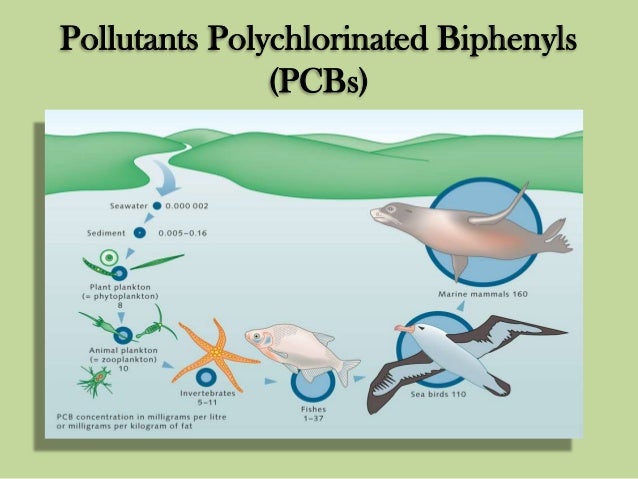
Banned pollutant PCB threatens Europe's whales

Scientists are warning that a banned pollutant could wipe out Europe's killer whales and dolphins.The use of the PCB chemical was prohibited from the 1980s but it still exists in the environment. (BBC News)


polychlorinated biphenyl (PCB) is a synthetic organic chemical compound ofchlorine attached to biphenyl, which is a molecule composed of two benzene rings. There are 209 configurations of organochlorides with 1 to 10 chlorine atoms. The chemical formula for a PCB is C12H10−xClx. Of the different PCB arrangements and orientations 130 are used commercially.
Polychlorinated biphenyls were widely used as dielectric and coolant fluids in electrical apparatus, cutting fluids for machining operations, carbonless copy paper and in heat transfer fluids. Because of PCBs' environmental toxicity and classification as a persistent organic pollutant, PCB production was banned by the United States Congress in 1979 and by the Stockholm Convention on Persistent Organic Pollutants in 2001. The International Research Agency on Cancer (IRAC), rendered PCBs as definite carcinogens in humans. According to the U.S. Environmental Protection Agency (EPA), PCBs cause cancer in animals and are probable human carcinogens.Many rivers and buildings including schools and other sites are contaminated with PCBs, and there have been contaminations of food supplies with the toxins.

Some PCBs share a structural similarity and toxic mode of action with dioxin. Other toxic effects such asendocrine disruption (notably blocking of thyroid system functioning) and neurotoxicity are known. The maximum allowable contaminant level in drinking water in the United States is set at zero, but because of water treatment technologies, a level of 0.5 parts per billion is the de facto level.
in Wikipedia

Wednesday, January 20, 2016

Global fishing catch significantly under-reported, says study

The amount of fish taken from the world's oceans over the last 60 years has been underestimated by more than 50%, according to a new study.

fish
Global fish take based on official figures underestimates the actual catch size according to this study

Researchers say that official estimates are missing crucial data on small scale fisheries, illegal fishing and discarded by-catch.
The authors argue that global fishing catches are now declining rapidly because stocks have been exhausted.
But other researchers have questioned the reliability of the new study.
The UN's Food and Agriculture Organisation (FAO) is the body that collates global statistics on fishing from countries all over the world.
According to their official figures, the amount of fish caught has increased steadily since 1950 and peaked at 86 million tonnes in 1996 before declining slightly to around 77 million tonnes in 2010.
But researchers from the University of British Columbia argue that the official figures drastically under-report the true scale of fishing.
They argue that the figures submitted to the FAO are mainly from large scale "industrial" fishing activities and do not include small scale commercial fisheries, subsistence fisheries as well as the discarded by-catch and estimates for illegal fishing.
The scientists say their "catch reconstruction" method give a far more accurate picture of the scale of the impacts of fishing around the world.
They say that reconstructed catches, that include estimates and data on the under-reported activities, show that the world took 53% more fish from the seas than the official figures indicate.
They argue that around 32 million tonnes of fish go unreported every year - more than the weight of the entire US population.
"The catches are all underestimated," said lead author Prof Daniel Pauly.
"The FAO doesn't have a mandate to correct the data that they get - and the countries have the bad habit of reporting only what they see - if they don't have people who report on a given fishery then nothing is reported. The result of this is a systematic underestimation of the catch and this can be very high, 200-300% especially in small island states, in the developed world it can be 20-30%."
Prof Pauly gave the Bahamas as an example where there was no reporting of fish caught by small scale fishers. But when the researchers dug a little deeper and went to the big hotels and resorts, they found invoices from small scale fishermen who sold their catch directly.
Not only have more fish been taken from the seas than have been reported say the authors, but the decline in fish caught since the mid 1990s has been far greater than the official figures show.
fish
A graph showing the differences between the official figures and the reconstructed catch
From BBC Science/Environment

Thursday, December 17, 2015

Giving Endangered African Penguins a Second Chance at Life

This short video produced by IFAW shows the plight facing endangered African Penguins due to overfishing, pollution, and climate change. But there is hope as IFAW is working with the Southern African Foundation for the Conservation of Coastal Birds (SANCCOB) in Capetown, South Africa to rescue, rehabilitate, and release African penguins back to the wild. 

To learn more, visit www.ifaw.org.


The number of African penguins in South Africa and Namibia has dramatically fallen in the past ten years.
The penguins pair for life and have their chicks - but the number of pairs has dropped from over 30,000 in 2004 to just over 3,000 in 2014.
Nicky Stander, a Penguin Conservationist says: ''There used to be over a million penguins in the 1930's but now the population is down by around 98 per cent.''
Experts say it's because the sardines and anchovies they eat are disappearing.
They believe it's because of over-fishing and the sea getting warmer. (CBBC Newsround)

Friday, December 04, 2015

COP21: What does ocean acidification look like?

Marine scientists are concerned that changes in the chemistry of the world's seas will have severe consequences for marine wildlife and ecosystems.
Jason Hall-Spencer, professor of Marine Biology at Plymouth University, shows BBC environment correspondent Matt McGrath the potential impact through two experiments at London's Aquarium.
Produced by Marcus Thompson (BBC)


Monday, November 16, 2015

Society 'to be hit by climate change'

Human societies will soon start to experience adverse effects from manmade climate change, a prominent economist has warned.

Flooding in Jakarta
Prof Richard Tol predicts the downsides of warming will outweigh the advantages with a global warming of 1.1C - which has nearly been reached already.
Prof Tol is regarded by many campaigners as a climate "sceptic".
He has previously highlighted the positive effects of CO2 in fertilising crops and forests.
His work is widely cited by climate contrarians.
"Most people would argue that slight warming is probably beneficial for human welfare on net, if you measure it in dollars, but more pronounced warming is probably a net negative," Prof Tol told the BBC Radio 4 series Changing Climate.
Asked whether societies were at the point where the benefits start to be outweighed by consequences, he replied: "Yes. In academic circles, this is actually an uncontroversial finding."
But it is controversial for climate contrarians, who often cite Professor Tol's work to suggest that we shouldn't worry about warming.

Managing ecosystems

Matt Ridley, the influential Conservative science writer, said he believed the world would probably benefit from a temperature rise of up to 2C.
"I think we probably will see 1.5 degrees of warming. The point is most people think 2C is when it turns catastrophic. That's not right. The literature is very clear; 2C is when we start to get harm. Up until then we get benefit," he said.
"We've got a greening in all ecosystems as a result of CO2. We've got about 11% more green vegetation on the planet than 30 years ago, much of which is down to the CO2 fertilisation effect."
On fertilisation Matt Ridley refers to unpublished work by Professor Ranga Myneni from Boston University.
But he told BBC News Lord Ridley had accurately quoted his research on the impacts of current CO2 levels, but was unduly complacent about future warming.
"I am worried about how this work is being interpreted, by Lord Ridley. In my opinion, [CO2 fertilisation] benefit of greening is not worth the price of all the negative changes," he said.
Richard Tol from Sussex University believes discussion over the impacts of a 2C temperature rise is largely irrelevant as the world is likely to warm by between 3-5C, because politicians at the forthcoming Paris climate summit won't be willing or able to make the scale of cuts needed to keep temperature rises under 2C.
He says a rise of 4C would be undesirable but manageable for Europe and all nations rich enough to cope with the costs of adaptation. The best way of combating climate change, he told BBC News, was to maximise economic growth.

Warming feedback

Tim Lenton, professor of Earth systems science from Exeter University, told us this was a highly optimistic prognosis under a 4C rise.
"The land surface of central Europe would be quite a lot more than 4C warmer on average, changing potentially the pattern of seasonality over Europe.
"We would have lost the summer Arctic sea-ice, [and] would have sea-ice cover radically thinned in winters.
"We're seeing already that appears to have some connection to changes in the pattern of weather and weather extremes and the changes in the distribution of rivers and river flows.
"We might then speculate about how intense Mediterranean drying might drive... movements of people. It would be a very different Europe."
Johan Rockstrom, director of the Resilience Centre at Stockholm University, warns that the further we go above 2C, the more we risk triggering irreversible effects.
"What takes us to 6C is not carbon emissions, it is biosphere response. Will we be able to maintain the natural carbon sinks in the permafrost, in the rainforests, in the boreal forests, in the wetlands and in the coastal regions? Because that's where the big stores are.
"We emit nine gigatons of carbon per year from our burning of fossil fuels, but there's a 100 gigatons lying just under the Siberia tundra. You have many-fold larger stores of carbon in the topsoil of tropical soils, or under the ice in the Arctic.
"If we don't manage the living ecosystems well enough they could start biting us from behind."
From BBC News-Science/ Environment

Friday, October 02, 2015

Plastic in oceans 'threatens food chain'


As England prepares to introduce a charge for plastic bags, science editor David Shukman reports on the possible threat to the food chain, by the plastics broken down into tiny fragments in our oceans.
Tests by the Plymouth Marine Laboratory have shown that when minuscule particles of plastic are in the water, the creatures at the bottom of the food chain do ingest them.
An estimated eight million tonnes of plastic waste is added to the oceans every year.(BBC News)


Saturday, September 26, 2015

Efforts to save Great Barrier Reef 'too slow'

Efforts to try to save the Great Barrier Reef from pollution aren't happening quickly enough, according to top politicians in Australia.

A report by the Queensland government says the Great Barrier Reef is in poor condition because of chemicals, used by farmers to help their crops grow, entering into the sea.
When it rains the chemicals run off the land in the rainwater, flowing into rivers that end up in the sea.
Once in the sea the chemicals damage the coral and threaten certain species of fish by making the levels of acid in the water go up and the oxygen levels, needed for sea creatures to breathe, go down.
The Great Barrier Reef is the world's largest coral reef system covering 1,600 miles along Australia's north east coast.
The government in Queensland say more work needs to be done urgently with farmers to cut down the use of chemicals on their crops.(CBBC Newsround)


Wednesday, August 26, 2015

Crew rescue entangled whale in freezing Icelandic waters

It took them two days to release the poor trapped whale!

The rescuers were nearly knocked out of their boat by the distressed animal

Brave these men!


Would you spend your weekend grappling with a whale in freezing Icelandic waters?
One team of volunteers did just that, as they attempted to free a whale that had become entangled in fishing gear.
Working from a small inflatable boat, the four-man team pursued the humpback whale for two days before attaching a rope to the fishing gear and eventually cutting it away.
The operation was described by one of the organisations involved as the most dangerous type of rescue that they do.
Mark Stevens and Geoff Hammock, co-directors of the British Divers Marine Life Rescue, explained the rescue operation to the BBC's Lucy Hockings.
From BBC Science/ Environment

Monday, August 10, 2015

Campaign to save the giant manta ray

Huge and so beautiful!


Conservation charities are working with the government in northern Peru in South America where a big campaign's started to help save the Giant Manta Ray and make sure the species is protected forever.


There are concerns that over-fishing and destruction of habitat could be harming the species.
Changing attitudes about the species starts in the classroom and kids have been helping out.

Fin-tastic facts:

  • They're the largest ray in the world (up to 8m wide!)
  • They can make migrations across the oceans, finding their way by following topographical maps using ocean landmarks, such as seamounts.
  • They're also extremely intelligent and possess the largest brain of any fish.

  • When swimming around divers, mantas can be extremely curious, often coming in for a closer inspection and swimming repeatedly through divers' bubbles.

from CBBC Newsround

Wednesday, August 05, 2015

Humpback whale numbers 'increasing' around Australia

New research suggests that humpback whale populations in waters around Australia are increasing faster than anywhere else in the world.


The seas around the country are a popular area for this type of whale, but many decades of legal and illegal hunting, saw their numbers dip dangerously low and they were considered to be an endangered species.
However, conservation efforts now seem to be paying off because scientists say that humpback whales have recovered so well, they are "a symbol of hope."
Whale hunting is still a problem in other parts of the world so these results will be looked at closely to see how to help numbers increase globally. (CBBC Newsround)

Friday, July 17, 2015

Fifty sharks spotted swimming in West Sussex, England

Up to fifty sharks have been spotted swimming in waters near Selsey in West Sussex.


In June, a few sharks had been spotted at Medmerry, and half a dozen were also spotted in nearby PSRB Pagnam Harbour, but the huge number was unprecedented.
Mr Hughes told the Chichester Observer: "We do not know if the spectacle is going to repeat itself.
“Those wanting to look for the sharks can view from the new footpaths around the perimeter of Medmerry.
“Anyone new to the area should pick up a trail map and get advice from the RSPB Pagham Harbour visitor centre at Sidlesham.” ( From The Mirror)

Sharks Seen Swimming In UK Estuary

The sharks were identified as smooth hound sharks, which can grow to around 1.5 metres in length.
The RSPB's Peter Hughes, who filmed the event on Thursday, said: "It was astonishing. There were just these huge fish everywhere in knee-deep water.
"We knew in time that Medmerry was going to be a great place for wildlife, but I don’'t think anyone expected this. We assume they were coming in to feed on the crabs and other marine life that have made their home at Medmerry."
Footage courtesy of RSPB warden Peter Hughes
From CBBC Newsround

Wikipedia

Search results