To my dear visitors and commenters

Hi, everybody! I've noticed with lots of joy and happiness, that thousands of comments have been written in my posts. It's wonderful that so may people around the world appreciate my work. Therefore, I want to thank you for that and ,at the same time I want to ask you to be this blog's followers. It's fast and easy! Make it be even more visited and spread all over the world! I'm a woman, a teacher of English in Portugal, and I've been away for quite a long time because of my father's health. Unfortunately he died from Covid19 a few months ago. Now I felt it was time to restart my activity in this and other blogs I owe. I've recently created a new one in a partnership with a street photographer, Mr. Daniel Antunes. He's fabulous! https://pandpbydandd.blogspot.com I'd like you to visit it and, who knows, become our followers. The poems, chronicles and thoughts are all mine. Thank you so much! Kisses :-)

Search This Blog

Showing posts with label fishing. Show all posts

Wednesday, February 17, 2016

Banned pollutant PCB threatens Europe's whales

Scientists are warning that a banned pollutant could wipe out Europe's killer whales and dolphins.The use of the PCB chemical was prohibited from the 1980s but it still exists in the environment. (BBC News)


A polychlorinated biphenyl (PCB) is a synthetic organic chemical compound ofchlorine attached to biphenyl, which is a molecule composed of two benzene rings. There are 209 configurations of organochlorides with 1 to 10 chlorine atoms. The chemical formula for a PCB is C12H10−xClx. Of the different PCB arrangements and orientations 130 are used commercially.
Polychlorinated biphenyls were widely used as dielectric and coolant fluids in electrical apparatus, cutting fluids for machining operations, carbonless copy paper and in heat transfer fluids. Because of PCBs' environmental toxicity and classification as a persistent organic pollutant, PCB production was banned by the United States Congress in 1979 and by the Stockholm Convention on Persistent Organic Pollutants in 2001. The International Research Agency on Cancer (IRAC), rendered PCBs as definite carcinogens in humans. According to the U.S. Environmental Protection Agency (EPA), PCBs cause cancer in animals and are probable human carcinogens.Many rivers and buildings including schools and other sites are contaminated with PCBs, and there have been contaminations of food supplies with the toxins.
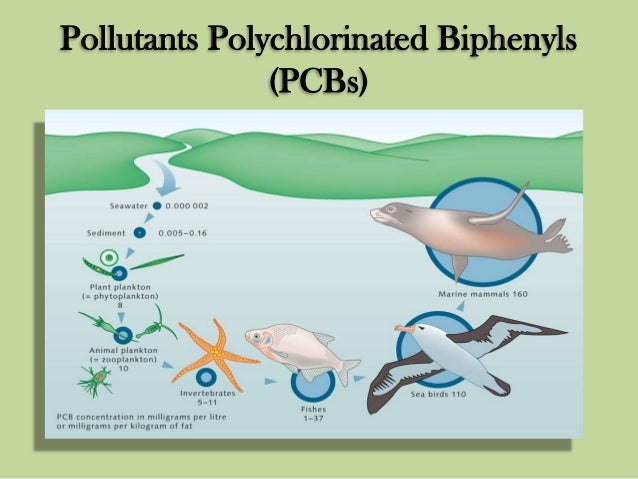
Some PCBs share a structural similarity and toxic mode of action with dioxin. Other toxic effects such asendocrine disruption (notably blocking of thyroid system functioning) and neurotoxicity are known. The maximum allowable contaminant level in drinking water in the United States is set at zero, but because of water treatment technologies, a level of 0.5 parts per billion is the de facto level.
in Wikipedia

Wednesday, January 20, 2016

Global fishing catch significantly under-reported, says study

The amount of fish taken from the world's oceans over the last 60 years has been underestimated by more than 50%, according to a new study.

fish
Global fish take based on official figures underestimates the actual catch size according to this study

Researchers say that official estimates are missing crucial data on small scale fisheries, illegal fishing and discarded by-catch.
The authors argue that global fishing catches are now declining rapidly because stocks have been exhausted.
But other researchers have questioned the reliability of the new study.
The UN's Food and Agriculture Organisation (FAO) is the body that collates global statistics on fishing from countries all over the world.
According to their official figures, the amount of fish caught has increased steadily since 1950 and peaked at 86 million tonnes in 1996 before declining slightly to around 77 million tonnes in 2010.
But researchers from the University of British Columbia argue that the official figures drastically under-report the true scale of fishing.
They argue that the figures submitted to the FAO are mainly from large scale "industrial" fishing activities and do not include small scale commercial fisheries, subsistence fisheries as well as the discarded by-catch and estimates for illegal fishing.
The scientists say their "catch reconstruction" method give a far more accurate picture of the scale of the impacts of fishing around the world.
They say that reconstructed catches, that include estimates and data on the under-reported activities, show that the world took 53% more fish from the seas than the official figures indicate.
They argue that around 32 million tonnes of fish go unreported every year - more than the weight of the entire US population.
"The catches are all underestimated," said lead author Prof Daniel Pauly.
"The FAO doesn't have a mandate to correct the data that they get - and the countries have the bad habit of reporting only what they see - if they don't have people who report on a given fishery then nothing is reported. The result of this is a systematic underestimation of the catch and this can be very high, 200-300% especially in small island states, in the developed world it can be 20-30%."
Prof Pauly gave the Bahamas as an example where there was no reporting of fish caught by small scale fishers. But when the researchers dug a little deeper and went to the big hotels and resorts, they found invoices from small scale fishermen who sold their catch directly.
Not only have more fish been taken from the seas than have been reported say the authors, but the decline in fish caught since the mid 1990s has been far greater than the official figures show.
fish
A graph showing the differences between the official figures and the reconstructed catch
From BBC Science/Environment

Wikipedia

Search results