To my dear visitors and commenters

Hi, everybody! I've noticed with lots of joy and happiness, that thousands of comments have been written in my posts. It's wonderful that so may people around the world appreciate my work. Therefore, I want to thank you for that and ,at the same time I want to ask you to be this blog's followers. It's fast and easy! Make it be even more visited and spread all over the world! I'm a woman, a teacher of English in Portugal, and I've been away for quite a long time because of my father's health. Unfortunately he died from Covid19 a few months ago. Now I felt it was time to restart my activity in this and other blogs I owe. I've recently created a new one in a partnership with a street photographer, Mr. Daniel Antunes. He's fabulous! https://pandpbydandd.blogspot.com I'd like you to visit it and, who knows, become our followers. The poems, chronicles and thoughts are all mine. Thank you so much! Kisses :-)

Search This Blog

Showing posts with label Amazing photos. Show all posts

Friday, October 23, 2015

Snow leopards face 'new climate change threat'

Warmer temperatures are threatening to shrink the habitat of the snow leopard and weaken their struggle against extinction, a report says.

Snow leopard
Snow leopards are a species in crisis, the WWF report says

Conservation charity WWF says more than a third of the animal's mountain living areas could become uninhabitable because of climate change.
It says plants and trees there are not able to survive in warmer temperatures.
The report describes snow leopards as one of the most beautiful and enigmatic big cats.
"But it is also one of the most elusive and endangered," it says.

WWF says that the animal is threatened not just because of climate change but also because of a combination of other factors including:


Snow leopard in Mongolia
The WWF report is accompanied by rare camera trap images of snow leopards in Mongolia

Snow leopard
Snow leopards have been described by WWF as one of the world's most majestically beautiful and enigmatic big cats
Climate change will exacerbate most of these threats, the report says, further increasing the pressure on snow leopards and reducing them to unsustainable numbers in many areas.
"The Himalayas region will face a major crisis if we choose to ignore climate change. Not only do we risk losing majestic species such as the snow leopard, but hundreds of millions of people who rely on water flowing from these mountains may be affected," WWF-UK's Snow Leopard Programme Lead Rebecca May said.
The charity says that India, Nepal and Bhutan's success in increasing the number of endangered species such as tigers and rhinos could be replicated for snow leopards
Snow leopard

Snow leopards

  • Native to the mountains of Central and South Asia, it is estimated that there are some 4,000 to 6,000 worldwide
  • Usually found at elevations of 3,000-4,500m (11,480-14,760ft)
  • Solitary creatures, they usually hunt at dawn and dusk and are able to kill prey up to three times their own weight
  • Mostly feed on wild animals, but will also prey on livestock
  • Their spotted coats change with the seasons - from a thick, white fur to keep them warm and camouflaged in winter to a fine yellow-grey coat in summer
  • Retaliatory killings by farmers are not uncommon but are rarely reported

From BBC News- science/Environment

Tuesday, October 06, 2015

Wild mammals 'have returned' to Chernobyl

Removing humans from what is now the exclusion zone around the damaged Chernobyl nuclear reactor has allowed wildlife to return, researchers say.

Wild boar in Chernobyl exclusion zone (c) Valeriy Yurko
The team carried out a long-term survey of mammals including wild boars


They say a long-term census of mammals in the area has shown that wildlife numbers are likely to be "much higher than they were before the accident".
Professor Jim Smith of the University of Portsmouth led the study, published in the journal Current Biology.
He stressed that this "does not mean that radiation is good for wildlife".
"It's just that the effects of human habitation, including hunting, farming, and forestry, are a lot worse," Prof Smith said.
With the help of with colleagues from the Polesky State Radioecological Reserve in Belarus, the researchers examined data from aerial surveys that counted large mammals including roe deer, elk, wild boar and wolves.
Roe deer near Chernobyl nuclear power plant (c) Tatyana Deryabina
Tracks in the snow allowed the researchers to estimate roe deer populations in the exclusion zone
They also carried out tracking studies in the winter - using footprints in snow to calculate the numbers of different mammal species. And measuring the levels of radioactive contamination in those tracks.
"The numbers of animals we see in Chernobyl is similar to the populations in uncontaminated nature reserves," Prof Smith said.
The number of wolves was particularly striking - up to seven times higher than in nearby nature reserves of a comparable size. Prof Smith attributed this to the lack of hunting in the exclusion zone.
A 30km exclusion zone now surrounds the infamous Chernobyl nuclear power plant. And Prof Smith says the picture from this study reveals what happens in terms of wildlife conservation "when you take humans out of the picture".
Wolf in Chernobyl exclusion zone (c) Valeriy Yurko
Researchers think wolves in the exclusion zone have thrived thanks to a lack of hunting
But, he said, the study did not look at the health effects of radiation on individual animals.
That is something that Prof Tim Mousseau from the University of South Carolina, has spent many years trying to unpick in his studies of wildlife - particularly bird populations - in the exclusion zone.
Prof Mousseau said the study was a "very positive move forward in conducting research concerning the potential health and environmental impacts of nuclear accidents".
"Much more research on this is desperately needed," he added.
But Prof Mousseau is also troubled by "the characterisation that Chernobyl and the surrounding area is teeming with wildlife".
"This study only applies to large mammals under hunting pressure, rather than the vast majority of animals - most birds, small mammals, and insects - that are not directly influenced by human habitation," 
From BBC News- Science/ Environment

Thursday, August 13, 2015

Dozens killed in Tianjin port blasts

Tianjin: a beautiful modern city, tending to be an eco city

Tianjin from Nanjing Road
 (Heping Kongzhuyuan park in foreground) - TianjinTianjin Skyline 2009 Sep 11
 by Nangua 1 - Tianjin


China explosion: 'I woke in a panic and the sky was red'


Massive explosions have hit China's northern city of Tianjin, killing at least 50 and injuring 500 people.
According to Chinese state media, the blasts occurred when a shipment of explosives blew up in the port city at about 23:30 (16:30 GMT).
An eyewitness has described the moment a huge explosion hit a major port and industrial area in China's northern city of Tianjin.
Monica Andrews says she woke up in a panic and initially thought it was an earthquake.
Her friend Cara Carnello caught the explosion on her mobile phone, it shows a huge fireball and a billowing cloud of smoke.
Footage filmed by a drone shows the devastation caused by the explosions at a warehouse in Tianjin in northern China.
At least 50 people have died and over 500 were injured after two major explosions.
The blast happened in a warehouse storing "dangerous and chemical goods" in the port area.
From BBC News


Drone footage shows Tianjin blast site


Wednesday, August 12, 2015

Guide: How to watch the Perseid meteor shower

Stargazers are getting ready to enjoy the spectacular Perseid meteor shower.

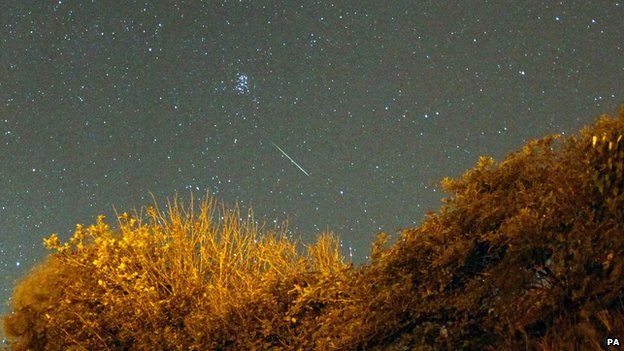
Time exposure photograph of polar stars during a meteor shower.
Time exposure photograph of polar stars during a meteor shower
Up to 100 shooting meteors an hour will streak across the sky in the beautiful natural firework show, visible around the world.
Those hoping to catch a glimpse of the shower shouldn't be disappointed this year.
Astronomers say they're expecting extra-dark skies which will create perfect stargazing conditions.
The Perseids
Up to 100 shooting meteors per hour will streak across the sky

What causes the Perseid meteor shower?

The Perseids are actually tiny pieces of the Swift-Tuttle comet that can be seen every year when the Earth passes through a cloud of the comet's debris.
They're bits of ice and dust, which can be as small as a grain of sand or as big as a pea.
The fragments were left behind when Swift-Tuttle passed close to Earth in 1992.
The meteors appear to come from a point in the constellation of Perseus, hence the name Perseid.
They hit the Earth's atmosphere at a whopping speed of 134,000 mph, but don't pose any danger to us on Earth.
Perseid meteor shower
It's best to find a wide open space away from tall buildings, trees and artificial light

When and how can I see it?

The celestial show is expected to hit its peak overnight on Wednesday.
Unlike some other cosmic events, spectators don't need special technology to watch the Perseids unfold.
It's best to find a wide open space away from tall buildings or trees, and with as little light as possible. The more of the sky you can see, the better.
This year the Moon's glow will not interfere with meteor-watching, as it will be approaching its darkest or "new" phase, experts say.
From CBBC newsround

Sunday, August 09, 2015

Panama Canal to limit ship draft due to drought

The Panama Canal Authority says it will temporarily cut the draft of ships allowed through because of drought caused by El Nino.

A ship at the Panama Canal
The Panama Canal is a key route in global shipping

From 8 September, the maximum draft - or depth in the water - will be cut to 39ft (11.89m), which may affect up to 20% of traffic.
A similar restriction was imposed for the same reason in 1998.
The authorities say a further cut could be imposed on 16 September if the situation does not improve.
The authority has taken the action because water levels in the Gatun and Alhajuela lakes has reduced as a result of the El Nino weather phenomenon.
The current draft limit is 39.5ft, which will be cut to 39ft on 8 September and then potentially to 38.5ft on 16 September.
Shipping companies had been warned the cuts could be coming.
The Panama Canal celebrated its 100th anniversary last year, having seen more than a million ships pass through.
Panama took control of the canal from the US in 2000, and has since been widely praised with the way it has handled the operation.
Transit fees now bring in about $1bn (£645m) a year for the government.
Map
From BBC News
Watch this video and you'll find out the great importance of this canal


Monday, August 03, 2015

New York's Empire State Building hosts wildlife display

New York's famous Empire State Building had images of endangered animals flashed across its walls this weekend.

Images on Empire State Building

The aim was to raise awareness about these animals and risks of extinction.
Pictures of snow leopards, tigers and various animals were shown on the 381m high skyscraper.
An image of Cecil the lion, who died last month in Zimbabwe, Africa, was also displayed.

Cecil the lion projected on to Empire State
Cecil the lion projected on to Empire State building
People watch a projection on the Empire State Building
Crowds of people came to watch and take photos

Images of animals on Empire State Building


From CBBC Newsround

Tuesday, July 28, 2015

Ria Formosa Natural Park- Algarve, Portugal


There are many wild and interesting places to visit in the Algarve, but this is my favourite nature reserve in the region.
Although Parque Natural da Ria Formosa Centre is not signed from any direction and is difficult and frustrating to find, this important wildlife site (it is designated under the RAMSAR convention as a wetlands reserve of worldwide signficance) is very well worth a visit. It took us four attempts on separate visits to the Algarve to finally find it, and as we were travelling from the mid-Algarve by car, our wandering cannot be described as an environmentally-friendly activity, but it was worth the effort.


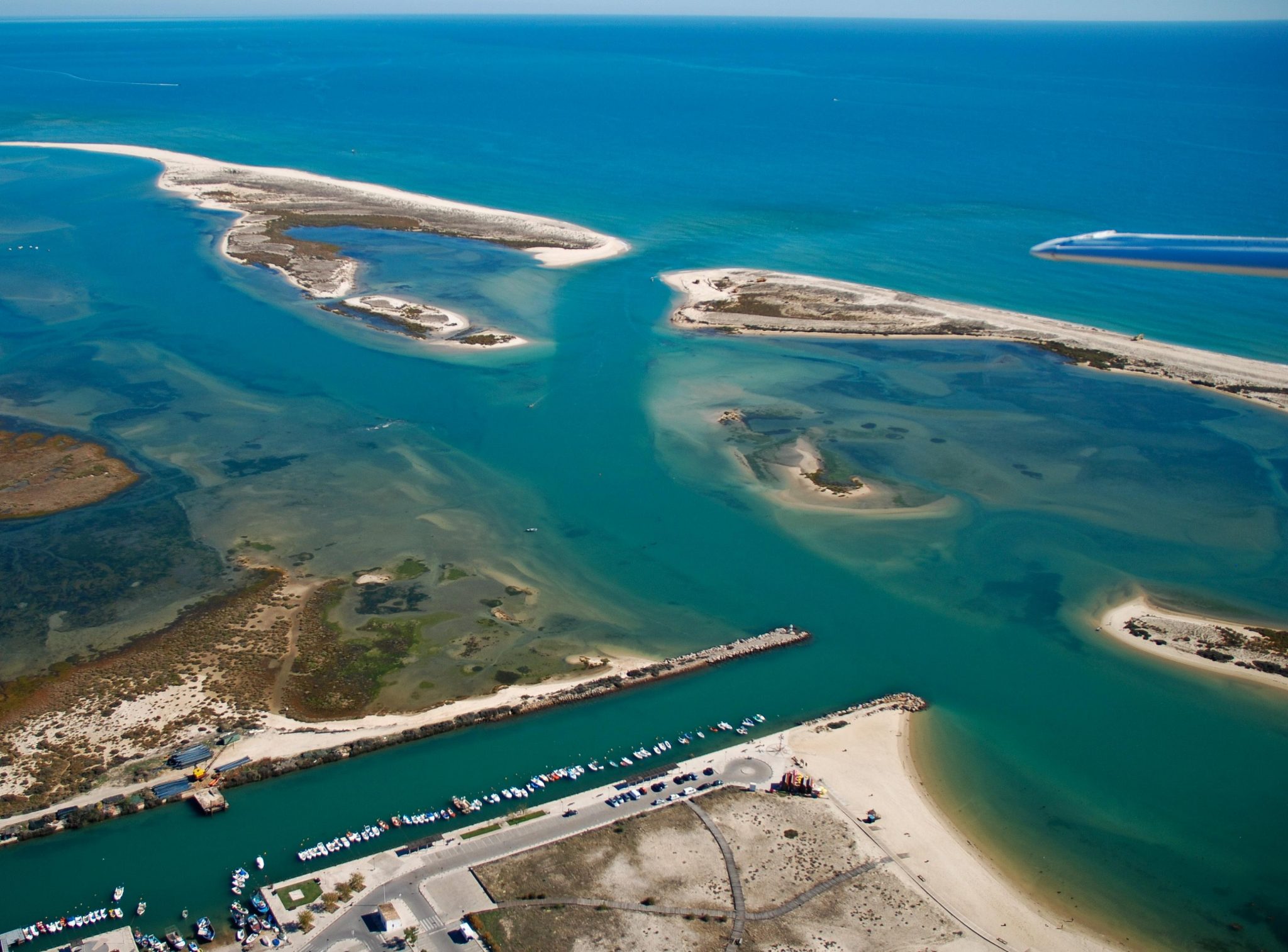
The Ria Formosa lagoon, located in the Algarve, in southern Portugal, is a system of barrier islands that communicates with the sea through six inlets. Five of these inlets are natural and have mobility characteristics. The sixth is an artificial inlet that was opened with the purpose of allowing easier access to the port of Faro, the capital of the Algarve.
Presently the main inlet of the system is the Faro-Olhão inlet, which was artificially opened. The process started in 1927 but only in 1952 were the engineering works completed and it assumed the present configuration.
Within the Ria Formosa system, different and sometimes antagonistic uses may be found. Part of the system is a Natural Park but Ria Formosa also plays an important role in the region's economy. Beyond the tourist use the system also supports other economic activities like seafood farms (including grooved carpet shell harvesting) and the port of Faro.
The Ria Formosa is also a designated Natural Park of over 170 km² and a stopping place for hundreds of different birds during the spring and autumn migratory periods.
It is also a reserve for various animal and plant species which can be  watched
in birdwatching programmes


The most important cities near the Ria Formosa are Tavira, Faro and Olhão.
There are also some towns in this area, whose names are: Fuzeta (which belongs to the municipality of Olhão), Santa Luzia, Cabanas de Tavira (these last two belonging to Tavira) and Cacela Velha (which belongs to Vila Real de Santo António).
Several buses run from Tavira to Cabanas and back each weekday, but there are no buses on Saturday afternoons nor all day Sundays and Holidays, even in summer. The nearest train station is in nearby Conceição which is on the Tavira to Vila Real line. That's about 1 mile /1.6km and an easy walk. 
Classified as a Natural Park in 1987, the Ria Formosa encompasses an area of about 18 000 hectares, and is protected from the sea by 5 barrier-islands and 2 peninsulas: the Peninsula of Ancão that the locals call island of Faro, the Barreta Island also known as Ilha Deserta, the Culatra Island (where the lighthouse of Santa Maria is located), the Island of Armona, the Island of Tavira, Cabanas Island and, finally, the Peninsula of Cacela. This awesome area extends along the leeward coast of the Algarve through the municipalities of Loulé, Faro, Olhão, Tavira and Vila Real de Santo António. 

Commercial activities like salt extraction and shellfish farming are quite important for the local populations. For instance the Ria Formosa is responsible for approximately 60% of the total of shellfish produced in the country.

Shellfish of every kind are found in Ria Formosa and a festival is held in Faro every year in summer


Sources.

Saturday, July 25, 2015

Iberian lynx returns to Spain from verge of extinction

An intense conservation campaign has brought the Iberian lynx back to the south of Spain from the verge of extinction barely 10 years ago, Guy Hedgecoe reports from Spain.
Female lynx with cubs (July 2015)
On it they watch an Iberian lynx cub learn to hunt by playing with a domestic rabbit in one of the centre's compounds. The lynx, the size of a small cat, is only a few weeks old but already has the sharply pointed ears and mottled fur that make the species so recognisable.
It swipes playfully at the rabbit with its paws, but still has a long way to go before it graduates to killing its own prey.
When it does, it will probably be released into the wild, following in the tracks of many other animals born in captivity here.
Just over a decade ago, the Iberian lynx, also known as Lynx pardinus, was on the verge of extinction, with only 90 animals registered, in the Andujar and Donana areas of southern Spain.

'Saving the species'

But an intense campaign over recent years has brought it back from the brink, with 327 lynxes believed to be roaming southern, central and western Spain, as well as parts of Portugal, last year.
Lynx in Donana national park
It is feared that rabbit haemorrhagic disease, a highly contagious virus, may harm the comeback of lynxes
Inside La Olivilla lynx breeding centre control room

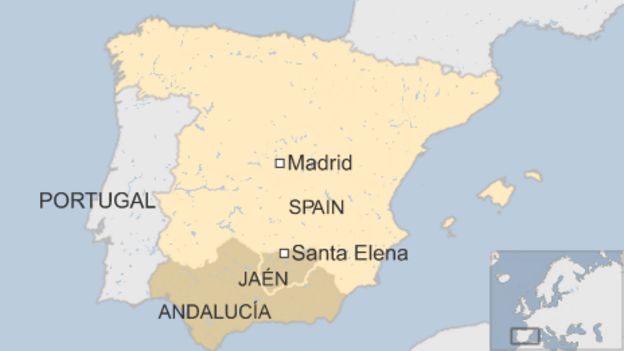
The La Olivilla lynx breeding centre in Santa Elena is at the forefront of the conservation programme

"We're on the way to saving the species," says Miguel Simon, director of the Iberlince lynx conservation programme.
"Losing this unique natural treasure would have been as bad for us as losing the Great Mosque in Cordoba or the Alhambra in Granada."
In June, the International Union for the Conservation of Nature (IUCN) improved the status of the Iberian lynx from "critically endangered" to "endangered". In its appraisal, the organisation saw the mammal's recovery as "excellent proof that conservation really works".
Around 140 specimens have been released into the wild, with the Iberian wildcat programme borrowing reintroduction techniques used by German conservationists.

Not all good news

But this success has not been cheap. Between 2002 and 2018, the programme will have received €69m (£49m; $76m) in funding, mainly from the European Union.
Much of that money has gone into three breeding centres in Spain, including in Santa Elena and one in Portugal.
Lynx undergoing treatment
Last year 22 lynxes were killed by vehicles on Spanish roads
Veterinarian Maria Jose Perez (left) and Miguel Simon (right) at La Olivilla breeding centre (July 2015)
Miguel Simon (right) - seen here with veterinarian Maria Jose Perez at La Olivilla breeding centre - says forecasts of the imminent demise of lynxes are "alarmist"
A lynx cub (July 2015)

Some wonder whether the IUCN was right to take the lynx off the "critically endangered" list

Teresa del Rey Wamba, a veterinarian who works on the conservation programme in southern Spain, says that prior to the animal's recent comeback, a lack of appropriate prey was a major problem, as was illegal hunting.
Clamping down on poaching and encouraging the growth of rabbit populations - the lynx's favoured food - were therefore key, with private landowners, local governments and hunting federations all supporting the programme.
But it is not all good news. Last year, 22 lynxes were killed by vehicles on Spanish roads.
Map
Miguel Simon says that while this is a problem, it also reflects how the lynxes' movement has increased as their numbers have risen.
His team has overseen the installation of underground tunnels, custom-built for the animals to cross busy roads, and more are planned.
Of greater concern however is a recent outbreak across southern Europe of rabbit haemorrhagic disease, a highly contagious virus that has been killing off the lynxes' staple diet since 2011 and reducing their reproductive rate.
In light of this threat, the IUCN decision to take the lynx off the "critically endangered" list was incorrect, according to Emilio Virgos, a lynx expert at Rey Juan Carlos University in Madrid.
"If all the data we have so far about how lynxes live and survive and reproduce are correct, and we have no reason to think otherwise, the number of lynxes… will drop drastically," he says of the outlook for the next few years.
He warns that extinction is still a possibility within decades.

line break

What is a lynx?

  • A medium-sized cat which lives in the wild
  • There are four different species - Eurasian, Iberian, Canada and Bobcat
  • The Eurasian lynx is the biggest - about 60cm tall - roughly the same size as a Labrador
  • The Iberian lynx is one of the rarest smaller wildcats in the world - mainly found in parts of Spain and Portugal
  • The Bobcat is found in North America while the Canada lynx lives in Canada and Alaska
  • Most lynxes are listed as threatened or endangered and are prized by poachers for their fur
  • Lynxes are usually only active at night and hunt deer, rabbits and hares for food

line break

While Mr Simon is worried about the rabbit virus, he describes such forecasts as "alarmist" and points to an emergency plan to boost rabbit numbers. Its success, he says, will depend in great part on continued funding.
"The battle for conservation of the lynx is never-ending," he says.
From BBC News Science/Environment

Tuesday, March 03, 2015

Woodpecker flies with a weasel on its back

Amazing wonders of Mother-Nature!

Woodpecker flying with weasel on back, Hornchurch Essex
Martin Le-May saw the woodpecker with a weasel on its back

Amateur photographer Martin Le-May took this amazing pic of a weasel riding on the back of a green woodpecker as it flies through the air.

He took the photo at a park in Essex on Monday afternoon and they've since gone all over the internet. Martin told the BBC that he was out walking with his wife Ann when he saw what was happening.
"I heard a distressed squawking noise and feared the worst," he said."I soon realised it was a woodpecker with some kind of small mammal on its back."
It's likely the weasel was attacking the bird - but Martin thinks he scared it off.
Martin Le May
"I think we may have distracted the weasel as when the woodpecker landed, it managed to escape and the weasel ran into the grass.

"I'm so proud so many people are getting to see my image," he added
From CBBC Newsround.

Wikipedia

Search results