To my dear visitors and commenters

Hi, everybody! I've noticed with lots of joy and happiness, that thousands of comments have been written in my posts. It's wonderful that so may people around the world appreciate my work. Therefore, I want to thank you for that and ,at the same time I want to ask you to be this blog's followers. It's fast and easy! Make it be even more visited and spread all over the world! I'm a woman, a teacher of English in Portugal, and I've been away for quite a long time because of my father's health. Unfortunately he died from Covid19 a few months ago. Now I felt it was time to restart my activity in this and other blogs I owe. I've recently created a new one in a partnership with a street photographer, Mr. Daniel Antunes. He's fabulous! https://pandpbydandd.blogspot.com I'd like you to visit it and, who knows, become our followers. The poems, chronicles and thoughts are all mine. Thank you so much! Kisses :-)

Search This Blog

Showing posts with label Wonders of Nature. Show all posts

Sunday, March 13, 2016

Europe's rarest seabird 'faces extinction'

Europe's rarest seabird will be extinct within 60 years, according to a new analysis.

The bird breeds in caves off Mallorca

Urgent action is needed to stop the Balearic sheerwater being drowned in fishing lines and nets, say scientists.
The bird breeds in the Balearic Islands, sometimes stopping off in British waters as it migrates north.
Research shows the global population is not sustainable in the long term. There are about 3,000 breeding pairs left.
The main threat to the bird is becoming entangled in fishing gear, according to findings published in the Journal of Applied Ecology.
Other risks include hunting by the likes of cats and other small mammals.


Prof Tim Guilford of the Department of Zoology at the University of Oxford is co-researcher on the study.
He told BBC News: "The survival of adults from one year to the next and especially of young adults is much lower than we thought.
"The species is unsustainable - it is on the road to extinction."

Night fishing

Estimates suggest about half of deaths in adult birds are due to accidental capture in fishing lines and nets.
Fishing on the seabed is a particular risk as birds can become entangled and drown when lines are immersed, say researchers in the UK and Spain.
Changes such as setting fishing gear at night when the bird does not dive "could make a massive difference", said Prof Guilford.
"The science shows just how serious the problem is, but also that there is a technically simple solution - the setting of demersal long-lines at night," he added.
The Balearic shearwater (Puffinus mauretanicus) is one of the rarest seabirds in the world.
The seabird is classified as critically endangered on the IUCN Red List of species.
It breeds on cliffs and small islets and lays only one egg.
From BBC News-Science / Environment

Saturday, September 26, 2015

Efforts to save Great Barrier Reef 'too slow'

Efforts to try to save the Great Barrier Reef from pollution aren't happening quickly enough, according to top politicians in Australia.

A report by the Queensland government says the Great Barrier Reef is in poor condition because of chemicals, used by farmers to help their crops grow, entering into the sea.
When it rains the chemicals run off the land in the rainwater, flowing into rivers that end up in the sea.
Once in the sea the chemicals damage the coral and threaten certain species of fish by making the levels of acid in the water go up and the oxygen levels, needed for sea creatures to breathe, go down.
The Great Barrier Reef is the world's largest coral reef system covering 1,600 miles along Australia's north east coast.
The government in Queensland say more work needs to be done urgently with farmers to cut down the use of chemicals on their crops.(CBBC Newsround)


Tuesday, July 28, 2015

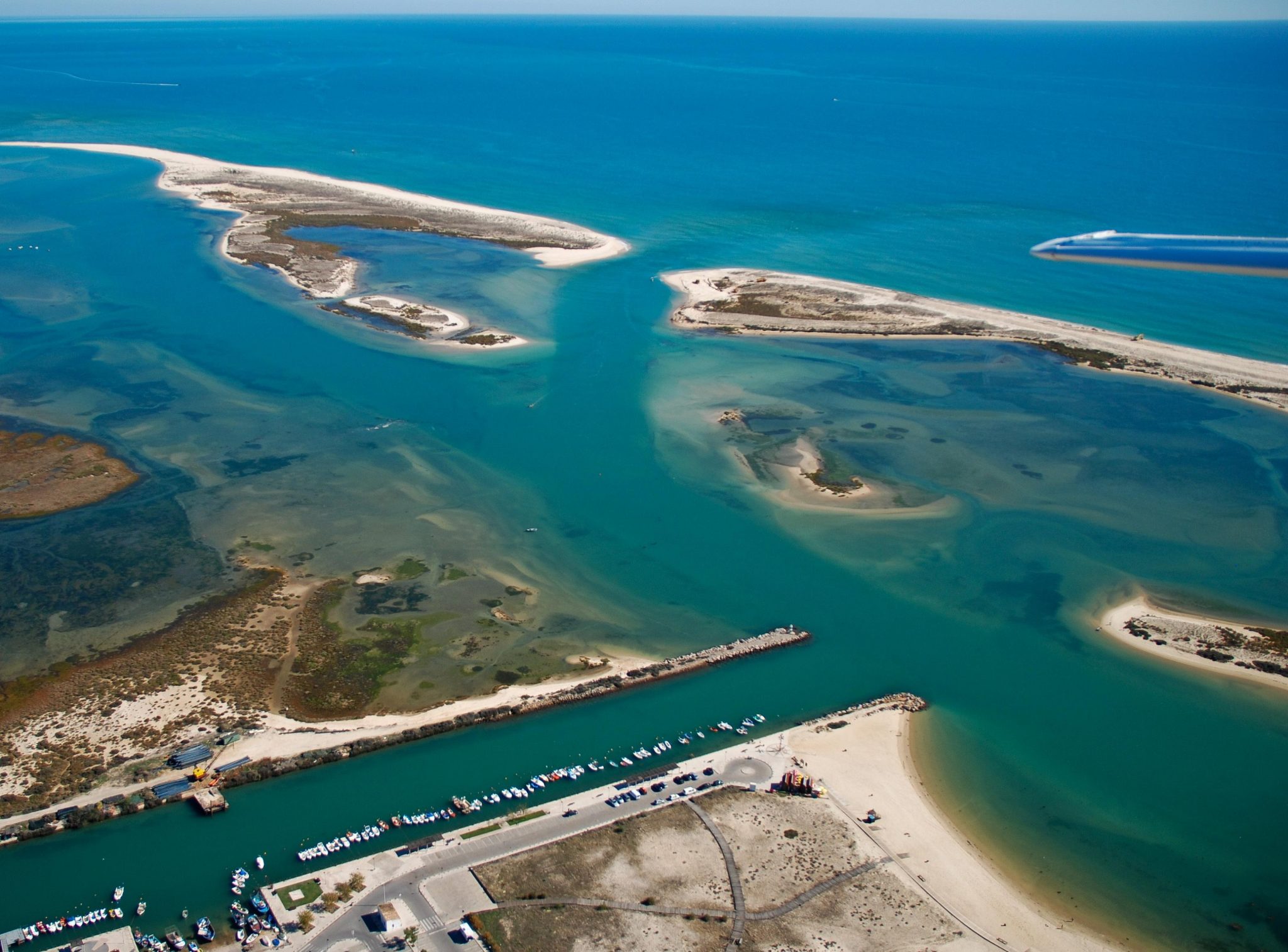
Ria Formosa Natural Park- Algarve, Portugal


There are many wild and interesting places to visit in the Algarve, but this is my favourite nature reserve in the region.
Although Parque Natural da Ria Formosa Centre is not signed from any direction and is difficult and frustrating to find, this important wildlife site (it is designated under the RAMSAR convention as a wetlands reserve of worldwide signficance) is very well worth a visit. It took us four attempts on separate visits to the Algarve to finally find it, and as we were travelling from the mid-Algarve by car, our wandering cannot be described as an environmentally-friendly activity, but it was worth the effort.


The Ria Formosa lagoon, located in the Algarve, in southern Portugal, is a system of barrier islands that communicates with the sea through six inlets. Five of these inlets are natural and have mobility characteristics. The sixth is an artificial inlet that was opened with the purpose of allowing easier access to the port of Faro, the capital of the Algarve.
Presently the main inlet of the system is the Faro-Olhão inlet, which was artificially opened. The process started in 1927 but only in 1952 were the engineering works completed and it assumed the present configuration.
Within the Ria Formosa system, different and sometimes antagonistic uses may be found. Part of the system is a Natural Park but Ria Formosa also plays an important role in the region's economy. Beyond the tourist use the system also supports other economic activities like seafood farms (including grooved carpet shell harvesting) and the port of Faro.
The Ria Formosa is also a designated Natural Park of over 170 km² and a stopping place for hundreds of different birds during the spring and autumn migratory periods.
It is also a reserve for various animal and plant species which can be  watched
in birdwatching programmes


The most important cities near the Ria Formosa are Tavira, Faro and Olhão.
There are also some towns in this area, whose names are: Fuzeta (which belongs to the municipality of Olhão), Santa Luzia, Cabanas de Tavira (these last two belonging to Tavira) and Cacela Velha (which belongs to Vila Real de Santo António).
Several buses run from Tavira to Cabanas and back each weekday, but there are no buses on Saturday afternoons nor all day Sundays and Holidays, even in summer. The nearest train station is in nearby Conceição which is on the Tavira to Vila Real line. That's about 1 mile /1.6km and an easy walk. 
Classified as a Natural Park in 1987, the Ria Formosa encompasses an area of about 18 000 hectares, and is protected from the sea by 5 barrier-islands and 2 peninsulas: the Peninsula of Ancão that the locals call island of Faro, the Barreta Island also known as Ilha Deserta, the Culatra Island (where the lighthouse of Santa Maria is located), the Island of Armona, the Island of Tavira, Cabanas Island and, finally, the Peninsula of Cacela. This awesome area extends along the leeward coast of the Algarve through the municipalities of Loulé, Faro, Olhão, Tavira and Vila Real de Santo António. 

Commercial activities like salt extraction and shellfish farming are quite important for the local populations. For instance the Ria Formosa is responsible for approximately 60% of the total of shellfish produced in the country.

Shellfish of every kind are found in Ria Formosa and a festival is held in Faro every year in summer


Sources.

Saturday, June 06, 2015

Roadside verges 'last refuge for wild flowers'

More than 700 species of wild plants - almost half of the native flora of the British Isles - are found on road verges, according to a study.

Pyramidal orchid on the roadside
Many plants once found in meadows now only thrive beside roads, where they provide essential habitat for insects, says charity Plantlife International.
But it says one in 10 of the plants is at risk of extinction, in part because councils cut verges too early.
Local authorities say shorter verges are safer for drivers and pedestrians.
Dr Trevor Dines, botanical specialist for the charity, said more than 97% of meadows had been destroyed in England since the 1930s, with road verges becoming the last stretches of natural habitat for wildlife such as bees and other insects.
Cow parsley
Road verges can be a haven for wild plants like cow parsley
"Most of our farmland is now hostile to many of our wild plants and other wildlife due to the loss of wild flower meadows and the use of herbicides and fertilisers," he told BBC News.
"The roadside verges are often the last refuge for wild flowers and the wildlife there depends on them.
"It's almost as if plants have been squeezed out of farmland and now they're being squeezed out of road verges from bad management."
The Local Government Association has said keeping road verges well-maintained means motorists have a good line of sight and allows pedestrians to walk more safely alongside busy roads.

Full flower


Bluebells
Around one in ten of these wild plants is threatened with extinction

Plantlife International says road verges are of particular importance to rare plants such as Deptford pink, tower mustard and spiked rampion.
They also act as wildlife corridors and provide pollen and nectar for bees, butterflies and moths.
The wild plant conservation charity says many of Britain's road verges are being cut down in full flower threatening the wildflowers and the wildlife that depends on them.
It is calling on members of the public to sign a petition urging councils to do more to enhance the wildlife value of road verges.

Its management principles for road verges include:
  • Allowing plants to complete their full life cycle, ie to grow, flower and set seed
  • Removing grass cuttings
  • Allowing flowers to return over time as they spread naturally.
Dr Dines added: "If we just give them a chance, wildflowers can return."

From BBC Science/Environment

Tuesday, March 03, 2015

Woodpecker flies with a weasel on its back

Amazing wonders of Mother-Nature!

Woodpecker flying with weasel on back, Hornchurch Essex
Martin Le-May saw the woodpecker with a weasel on its back

Amateur photographer Martin Le-May took this amazing pic of a weasel riding on the back of a green woodpecker as it flies through the air.

He took the photo at a park in Essex on Monday afternoon and they've since gone all over the internet. Martin told the BBC that he was out walking with his wife Ann when he saw what was happening.
"I heard a distressed squawking noise and feared the worst," he said."I soon realised it was a woodpecker with some kind of small mammal on its back."
It's likely the weasel was attacking the bird - but Martin thinks he scared it off.
Martin Le May
"I think we may have distracted the weasel as when the woodpecker landed, it managed to escape and the weasel ran into the grass.

"I'm so proud so many people are getting to see my image," he added
From CBBC Newsround.

Friday, February 06, 2015

Galapagos emergency over stranded ship

Ecuador has announced a state of emergency in the Galapagos Islands, a week after a cargo ship with hazardous materials ran aground there.

A Galapagos giant tortoise. File photo
The Galapagos are home to unique animal species such as the giant tortoise

The Floreana - which ferries food and other supplies to the Unesco world heritage site - was also carrying 45,000 litres (10,000 gallons) of fuel.
Booms have been used to contain a fuel spill in the pristine waters.
The islands - famous for their unique flora and fauna - lie some 1,000km (600 miles) off Ecuador's Pacific coast.
The emergency "will allow authorities to have immediate [financial] means to deal with the situation", a Galapagos National Park spokesman told the AFP news agency.
The ship's hull was reportedly destroyed in the incident on 28 January.
Rescue teams are now trying to refloat and remove the vessel.
This is not the first such incident. Last year, another cargo ship ran aground.
And in 2001, an oil spill devastated marine iguana populations.
From BBC News

Saturday, January 24, 2015

The Great Barrier Reef- Australia

locator map of Queensland

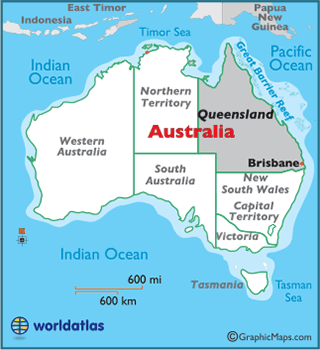
The Great Barrier Reef is the world's largest coral reef system composed of over 2,900 individual reefs and 900 islands stretching for over 2,300 kilometres (1,400 mi) over an area of approximately 344,400 square kilometres (133,000 sq mi). The reef is located in the Coral Sea, off the coast of Queensland, Australia.


The Great Barrier Reef can be seen from outer space and is the world's biggest single structure made by living organisms. This reef structure is composed of and built by billions of tiny organisms, known as coral polyps. It supports a wide diversity of life and was selected as a World Heritage Site in 1981. CNN labeled it one of the seven natural wonders of the world. The Queensland National Trust named it a state icon of Queensland.


A large part of the reef is protected by the Great Barrier Reef Marine Park, which helps to limit the impact of human use, such as fishing and tourism. Other environmental pressures on the reef and its ecosystem include runoff, climate change accompanied by mass coral bleaching, and cyclic population outbreaks of thecrown-of-thorns starfish. According to a study published in October 2012 by the Proceedings of the National Academy of Sciences, the reef has lost more than half its coral cover since 1985.
The Great Barrier Reef has long been known to and used by the Aboriginal Australian and Torres Strait Islander peoples, and is an important part of local groups' cultures and spirituality. The reef is a very popular destination for tourists, especially in the Whitsunday Islands and Cairns regions. Tourism is an important economic activity for the region, generating over $3 billion per year.
In November 2014, Google launched Google Underwater Street View in 3D of the Great Barrier Reef.
In Wikipedia

Friday, January 16, 2015

The geese that can conquer Mount Everest

Bar-headed goose in flight (Photo Nyambayar Batbayar)

A tracking study has revealed the secrets of the Himalayan flight of the bar-headed goose - the world's highest bird migration.
The geese have been recorded at heights of more than 7,000m (23,000 ft) and mountaineers have claimed they have seen the birds fly over Mount Everest.
Their ability to fly in such extreme conditions has fascinated scientists for decades, as the BBC's science reporter Victoria Gill reports. (BBC News)


A pale grey goose with an orange beak and legs and two striking black bars on the head. It lives in central Asia. It is monotypic (males and females look the same) and mates for life.
The bar-headed goose is famous as it is widely believed to make the highest altitude migration on earth. While there was an anecdotal report of a flock of bar-headed geese being heard flying over Mt Makalu (the fifth highest mountain on earth), an unconfirmed report of them being seen flying over Everest has become legend. Such a migration would be incredibly demanding – at altitude the ambient pressure is dramatically reduced, meaning that there is less oxygen available and that the air can support less lift for flight (particularly for species that flap, like geese). This has puzzled biologists and physiologists for years:
"there must be a good explanation for why the birds fly to the extreme altitudes... particularly since there are passes through the Himalaya at lower altitudes, and which are used by other migrating bird species" Black & Tenney (1980).
As part of a large international research project, led by Bangor University and primarily supported by the BBSRC (grant BB/F015615/1) and the Max Planck Institute, bar-headed geese have now been GPS tracked flying over the Himalaya and data reveal that they do not normally fly higher than 6,300 m elevation, flying through the Himalayan passes rather than over the peaks of the mountains. This altitude is clearly still very impressive (equivalent to Everest Camp II) and challenges even the fittest human climbers. Without proper acclimatisation to such altitudes, mammals suffer from high altitude related sickness very quickly, and in some cases this can be fatal.

Bar-headed geese don’t need the wind

It has also been long believed that bar-headed geese use jet stream tail winds to facilitate their flight across the Himalaya. Surprisingly, latest research has shown that despite the prevalence of predictable tail winds that blow up the Himalayas (in the same direction of travel as the geese), bar-headed geese spurn the winds, waiting for them to die down overnight, when they then undertake the greatest rates of climbing flight ever recorded for a bird, and sustain these climbs rates for hours on end.

How can they cope?

Bar-headed geese are known to have a suite of physiological adaptations to help them deal with the low Oxygen (hypoxia) conditions at altitude:
  1. Bar-headed geese have a slightly larger wingspan and lower wing loading than other similar goose species (Lee et al. 2008), yielding greater lift and reducing the power required for flight (Pennycuick 1972).
  2. Their flight muscle is better supplied with fresh oxygenated blood than other waterfowl (Fedde et al. 1985, Snyder et al. 1984, Scott et al. 2009).
  3. Bird lungs are superior to mammalian lungs, having a counter exchange system, which extracts O2 much more efficiently (Ramirez et al. 2007) and they are larger in bar-headed geese than in other species of waterfowl (Scott et al. 2009).
  4. In hypoxic conditions, bar-headed geese can hyperventilate 7.2 times faster than their rate at sea level, and suffer no ill effects as a result of this (which increases blood pH – in humans this makes us restrict blood flow to the brain, causing a dizzy sensation).
  5. Bar-headed geese can also increase cardiac output (heart rate and volume of blood pumped) in hypoxia to 5 times the rate at sea-level when resting (Black & Tenney 1980, although note this can also occur in low altitude bird species too).
  6. Their haemoglobin is also adapted to load more O2 to the blood than most other vertebrates (Hiebl & Braunitzer 1988, Weber et al 1993, Liang et al. 2001).

More information


Wikipedia

Search results