To my dear visitors and commenters

Hi, everybody! I've noticed with lots of joy and happiness, that thousands of comments have been written in my posts. It's wonderful that so may people around the world appreciate my work. Therefore, I want to thank you for that and ,at the same time I want to ask you to be this blog's followers. It's fast and easy! Make it be even more visited and spread all over the world! I'm a woman, a teacher of English in Portugal, and I've been away for quite a long time because of my father's health. Unfortunately he died from Covid19 a few months ago. Now I felt it was time to restart my activity in this and other blogs I owe. I've recently created a new one in a partnership with a street photographer, Mr. Daniel Antunes. He's fabulous! https://pandpbydandd.blogspot.com I'd like you to visit it and, who knows, become our followers. The poems, chronicles and thoughts are all mine. Thank you so much! Kisses :-)

Search This Blog

Showing posts with label Important measures to preserve nature. Show all posts

Thursday, April 07, 2016

The island in Cancun built on recycled plastic bottles

A British man in the Mexican tourist area of Cancun is looking to get legal recognition for the island home that he has built almost entirely out of recycled materials.
Richard Sowa created the island in 2007 out of reclaimed wood, held up on a bed of thousands of empty plastic drinks bottles.
He says it is ''a way of turning the trash of the world into paradise''. (from BBC News)


Cutting food and carbon waste-lines for healthy climate

Reducing food waste and changing the way people consume calories will help deliver a sustainable food system and reduce emissions, a study suggests.

Food in a waste bin (Image: BBC)

An estimate one third of all food produced remains uneaten

The global demand for food could more than double by the middle of the century, yet an estimated one third of produce is lost or wasted each year.
By cutting this waste will help food security and reducing agriculture's climate burden, the researchers added.
As the global human population is set to reach in excess of nine billion people by the middle of this century, up from the current seven billion, the importance of reducing food loss and waste in order to deliver food security is well documented.
However, a team of scientists have also considered what steps need to be taken to tackle food production's contribution to global carbon emissions.
Fruit stall, Cairo (Image: BBC)
Shifts in lifestyle and diet is increasing the global impact of the food sector
Prof Jurgen Kropp from the Potsdam Institute for Climate Impact Research, Germany, one of the study's co-authors said that previous studies had highlighted that "agriculture was playing an increasingly important role when it came to carbon dioxide emissions".
"We have worldwide lifestyle changes where people are moving towards a meat-rich diet and we need more food, of course," he told BBC News.
"The more rich a country becomes, there is a move towards more meat-rich diets and, of course, more calorie-rich diets.
"For one calorie of meat, you have to utilise one to eight calories of cereal. It is an inefficient form of food production," he observed.
"On the other hand, rich countries are wasting more food. A lot of the food we are producing at the moment, we do not see on our plates."
Prof Kropp added that this trend was projected to have a considerable impact on the global carbon budget by the middle of the 21st Century.
They calculated that about 10% of global greenhouse gas emissions from agriculture could be traced back to food waste by 2050.
However, the team examined past datasets and used future scenarios to identify pathways that could deliver improvements in food security and CO2 emissions.
Butcher shop display (Image: BBC)
As people around the globe shift to more meat-rich diets, emissions from agriculture continue to rise
The team observed: "The global food requirement changed from 2,300 [calories per person each day] to 2,400 [calories per person each day] during the past 50 years, while the food surplus grew from 310 [calories per person each day] to 510 [calories per person each day]."
Over the same period, the team found that greenhouse gas emissions associated with food surplus increased from 130 million tones of CO2 equivalent per year to 530 million tonnes - an increase of more than 300%.
Future scenarios did not make comfortable reading. They calculated that emissions associated with the food wasted may "increase tremendously" to up to 2.5 giga-tonnes of CO2 equivalent per year.
Prof Kropp added: "As many emerging economies like China or India are projected to rapidly increase their food waste as a consequence of changing lifestyle, increasing welfare and dietary habits towards a larger share of animal-based products, this could over proportionally increase greenhouse-gas emissions associated with food waste [while] undermining efforts for an ambitious climate protection.
"Avoiding food loss could pose a leverage to various challenges at once, reducing environmental impacts of agriculture, saving resources used in food production, and enhance local, regional, and global food security."
From BBC News Science / Environment

Saturday, April 02, 2016

Number of wild tigers could treble

The number of tigers living in the wild could rise in the next 20 years.

Tiger
At the moment there are only around three-thousand wild tigers living in Asia. The WWF believe that's 97% fewer than there were 100 years ago. Now experts say that number could treble if action is taken to protect their habitats.
Tiger yawning
Tigers can be found in 13 different countries around the world
Tiger populations have been affected by hunting, poaching and the loss of their habitats, to make way for roads, railways and towns.
Four of the sub-species of tigers are thought to be endangered and two are listed as 'critically' threatened.
Tiger skins
Tigers are poached for their skin, which some people use as decoration or rugs
But experts in the US say the population could grow.
A team at the University of Minnesota in the US have studied satellite images of places where tigers live, like forests.
The technology has helped identify specifically where tigers are losing their habitat.
They say that if the animals are given special 'corridors' or areas to make their territory bigger, the numbers could treble.
Dr Anup Joshi said: " Enough wild habitat remains to allow a range-wide doubling of the wild tiger population."
"The global population could approach a trebling in the next two decades." he added.
From CBBC Newsround

Friday, April 01, 2016

Climate predicts bird populations

Populations of the most common bird species in Europe and the US are being altered by climate change, according to an international study.

Bee-eater (c) Harvey van Diek
Bee-eaters seem to be benefitting from climate change, increasing their population in Europe in recent years

For the first time researchers showed climate to be having a similar, significant impact on bird populations in large, distant areas of the world.
Their study used population-predicting models and three decades of field data, gathered by bird-watching volunteers.
The findings are published in the journal Science.
Led by Durham University scientists, the team developed models that related each species' habitat to long-term climate patterns.
Using annual climate records - from 1980 to 2010 - these models were able to predict where a species had experienced an improvement or a decline in suitable climate.
Wren (c) Steve Willis/Durham University
Climate is remapping habitat for many familiar birds, such as the wren

"We then had this amazing data set collected by thousands of volunteers over decades - where people have gone out and counted birds across different countries in Europe and the United States," explained lead researcher Dr Stephen Willis.
"We can use that to see to what extent our predictions match what people are finding on the ground."
The outlook is different for each species. Increasing temperatures in the UK, for example, allow some species to expand their range and increase their population, while the same temperature patterns have made the UK a less suitable habitat for others.
But the overall trends, this study shows, are strikingly similar in the US and Europe; populations are increasing in species predicted to benefit from climate change and decreasing in those predicted to be negatively affected.
"One important thing is that we're looking at the most common birds," said Dr Willis. "These birds are doing a lot of good in the countryside - eating crop pests and helping our ecosystems work.
"So we need to understand how they'll respond."

Shifting flocks


American Robin (c) US Fish and Wildlife Service
The American robin has declined in some southern states, but increased further north.

The research shows how the climate is gradually remapping the avian habitat across two continents.
In Europe, for example, birds such as the wren have been increasing in northern areas as winters become milder, but declining in some southern countries. The American robin has declined in some southern states, but increased further north.
"This is really the first time anyone's ever looked at changes in climate across two really extensive parts of the world," said Dr Willis. "So we're getting an idea that [the impacts of] climate change on wildlife are more far-reaching than individual countries."
David Noble from the British Trust for Ornithology, who was also involved in the study, told BBC News that the findings highlighted the value of such extensive data sets generated by volunteers.
"The similarities in results between the two continents, despite very big differences in their landscapes, geographic barriers and patterns of vegetation, are compelling evidence for the climate change effects," he added.
Dr Willis agreed, saying: "This is work carried out by thousands upon thousands of volunteers; it really demonstrates the power of citizen science."
The study was carried out in partnership with the RSPB and United States Geological Survey (USGS).
From BBC News- Science/ Environment


Monday, March 28, 2016

Ash tree set for extinction in Europe

The ash tree is likely to be wiped out in Europe, according to a review of the evidence.

Ash tree with suspected dieback
The chalara dieback has devastated ash trees across Europe

The trees are being killed off by the fungal disease ash-dieback along with an invasive beetle called the emerald ash borer.
According to the research, published in the Journal of Ecology, the British countryside will never look the same again.
The paper says that the ash will most likely be "eliminated" in Europe.
This could mirror the way Dutch elm disease largely wiped out the elm in the 1980s.
Ash trees are a key part of the treescape of Britain. You don't have to go to the countryside to see them. In and around towns and cities there are 2.2 million. In woodland, only the oak is more common.
However, according to a review led by Dr Peter Thomas of Keele University and published in the Journal of Ecology, "between the fungal disease ash dieback and a bright green beetle called the emerald ash borer, it is likely that almost all ash trees in Europe will be wiped out - just as the elm was largely eliminated by Dutch elm disease".
Ash dieback, also known as Chalara, is a disease that was first seen in Eastern Europe in 1992. It now affects more than 2 million sq km, from Scandinavia to Italy.

Thursday, March 24, 2016

Turtles in trouble as warming beaches turn eggs female

Can you imagine if the temperature decided whether you were born a girl or a boy?
Well that's exactly what happens with turtles.
But experts in Australia are now worried that rising temperatures over time could cause chaos for turtle populations by creating too many female turtles.

From CBBC Newsround


Researchers investigating the impact of rising temperatures on sea turtles are travelling to some of the most remote beaches in Australia to work out which populations are at risk of being feminised into extinction.
In a phenomenon being seen worldwide, warming temperatures are resulting in an increasing number of turtle eggs hatching female.
The race is now on to work out which rookeries are most at risk in Australia, with a University of Western Australia (UWA) team focused on turtle breeding areas on the Kimberley coast.

"This is very fundamental research, and will give us insights fifty years ahead about whether sex ratios will change, where distributions might shift to, and what impact climate change is going to have," team leader Nicki Mitchell said.
Blair Bentley holding a baby turtle on a beach on the Kimberley coast.
The tipping point for sex determination in turtles is thought to be just over 29 degrees Celsius. If the beach sand is any warmer the incubating eggs will hatch female, however if it is any cooler, the hatchlings will be male.
The problem is that beaches are heating up across much of the globe, and that could have big implications for turtle rookeries.
Researcher Blair Bentley said whole populations could be at risk.
"If it keeps getting warmer there are going to be more females being produced, and over time the males will keep dying at a greater rate than they are being replenished, so it's what's called demographic collapse," he said.
"There might still be males in the population, but there'll be far more females, and reproductive success will go down significantly."

Sunday, March 13, 2016

Europe's rarest seabird 'faces extinction'

Europe's rarest seabird will be extinct within 60 years, according to a new analysis.

The bird breeds in caves off Mallorca

Urgent action is needed to stop the Balearic sheerwater being drowned in fishing lines and nets, say scientists.
The bird breeds in the Balearic Islands, sometimes stopping off in British waters as it migrates north.
Research shows the global population is not sustainable in the long term. There are about 3,000 breeding pairs left.
The main threat to the bird is becoming entangled in fishing gear, according to findings published in the Journal of Applied Ecology.
Other risks include hunting by the likes of cats and other small mammals.


Prof Tim Guilford of the Department of Zoology at the University of Oxford is co-researcher on the study.
He told BBC News: "The survival of adults from one year to the next and especially of young adults is much lower than we thought.
"The species is unsustainable - it is on the road to extinction."

Night fishing

Estimates suggest about half of deaths in adult birds are due to accidental capture in fishing lines and nets.
Fishing on the seabed is a particular risk as birds can become entangled and drown when lines are immersed, say researchers in the UK and Spain.
Changes such as setting fishing gear at night when the bird does not dive "could make a massive difference", said Prof Guilford.
"The science shows just how serious the problem is, but also that there is a technically simple solution - the setting of demersal long-lines at night," he added.
The Balearic shearwater (Puffinus mauretanicus) is one of the rarest seabirds in the world.
The seabird is classified as critically endangered on the IUCN Red List of species.
It breeds on cliffs and small islets and lays only one egg.
From BBC News-Science / Environment

Friday, February 26, 2016

How Northern European waters soak up carbon dioxid

The seas around the UK and the rest of northern Europe take up a staggering 24 million tonnes of carbon each year.

Stormy waters
Colder, stormy waters at higher latitudes tend to take up most carbon dioxide
It is a mass equivalent to two million double-decker buses or 72,000 747 jets.
The number was produced by scientists studying the movement of carbon dioxide into and out of the oceans.
The team, led by Heriot-Watt University and Exeter University, has produced a software "engine" that will allow other scientists to do the same for different parts of the globe.
"It's a software toolbox essentially, that we've made available," said Exeter's Jamie Shutler.
"We've used it for our own work. We've done extensive checking, and now we're putting it out there for everyone else to use."
The amount of carbon dioxide absorbed by seawater acts as a moderator in the climate system.
It is estimated that a third of all human-produced CO2 emissions, from fossil fuel burning and the like, ends up in the oceans. Another third is taken up by land "sinks", with the rest remaining in the atmosphere.
Researchers are keen to understand how this budget might change over time.
Study
From  BBC News

Wednesday, February 17, 2016

Banned pollutant PCB threatens Europe's whales

Scientists are warning that a banned pollutant could wipe out Europe's killer whales and dolphins.The use of the PCB chemical was prohibited from the 1980s but it still exists in the environment. (BBC News)


polychlorinated biphenyl (PCB) is a synthetic organic chemical compound ofchlorine attached to biphenyl, which is a molecule composed of two benzene rings. There are 209 configurations of organochlorides with 1 to 10 chlorine atoms. The chemical formula for a PCB is C12H10−xClx. Of the different PCB arrangements and orientations 130 are used commercially.
Polychlorinated biphenyls were widely used as dielectric and coolant fluids in electrical apparatus, cutting fluids for machining operations, carbonless copy paper and in heat transfer fluids. Because of PCBs' environmental toxicity and classification as a persistent organic pollutant, PCB production was banned by the United States Congress in 1979 and by the Stockholm Convention on Persistent Organic Pollutants in 2001. The International Research Agency on Cancer (IRAC), rendered PCBs as definite carcinogens in humans. According to the U.S. Environmental Protection Agency (EPA), PCBs cause cancer in animals and are probable human carcinogens.Many rivers and buildings including schools and other sites are contaminated with PCBs, and there have been contaminations of food supplies with the toxins.
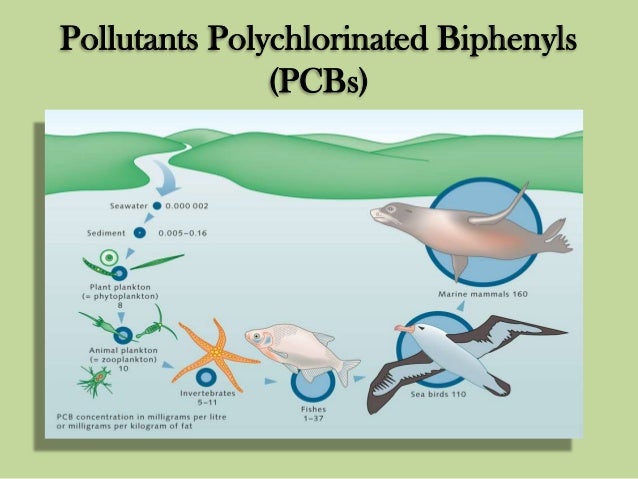
Some PCBs share a structural similarity and toxic mode of action with dioxin. Other toxic effects such asendocrine disruption (notably blocking of thyroid system functioning) and neurotoxicity are known. The maximum allowable contaminant level in drinking water in the United States is set at zero, but because of water treatment technologies, a level of 0.5 parts per billion is the de facto level.
in Wikipedia

Wednesday, February 10, 2016

The Moroccan city of Ouarzazate is powered by salt

A Moroccan city is being powered at night by solar energy, thanks to salt.

The newly-opened plant at Ouarzazate harnesses the Sun's warmth to melt salt to 500C. The salt holds its heat and powers a steam turbine in the evening.(BBC News)


The new site near the city of Ouarzazate -- famous as a filming location for Hollywood blockbusters like "Lawrence of Arabia" and "Gladiator" -- could produce enough energy to power over one million homes by 2018 and reduce carbon emissions by an estimated 760,000 tons per year, according to the Climate Investment Funds (CIF) finance group.
As His Majesty Mohammed VI of Morocco pressed a button on 4 February 2016, the first phase of the three-part project was set in motion.From CNN

Tuesday, February 09, 2016

How do you prepare orangutans to go back into the wild?

Orangutans living at a sanctuary in Indonesia are being prepared for release back into the wild.


Forest fires and poaching have led to a decrease in the population.
Some baby orangutans don't have parents to teach them how to look after themselves.
International Animal Rescue has more than 100 of the animals at its sanctuary in Ketapang in western Kaliman province.
It's set up a forest school so the oraguntans can play and learn how to survive in the wild.
It can take up to eight years for the babies to be ready to be released.
From CBBC Newsround


Friday, February 05, 2016

'Wrong type of trees' boost warming

The assumption that planting new forests helps limit climate change has been challenged by a new study.

oak tree
The replacement of broad leaf species like oak with conifers has increased warming say researchers
Researchers found that in Europe, trees grown since 1750 have actually increased global warming.
The scientists believe that replacing broadleaved species with conifers is a key reason for the negative climate impact.
Conifers like pines and spruce are generally darker and absorb more heat than species such as oak and birch.
The authors believe the work has implications for current efforts to limit rising temperatures through mass tree planting.

Management issues

Europe's green canopy was dramatically thinned between 1750 and 1850, when the forested area diminished by 190,000 sq km.
Ironically the greater use of fossil fuels, particularly coal, slowed the timber rush, and from 1850 to the present day, Europe's forests grew by some 386,000 sq km and now cover 10% more land than before the industrial revolution.
However, the form and content of these new woods differed considerably from what went before.
In the distant past, these forests ran wild - but in the modern world, some 85% of Europe's trees are managed by humans. And over the past 150 years, foresters have adopted a scientific approach to woodlands - planting faster growing, more commercially valuable trees such as a Scots pine and Norway spruce.
The rapid re-forestation of great swathes of European has generally been seen as a good thing due to the trees' ability to soak up carbon, something that has become particularly relevant in recent decades.
But the new study questions the positive impact of all these new trees on the climate.
The research team reconstructed 250 years of forest management history in Europe - and found that the way forests are controlled by humans can lead to far less carbon being stored than would have been the case when nature was in charge.
trees
Under human management, Europe's forests have expanded but store less carbon
Removing trees in an organised fashion tends to release carbon that would otherwise remain stored in forest litter, dead wood and soil.
Choosing conifers over broadleaved varieties also had significant impacts on the albedo - the amount of solar radiation reflected back into space.
"Even well managed forests today store less carbon than their natural counterparts in 1750," said Dr Kim Naudts who carried out the study while at the Laboratory of Climate Science and Environment in Gif-sur-Yvette, France.
Speaking to Science in Action on the BBC World Service, she said: "Due to the shift to conifer species, there was a warming over Europe of almost 0.12 degrees and that is caused because the conifers are darker and absorb more solar radiation."
The researchers say that the increase in temperature equates to 6% of the global warming attributed to the burning of fossil fuels. They say that is a significant amount and believe that similar impacts are likely in regions where the same type of afforestation has taken place.
Many governments have made planting trees a key part of their plans for dealing with climate change; China is building a "great green wall" of trees, set to cover around 400 million hectares when complete.
The authors suggest the world should look carefully at both the types trees that we are planting and the ways in which they are managed.
"We shouldn't put our hopes on forests to mitigate what is an emission problem," said Dr Naudts.
"Our results indicate that in large parts of Europe, a tree planting programme would offset the emissions but it would not cool the planet, especially not if the afforestation is done with conifers."
The researchers believe that consideration should be given to a programme of replacement. As the conifers are harvested, more broadleaved species could replace them.
The study has been published in the journal Science.
From BBC News

Sunday, January 31, 2016

British helicopter pilot killed by poachers in Tanzania

A British helicopter pilot working for a wildlife charity in Tanzania has been shot dead by elephant poachers.
Mr Gower was originally from Birmingham and worked in London before moving to East Africa to work as a helicopter pilot.
His brother Max told the BBC: "He would not have gone anywhere near those poachers if he'd known that they were armed.
"As I understand it, he knew they were around but came across them by accident. He didn't really have enough time to evaluate the situation before they opened fire on him."
Roger Gower
Tropic Air Kenya
The Friedkin Conservation Fund said Roger Gower had been helping to find the criminals when they fired on his aircraft.
Tanzanian police have arrested three suspects over the death of the pilot working for a conservation fund .
Natural Resources and Tourism Minister Jumanne Maghembe told AFP news agency that those detained were co-operating.
"Soon more people making up the poaching gang will be netted and brought to justice," he said.
Roger Gower, 37, had been flying near an elephant killed by poachers when his helicopter came under fire.
The incident happened in Maswa Game Reserve, which borders the Serengeti National Park in northern Tanzania.
Mr Gower managed to land his helicopter, but died before he could be rescued, a Tanzanian MP and former minister for natural resources and tourism, Lazaro Nyalandu, said in a tweet.

Max Gower also said his brother would be remembered as "very much his own man".
"He had a very strong moral compass. He just loved having fun, he couldn't be with his friends without making sure that everybody had fun."
The Gower family have invited donations to a fund established in Roger's memory that will contribute towards anti-poaching efforts in Tanzania.
The Friedkin Conservation Fund, for which Mr Gower had been working, said the organisation had lost "a dear friend".
The charity's founder, Dan Friedkin, said: "We believe that Roger can best be honoured by redoubling our commitment to protect elephants and our priceless wildlife heritage.
"This tragic event again highlights the appalling risk and cost of protecting Tanzania's wildlife."

Map of Tanzania
From BBC News

Saturday, January 30, 2016

Big Garden Birdwatch: Thousands expected to join RSPB weekend

More than half a million people are expected to take part in an annual UK birdwatch this weekend and record species spotted in gardens and parks.

Photo of blue tits
The survey will monitor birds including the blue tit
The RSPB Big Garden Birdwatch tracks species like starlings and song thrushes, which have declined by 80% and 70% since the survey began in 1979.
The unusual weather this winter could affect which birds are seen in gardens.
The RSPB said it was likely there would be fewer birds because they have been less reliant on garden feeders.
December was the warmest and wettest month in the UK in more than 100 years, before a cold snap was followed by warmth in January.
The RSPB said it would be interesting to see how this had affected the long tailed tit, which is badly affected by harsh winters, and if there were lower numbers of species from the continent, including finches and blackbirds.

'Quieter gardens'

RSPB wildlife adviser Ben Andrew said: "If the UK experiences a continuation of these milder temperatures, those taking part in Big Garden Birdwatch may notice their gardens quieter than in other years.
"The milder weather means there is more food available in the wider countryside, with birds being less reliant on garden feeders."
However, Mr Andrew added it was still important to keep garden feeders stocked so that birds could find food whatever the weather.
The birdwatch, which takes place over the next two days, encourages people to spend at least an hour spotting birds and then report their sightings to the RSPB.
This lets them to learn more about changes in numbers.
From CBBC Newsround

Wikipedia

Search results