This blog was created because I'm very much concerned about our Planet and the many environmental issues which deserve being known by everybody. Some are real catastrophes while others are achievements of great importance for the survival of numerous endangered species or the health of the only planet we've got: E A R T H !
To my dear visitors and commenters
Hi, everybody!
I've noticed with lots of joy and happiness, that thousands of comments have been written in my posts. It's wonderful that so may people around the world appreciate my work. Therefore, I want to thank you for that and ,at the same time I want to ask you to be this blog's followers. It's fast and easy!
Make it be even more visited and spread all over the world! I'm a woman, a teacher of English in Portugal, and I've been away for quite a long time because of my father's health.
Unfortunately he died from Covid19 a few months ago. Now I felt it was time to restart my activity in this and other blogs I owe. I've recently created a new one in a partnership with a street photographer, Mr. Daniel Antunes. He's fabulous!
https://pandpbydandd.blogspot.com
I'd like you to visit it and, who knows, become our followers. The poems, chronicles and thoughts are all mine.
Thank you so much!
Kisses :-)
Search This Blog
Showing posts with label Animals' rights. Show all posts
Showing posts with label Animals' rights. Show all posts
A great white shark has been rescued after it was stranded on a beach at Chatham, Massachusetts in the US.
Witnesses say the seven-foot male shark got stuck as the tide went out.
Members of the public kept the shark alive and wet by splashing it with buckets of water until officials arrived.
The harbour master then attached a line to his rear caudal fin and pulled it back into open waters to release it safely back into the sea. ( From CBBC Newsround)
Witnesses said the two-metre male was stranded by a receding tide. ( From The Guardian)
Local harbour master Stuart Smith was able to attach a rope to the shark and, with the help of colleagues, dragged it back into the sea ending the rescue at around 5pm.
“Twenty, 25 years ago, they wouldn’t be exactly helping the shark. They’d be harming the shark. But now every single person on that beach was trying to assist it,” Mr Smith told theBoston Globe. “The people on the beach made the difference.”
Greg Skomal, a biologist from the state’s Division of Marine Fisheries, was also on hand to help, attaching an acoustic tag to the animal to enable researchers to track its movements along the Cape Cod coast.
He also praised the actions of the crowd, noting that when the great white eventually started swimming roughly a mile out to sea spectators “started clapping on the shoreline”.
Although the video does not appear to show the shark swimming, it has been reported that the fish survived – despite appearing close to death in much of the video. ( From The Independent)
Lions have padded their way through history, their beauty and physical prowess inspiring fear and respect. But despite a fascination with the creatures, humans have managed to wipe out one type of lion completely, writes Mary Colwell.
The lion motif appears on the insignia of kings, cars, chocolate bars and rugby shirts - the giant media company MGM has famously used the roaring creature as its logo since 1924.
Lions are among the most popular subjects for natural history films, where every nuance of their lives is explored in detail. We never tire of the thrill of a hunt or seeing cubs playing around a dozing adult.
Leo the lion, the star constellation of the outgoing and showy, prowls the night sky. The embodiment of power and wealth, lions symbolise physical beauty, muscular prowess and majesty.
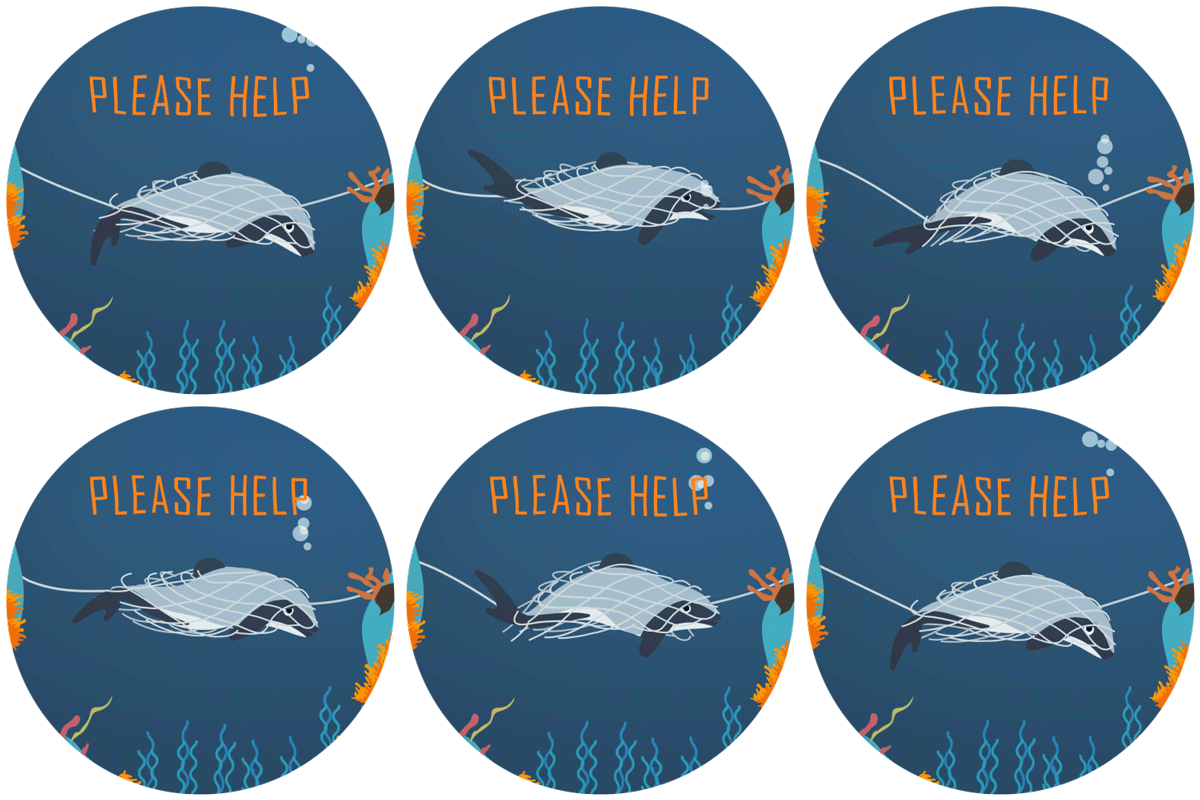
The smallest and rarest marine dolphin in the world could be extinct within 15 years if protection is not stepped up, experts have warned.
Maui's dolphins are less than 1.5m long and only found off the west coast of New Zealand
Conservation organisation Nabu say there are fewer than 50 Maui's dolphins left on the planet now.
The organisation said fishing should be banned in the waters off New Zealand, where the species live.
Dolphins are often caught in fishing nets which can harm and even kill them.
Change
"New Zealand has to abandon its current stance, which places the interests of the fishing industry above conservation," said Dr Barbara Maas from Nabu.
A spokesperson for the New Zealand minister for conservation said no comment would be made until after the scientific committee reported its findings and recommendations in June.
The number of dolphins has declined since the 1970s.
Scientists say the main threat is fishing using trawling nets. It's thought the nets kill five Maui's dolphins each year.
The state government of Victoria may soon cull a colony of koalas living in a popular Australian tourist destination. It doesn't seem fair! They're so cute! Isn´t there another solution? Maybe they could plant more trees or transfer some Koalas to another area where they may be lacking...
The Victorian government says Cape Otway koalas face starvation because of "overpopulation"
The Victorian government euthanised about 700 koalas at Cape Otway in the state's south, in 2013 and 2014.
It said they were starving because of a population boom that could not be sustained by local woodland.
But critics angry with the latest move say the problem is too few trees, not too many koalas.
Despite some bush regrowth, the koala density at the cape remained high and sick koalas might be euthanised, the state government said on Monday.
Victorian Department of Environment, Land, Water & Planning said it would carry out a "koala health assessment" of the "overabundant koala population" in the Manna Gum woodland.
The assessment will be conducted by vets and animal health officers, said department spokesperson Mandy Watson.
Koalas will only eat the leaves of a few types of eucalyptus trees
"We are focusing our attention on private land in Cape Otway where koalas are most affected by over-browsing," she said.
"Any unhealthy koalas, which are deemed too sick to survive release, will be humanely euthanized to prevent further suffering," she said.
Development pressure
Koalas live in tall open eucalypt (gum tree) forests and will only eat a few of the hundreds of species of eucalypts that grow in Australia.
Australian Koala Foundation chief executive officer Deborah Tabart said the koala habitat should be protected so a cull is not necessary.
"I know they are not looking at planting trees, they are not looking at the long term," Ms Tabart told ABC TV.
"I never see this as an overpopulation of koalas; I see it as a under-population of trees."
In 2012, the koala was listed as "vulnerable" under Australia's Environmental Protection and Biodiversity Conservation Act.
However, there is no specific law that protects koala habitat, which is under pressure from housing and commercial development.
The sale of illegal animals around the world is pushing some species to extinction and Peru is just one of the countries, trying to put a stop to the illegal trade.
It's a particularly big problem in the jungles of South America. In Peru, the government and the police are trying to stop criminals from selling snakes, monkeys and other species in markets and elsewhere.
Police have been going into markets to try and rescue some of the species.
The number of unwanted reptiles being abandoned has risen by a third in three years, according to the RSPCA.
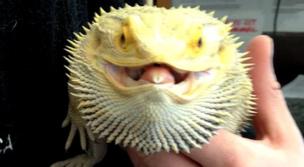
Abandoned cases seen by the charity include a desert iguana and a pair of bearded dragons.
Keith Simpson-Wells from the RSPCA Reptile Rehoming Centre in Brighton says people don't know enough about how to keep the animals.
"People don't do their research completely on the animal before they get it and I think sometimes they can become scared of the animal," he said.
In 2011 the RSPCA collected 1,390 reptiles. By 2014 the number had increased to 1,853.
Things to think about before getting a reptile as a pet:
How long the animal will live and how large it will grow.
What it eats and how much food it needs.
What kind of environment the animal needs to live in. Many exotic pets, like reptiles, must have a carefully-controlled environment, or they may become sick.
The size of enclosure - this is likely to increase as the animal grows!
If the animal should be kept alone or with others.
Whether the animal will be active at night or during the day.
Is there a vet nearby who can look after exotic animals and treat it if it becomes sick?
Do you need a special licence or any other legal paperwork to keep it?
The Kenya Wildlife Service (KWS) has opened a forensic laboratory to boost the fight against poaching.
The Kenya Wildlife Service says some species could be pushed into extinction because of poaching
The information gathered should help in prosecuting suspected poachers as cases can collapse because of weak evidence.
The laboratory will build up a DNA database which will link stolen ivory and meat to specific animals.
Poaching has damaged the wildlife population in Kenya with fears that some species could be pushed into extinction.
The laboratory is the second of its kind in sub-Saharan Africa - the other being in South Africa - and KWS says it can be used by all countries in the east and central African region.
A team of 45 researchers at the $1.7m (£1.2m) laboratory in the Kenyan capital, Nairobi, will now be taking samples from wild animals in order to extract the DNA.
This information can then be used to provide "water-tight evidence" in court, according to KWS spokesman Paul Udoto.
The Thai authorities recently discovered $6m-worth (£4m) of smuggled ivory in the country
Mr Udoto says prosecutors have faced a problem proving that meat found with a suspected poacher is from a protected species.
In the past suspects have been able to argue that it was goat or cattle meat.
Now the evidence can be tested in court and compared with the information in the database to prove beyond doubt what animal it comes from.
KWS says that bushmeat hunting is endangering some wild animals including the sable and hirola antelopes.
DNA taken from smuggled ivory that has been discovered can be linked to an individual animal in a specific location.
Some ivory stockpiles have been destroyed in an attempt to halt the trade
That information can secure a prosecution and help in intelligence gathering when trying to establish where poachers are operating, Mr Udoto says.
About 100 rhinoceros have been poached in Kenya in the last three years and KWS things that if no "urgent interventions are made" rhinos could disappear from Kenya altogether.
It is hoped that more prosecutions will act as a deterrent to potential smugglers.
The illegal ivory trade has soared in recent years, and a kilogramme of ivory is now worth thousands of dollars.
Much of the demand has been driven by a rapidly growing market in Asia.
A plan has been announced to turn off the lights on some big buildings in New York City this spring and autumn because of worries about the effect they're having on birds.
As the seasons change lots of birds fly from one part of America to another.
But their journey through New York isn't always so smooth, particularly at night.
That's because birds use the stars in the sky to help them figure out where they're going in the dark.
But with so many bright lights in the city, they get confused and don't end up in the right place.
So the mayor has decided to turn off outdoor lights on public buildings which aren't needed.
From 11pm in the evening, it'll be a whole lot darker for New Yorkers... but hopefully a lot easier for their feathery friends.
An exotic snake had a lucky escape after apparently being fly-tipped at the side of a road with a pile of kitchen cupboards.
The corn snake will eventually be rehomed at a specialist centre, the RSPCA said
The non-native corn snake was spotted by a "shocked" council worker as he sorted through the rubble in a remote area off Mill Lane in Setchey, Norfolk.
It is now being cared for at the RSPCA's East Winch centre.
Manager Alison Charles said "abandoning" the snake was a "callous way to treat a pet".
Tim Borodka, who found the reptile on Friday, said: "It gave me quite a shock when I suddenly saw the snake slither away from me.
"I have come across lizards and wild grass snakes before, but nothing like this."
'Likely abandoned'
Ms Charles said the snake would have been unlikely to survive in the wild if Mr Borodka had not put it in a box and taken it to the King's Lynn rescue centre.
"The snake was found so far from any homes and amongst fly-tipped rubbish so it seems likely that it was abandoned."
Corn snakes are native to parts of North America and can grow up to 6ft (1.8m). The 3ft (0.9m) snake that slithered past Mr Borodka will eventually be rehomed at a specialist centre.
"We would encourage people who are thinking about taking on an exotic pet to research the needs of the particular species thoroughly and ensure they can meet them at all times," Ms Charles added.
Last year the RSPCA was called in to collect 807 exotic pet snakes. More than 450 of these were thought to be former pets that had either escaped or been deliberately dumped or released. From BBC News
A record number of rhinos were slaughtered for their horns in South Africa last year, and fears are growing for the survival of the species in the wild.
Rhino horn is falsely believed to have medicinal benefits, and is more expensive per gram than gold or diamonds. In South Africa, most of the animals are killed by poachers from neighbouring Mozambique.
Leana Hosea reports on the drive to stamp out the trade.
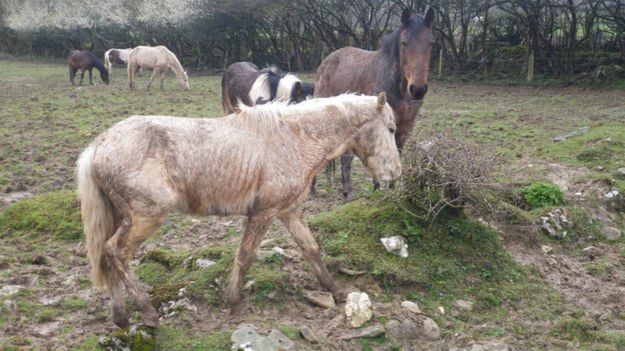
Horses are being abandoned in record numbers in Wales in what the RSPCA has called a "crisis".
The RSPCA has said it is looking after so many abandoned horses, donkeys and ponies that it cannot take in any more.
The charity claims a recent fall in the market price for horses has led to irresponsible owners leaving them in fields and on waste land to die.
It is now appealing for help to re-home more than 600 animals in its care.
The charity said there had been a six-fold increase in the number of horses rescued in Wales over five years to 271, nearly half of them in Swansea.
Falling prices and rising feed and care costs have been blamed.
RSPCA chief inspector Cathy Hyde said the main concern was large groups of horses abandoned without food or water.
A campaign has been launched to find homes for the rescued animals.
'Horrendous'
The RSPCA said the increase in cases of abandonment and neglect over five years amounted to what it called a "horse crisis".
The number of horses rescued by RSPCA inspectors in Wales increased six-fold from 45 in 2009 to 271 in 2013
Swansea saw the biggest jump from nine to 125 - a rise of nearly 1,300% and nearly half the total for Wales
The number of calls reporting horse welfare concerns in Wales rose by 60% to more than 2,300 in 2013
The most calls in 2013 came from Carmarthenshire
900 horses are in RSPCA care across England and Wales
For every horse in an RSPCA re-homing centre the charity says seven are waiting for a place
Ms Hyde, who leads a specialist RSPCA team dealing with horse inquiries, said they now seemed to be neglected more than any other animal.
"Over the past five years there has been a marked and very worrying increase in equine neglect and abuse. This is witnessed on a daily basis by frontline staff," she said.
"I remember a major issue in Wales in 2013, where we dealt with a group of 300 sick and neglected horses and ponies," she said, referring to an incident in the Vale of Glamorgan.
"It was horrendous, something that I will not easily forget and I fear we will have to deal with something similar again in the future."
Secret was emaciated and heavily pregnant when rescued, the RSPCA said
Secret was rescued when the RSPCA found a herd of horses in what they described as "horrific" conditions in a muddy field in Whitland, Carmarthenshire, in early 2013.
Inspectors found one horse collapsed on the ground tangled in a rug and a pregnant mare lying dead nearby under some covers.
The charity said the field had very little grazing and was littered with mud, rocks and pieces of metal.
The ponies were underfed with many badly affected by worms and the effects of standing out in the rain, it added.
Secret recovered under the RSPCA's care and gave birth to a filly
"Secret was part of a large case of emaciated ponies and she was heavily in foal," said groom Hanna Clifford, who treated her at a specialist RSPCA equine centre near Shrewsbury.
"She was not very well handled and was terrified of humans. With a lot of time and patience Secret started to gain our trust, and gave birth to a beautiful filly who we named Faith."
New laws to tackle the growing problem of illegal fly-grazing - horses being left by their owners on other people's land to feed themselves - were announced by the Welsh government in October 2013.
It followed a series of incidents in which large herds of horses had apparently been abandoned on open land, with Blaenau Gwent in south Wales one of the worst affected areas.
The RSPCA has launched a Homes for Horses campaign to find new owners for 900 horses and ponies rescued across England and Wales. From BBC News-Environment
More than 100 animals have been rescued from an overcrowded private zoo in Mexico, after complaints from visitors.
Mexican environmental officials who raided the property found animals in cramped cages piled on top of each other.
Animals such as lions, bears and tigers, bears were being kept in terrible conditions at the zoo.
Officials who seized the creatures said they would try to find suitable new homes for the animals.
The zoo is owned by a senior Mexican politician, Sergio From CBBC newsround
Inspectors also found irregularities with the zoo's master plan and other paperwork, along with deficiencies in feeding, veterinary care and staff levels for a collection of such size.
The cramped conditions were said to have provoked aggressive behavior, fights and injuries to some animals.
A total of 101 were seized: 92 as a result of "serious breaches of proper treatment," and nine whose legal provenance could not be established.
They included more than 40 big cats, a half-dozen monkeys, two grizzly bears, antelope, bison and birds.
Industry authorities in New South Wales, Victoria and Queensland have suspended more than 20 people after raids on properties last week.
They were carried out after ABC handed over its footage ahead of Monday's broadcast.
Live baiting is outlawed but some trainers believe it gives their dogs an advantage in races.
'Profoundly disturbing'
The footage was secretly filmed at training tracks in Queensland and Victoria.
Some of the video showed struggling animals being flung around a mechanical lure before being torn apart by greyhounds. One possum was spun on the lure for almost an hour.
The footage also captured trainers apparently discussing ways of disposing of unwanted dogs, which is against racing regulations.
Animal rights group have called for an end to industry self-regulation
"What we have documented is sickening, shocking and profoundly disturbing, not only because of the horrific cruelty, but because of the human behaviour that is revealed," said Lyn White from Animals Australia, which helped gather the footage.
There has been condemnation from senior figures in Australia's greyhound industry. In a statement Greyhounds Australasia Chief executive Scott PParker described the footage as"appalling", and called the use of live animals"disgusting, illegal, unethical and totally rejected by the industry".
Darren Condon, the CEO of Racing Queensland, said immediate action would be taken against individuals implicated.
"Any person engaged in live baiting can expect to be disqualified and prosecuted," he said, but added that he believed the practice was not widespread, and was isolated to one private facility in Victoria.
Depending on state laws, someone convicted of animal cruelty in Australia can face a jail term of between one and five years, and a substantial fine.
Animals Australia and Animal Liberation Queensland, who also helped make the report, have called for an end to greyhound industry self-regulation. From BBC News
The gentle, solitary pangolin has a tongue as long as its body and curls into a ball when threatened. It is also the world's most trafficked mammal, and threatened with extinction.
In front of a drab government building near Vietnam's northern border with China, a young conservationist named Nguyen Van Thai prises open a flimsy wooden crate with a machete.
He lifts out four plastic sacks and places them on the ground. From each sack he pulls out a brownish-black ball with a scaly exterior, roughly the size and weight of an curling stone.
Gradually - and very, very cautiously - one of those balls begins to uncurl, revealing two blackcurrant eyes, a long snout, an even longer tail and a soft pink belly. It's a pangolin, one of the world's more remarkable creatures.
The pangolin is the only mammal wholly covered in scales, and it simply curls itself into an impregnable ball when threatened by predators.
It eats seven million ants and termites a year using a tongue that's almost as long as its body. It has no teeth, so it stores stones in its stomach to grind up its food.
The reason many of us have never heard of pangolins is because they seldom survive in captivity. Only six zoos in the world - and only one in Europe, Leipzig - have any.
Pangolins enjoy one other unfortunate distinction - they are the world's most trafficked mammal.
While the media focuses on the plight of the elephant and the rhinoceros, the celebrities of the natural world, roughly 100,000 pangolins a year are being snatched from the wild and sent to China and Vietnam.
In both those countries their meat is considered a delicacy, and their scales are deemed to have magical medicinal properties.
Already there are no pangolins left in great swathes of South East Asia, so Africa's pangolin populations are now being plundered. All eight species are threatened with extinction.
In both those countries their meat is considered a delicacy, and their scales are deemed to have magical medicinal properties.
Already there are no pangolins left in great swathes of South East Asia, so Africa's pangolin populations are now being plundered. All eight species are threatened with extinction.
They resemble artichokes on legs. They are gentle, solitary creatures with an almost comic rolling gait. They carry their young on their tails and curl round them to protect them. They use those prehensile tails to hang from branches, or to stretch out almost horizontally to reach ants' nests.
The Duke of Cambridge has made a speech in America, warning about the effect illegal poaching is having on elephants and rhinos.
Continents like Africa and Asia used to be home to hundreds of thousands of rhinos and elephants.
But today, three out of five rhino species are critically endangered, and in Africa last year there were more elephants killed by poachers than were born.
Poaching on the rise
If that continues, experts are warning that they could become extinct within 20 years.
Despite tough hunting laws, poaching is on the rise as horns and tusks can sell for high prices on the illegal wildlife market.
Poachers kill around 35,000 elephants and 1,000 rhinos every year.
Prince William hopes these talks will help to raise awareness around the world about how bad the situation is.
Park ranger Andre Bauma has been taking care of orphaned mountain gorillas at Virunga, Africa's oldest national park, for the past seven years, and he says he loves them as if they were his own children.
One gorilla, Ndakasi, is particularly close to Bauma. She sees him as her mother, and despite being a man - and a human to boot - he has taken on that role. "We shared the same bed, I played with her, I fed her… I can say I am her mother," he says.
They met in terrible circumstances. Ndakasi was a two-month-old infant when her mother was shot at close range through the back of the head - the park describes it as an "execution". Ndakasi was still clinging to her dead mother when they found her. "She was tiny, she only weighed a couple of kilos," says Bauma. Ever since he picked her up from the forest floor, he has dedicated his life to saving hers.
Kalonge another orphan gorilla rescued by the Virunda Park rangers
"Every single individual gorilla is crucial because it's an endangered species - so we had to take care of it, we took her in," he says.
Ndakasi was born into a renowned group of mountain gorillas called the Rugendo family, seven of whose members were slaughtered in the attack in 2007 that orphaned Ndakasi.
Illegal charcoal traders, engaged in a constant struggle with park rangers, are thought to have been behind the shootings.
The law says no human activity of any kind is allowed inside the park - located in the Democratic Republic of Congo - and the rangers are there to prevent it. It's a dangerous job - since 1996, more than 130 rangers have been killed. "We are constantly threatened, not only by the militias inside the park but also in general by the population," says Bauma. "There is a lot of poverty, so people try to survive. They will try to use the natural resources of the park, whether it be wood to make charcoal, fields for agriculture or illegal fishing."
Bauma now heads the gorilla orphanage, located at the park headquarters in Rumangabo. Ndakasi was the first to be housed there, but she was soon joined by Ndeze, another member of the Rugendo family. In 2010 the two females were joined by Maisha, another female, and Kaboko, a male - both had been seized by poachers, and Kaboko had lost his hand in a snare. Kaboko died in 2012, but since then another orphan has joined the gang - Matabishi, a young male found abandoned outside the park.
No-one believed Ndakasi would survive, but she has grown to be a healthy 65kg. She still behaves like a baby, though. "Whenever she sees me she climbs on my back like she would with her mother," says Bauma. "But she's a big and strong girl and I'm not capable of playing with her like I used to. When she climbs on my back, every time I'm worried that I'm going to hurt myself - in fact at the end of the day I have real backache." READ MORE