To my dear visitors and commenters

Hi, everybody! I've noticed with lots of joy and happiness, that thousands of comments have been written in my posts. It's wonderful that so may people around the world appreciate my work. Therefore, I want to thank you for that and ,at the same time I want to ask you to be this blog's followers. It's fast and easy! Make it be even more visited and spread all over the world! I'm a woman, a teacher of English in Portugal, and I've been away for quite a long time because of my father's health. Unfortunately he died from Covid19 a few months ago. Now I felt it was time to restart my activity in this and other blogs I owe. I've recently created a new one in a partnership with a street photographer, Mr. Daniel Antunes. He's fabulous! https://pandpbydandd.blogspot.com I'd like you to visit it and, who knows, become our followers. The poems, chronicles and thoughts are all mine. Thank you so much! Kisses :-)

Search This Blog

Showing posts with label Bad news. Show all posts

Sunday, April 03, 2016

'Drastic' Antarctic melt could double global sea-level rise

Global sea levels could rise by more than double the current best estimate, according to a new analysis of climate change in Antarctica.

Ice melt
The latest model suggests that Antarctic melting could double projections of sea-level rise

The modelling assessment says that Antarctic melting alone could contribute more than a metre to sea level by the end of this century.
By 2500, according to the study, the same source could cause levels across the world to rise by 13m.
The authors say that rapid cuts in carbon emissions could limit this risk.

Competing ideas

In 2013, the Intergovernmental Panel on Climate Change (IPCC) predicted that, without any restrictions on carbon emissions, the seas around the world likely rise by up to 98cm by 2100.
However, the IPCC estimates contained a minimum contribution from Antarctica.
Other analyses since then have projected bigger increases, with a recent studysuggesting that the oceans were rising faster than at any time in the past 2,800 years and by 2100 they could be up to 1.31m higher.
The exact level of Antarctica's impact on these projections has been vigorously debated. Late last year, a research paper suggested that projections of a contribution of a metre or more were not plausible.
But this new study argues that by 2100 the world could see 1.14m of sea-level rise from Antarctica alone.

Additions to the model

The scientists say that their model is able to provide a more accurate prediction because it incorporates the impacts of some physical processes for the first time.
While other models have focussed on the impact of warmer waters melting the ice shelves from below, this new study also includes the effect of surface melt-water and rain trickling down from above and fracturing supporting ice, hastening its slide to the sea.
The model also calculates the impact of the disintegration of floating ice shelves. If this happens, it will reveal walls of ice so tall that they cannot support their own weight.
The scientists involved expect that these extra factors will kick in over the coming decades, as warming from the atmosphere (not just from warmer waters below) becomes the dominant driver of ice loss.
ice melt
The collapse of ice cliffs could be a significant factor in the new projection
"One reason that other models didn't include the atmospheric warming is because it hasn't started to happen just yet," said co-author Dr David Pollard from Penn State University, US.
"In Antarctica, around the edges at sea level, it's just beginning to get up to the melt point in summer.
"With that warming, the flanks of Antarctica will start to melt drastically in about 50 to 100 years - and then it will start to kick in according to our model."
The authors believe that they have demonstrated the accuracy of the new model by correctly replicating sea-level rise in warm periods, millions of years into the past.
"Recently, we looked at the long-standing problem posed by geological evidence that suggests sea level rose dramatically in the past, possibly up to 10 to 20 metres around 3 million years ago, in the Pliocene," said Dr Pollard.
"Existing models couldn't simulate enough ice-sheet melting to explain that."

'Right questions'

If the world continues to emit "business as usual" levels of carbon dioxide over the coming decades, the scientists argue that sea-level rise will be double what has already been estimated for the coming 100 years.
"If these processes do kick in and they end up being as important as we think that they could be, then they really do have a big impact," said Prof Robert DeConto from the University of Massachusetts, Amherst.
"West Antarctica is responding very soon in these simulations and that ends up having a big impact on North America in particular."
Other researchers have praised the development of the new model for including impacts such as surface melt water and ice-cliff collapse, but they are uncertain about the conclusions.
"I have no doubt that on a century to millennia timescale, warming will make these processes significant in Antarctica, as well as Greenland, and drive a very significant Antarctic contribution to sea-level rise," commented Prof David Vaughan of the British Antarctic Survey.
"The big question for me is, how soon could this all begin, and could it be early enough to drive substantially higher sea levels by 2100? I'm not sure, but these guys are definitely asking the right questions."
The authors believe that there is "good news" in their report. If global emissions of carbon are curtailed significantly then the extra factors that substantially boost Antarctic melting will be avoided.
Seas will continue to rise, but not at the runaway rates suggested by this paper,which has been published in the journal Nature.
From BBC news-Science/ Environment


Wednesday, February 17, 2016

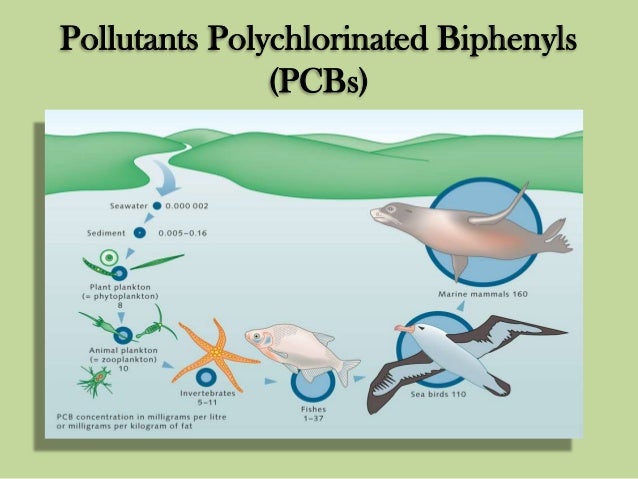
Banned pollutant PCB threatens Europe's whales

Scientists are warning that a banned pollutant could wipe out Europe's killer whales and dolphins.The use of the PCB chemical was prohibited from the 1980s but it still exists in the environment. (BBC News)


polychlorinated biphenyl (PCB) is a synthetic organic chemical compound ofchlorine attached to biphenyl, which is a molecule composed of two benzene rings. There are 209 configurations of organochlorides with 1 to 10 chlorine atoms. The chemical formula for a PCB is C12H10−xClx. Of the different PCB arrangements and orientations 130 are used commercially.
Polychlorinated biphenyls were widely used as dielectric and coolant fluids in electrical apparatus, cutting fluids for machining operations, carbonless copy paper and in heat transfer fluids. Because of PCBs' environmental toxicity and classification as a persistent organic pollutant, PCB production was banned by the United States Congress in 1979 and by the Stockholm Convention on Persistent Organic Pollutants in 2001. The International Research Agency on Cancer (IRAC), rendered PCBs as definite carcinogens in humans. According to the U.S. Environmental Protection Agency (EPA), PCBs cause cancer in animals and are probable human carcinogens.Many rivers and buildings including schools and other sites are contaminated with PCBs, and there have been contaminations of food supplies with the toxins.

Some PCBs share a structural similarity and toxic mode of action with dioxin. Other toxic effects such asendocrine disruption (notably blocking of thyroid system functioning) and neurotoxicity are known. The maximum allowable contaminant level in drinking water in the United States is set at zero, but because of water treatment technologies, a level of 0.5 parts per billion is the de facto level.
in Wikipedia

Sunday, January 31, 2016

British helicopter pilot killed by poachers in Tanzania

A British helicopter pilot working for a wildlife charity in Tanzania has been shot dead by elephant poachers.
Mr Gower was originally from Birmingham and worked in London before moving to East Africa to work as a helicopter pilot.
His brother Max told the BBC: "He would not have gone anywhere near those poachers if he'd known that they were armed.
"As I understand it, he knew they were around but came across them by accident. He didn't really have enough time to evaluate the situation before they opened fire on him."
Roger Gower
Tropic Air Kenya
The Friedkin Conservation Fund said Roger Gower had been helping to find the criminals when they fired on his aircraft.
Tanzanian police have arrested three suspects over the death of the pilot working for a conservation fund .
Natural Resources and Tourism Minister Jumanne Maghembe told AFP news agency that those detained were co-operating.
"Soon more people making up the poaching gang will be netted and brought to justice," he said.
Roger Gower, 37, had been flying near an elephant killed by poachers when his helicopter came under fire.
The incident happened in Maswa Game Reserve, which borders the Serengeti National Park in northern Tanzania.
Mr Gower managed to land his helicopter, but died before he could be rescued, a Tanzanian MP and former minister for natural resources and tourism, Lazaro Nyalandu, said in a tweet.

Max Gower also said his brother would be remembered as "very much his own man".
"He had a very strong moral compass. He just loved having fun, he couldn't be with his friends without making sure that everybody had fun."
The Gower family have invited donations to a fund established in Roger's memory that will contribute towards anti-poaching efforts in Tanzania.
The Friedkin Conservation Fund, for which Mr Gower had been working, said the organisation had lost "a dear friend".
The charity's founder, Dan Friedkin, said: "We believe that Roger can best be honoured by redoubling our commitment to protect elephants and our priceless wildlife heritage.
"This tragic event again highlights the appalling risk and cost of protecting Tanzania's wildlife."

Map of Tanzania
From BBC News

Saturday, January 02, 2016

South Africa's rhinos 'could be extinct in 10 years'!!!

Africa's rhino population could face extinction within 10 years, animal welfare experts have warned.

white rhino
There are now less than 30,000 rhinos in the wild

South Africa has the largest population of the species in the world but their existence is under threat from poaching.
Demand from Asian markets for their horns has led to a dramatic increase in the numbers killed. It is thought more than 1,000 rhinos have been killed in South Africa's game reserves in 2015 alone.( BBC News)

A shocking 1,215 rhinos were poached in South Africa alone during the last year, according to South Africa's National Wildlife Crime Reaction Unit.
This alarming figure is DOUBLE the amount that were poached in South Africa three years ago, and it has risen a staggering 9,000 per cent in just seven years.
There are now less than 30,000 rhinos in the wild and there are fears they will be wiped off the planet by 2026 if the illegal slaughter continues at its rapid rate.
Soaring demand for their horns from Asia has led to 2014 being branded "the worst poaching year on record" by international wildlife charity Save The Rhino.
Katherine Ellis, Office and Communications Manager for Save The Rhino, said: "According to South Africa’s National Wildlife Crime Reaction Unit, 1,215 rhinos were poached in South Africa alone during 2014, making last year the worst poaching year on record.
"This would represent over a 9,000 per cent increase in the number of South African rhinos poached since 2007, when just 13 rhinos were killed."
rhino
Save The Rhinos blamed one factor of this increase in rhino deaths on a soaring demand for horns
At the beginning of the 20th century there were 500,000 rhinos across Africa and Asia, according to Save The Rhino.
This number dramatically fell to 70,000 by 1970 and finally to around just 29,000 left in the wild today.
But if they continue to be poached at their current rates, Save The Rhino warned that they could become extinct in the wild by as soon as 2026.
"Depending on the rate that poaching increases, and also the breeding rate of rhinos, overall rhino deaths could overtake births sometime between 2015 and 2021, which would push rhino populations into decline," said Ms Ellis.
"Sadly if poaching continues to increase at current rates, rhinos could be effectively extinct in the wild as soon as 2026."
But there are crucial moves currently underway which aim at reversing the rhino decline.
These include attempts at thwarting poachers and conservation programmes to help protect the rhinos from both human and natural danger. ( express_logo)

Friday, December 04, 2015

COP21: Vanuatu voices from disappearing islands

Vanuatu is on the front line in the climate change debate, with rising sea levels putting the very future of the low-lying archipelago in jeopardy.

Islanders hope some sort of deal can be reached at the climate change conference Paris to make sure that whatever happens, their home will be as well prepared as possible.
They raised their concerns with the BBC's Matthew Price. (BBC Science/Environment)


Wednesday, November 25, 2015

Primates need protecting scientists warn

Scientists have called for governments to do more to protect primates.


Red ruffed lemur
It's unknown how many Red ruffed lemurs are left in the wild.
It's after warning that more than half the world's primate population is facing extinction.
A new list of the world's 25 most endangered primates has been published.
Baby Gorilla clinging on to it's mum.
The population has been decreasing for a number of reasons.
Including the burning and clearing of tropical forests.
As well as being hunted for food or for use in traditional medicine in Asia .
The Philippine tarsier primate.
There are more 700 different types of primates in the world.
The Philippine tarsier and the Lavasoa Mountains dwarf lemur from Madagascar have been added to the list for the first time.
The hope is to convince governments across the world to look at ways of better protecting habitats and the animals.
From CBBC Newsround

Monday, November 23, 2015

One of the world's last northern white rhinos dies in the US

An extremely rare northern white rhino has died in the US, leaving only three others in the world.

Nola at the San Diego Zoo Safari Park, Dec 2014
Nola was one of four northern white rhinos left in the world.
The 41-year-old rhino, Nola, died after surgery to her hip at San Diego Zoo.
Nola's death means that there are only three other northern white rhinos in the world.
They live in Kenya and are kept closely guarded.
Northern white rhino named Nola receives a veterinary exam, Dec 2014
Nola had surgery on 13 November but her health got worse.
Poachers have been blamed for the devastating drop in northern white rhino numbers.
They kill many rhinos to get their horns, which are worth a lot of money in some cultures.
However, there is hope that there may be more northern white rhinos born in the future.
San Diego Zoo has recently brought in six southern white rhinos, hoping to use them as mothers to new northern white rhino calves.
Zoo researchers are still working out if it's possible, but they say they're hopeful that a northern white rhino calf could be born within 10 to 15 years.
From CBBC Newsround

Wednesday, November 11, 2015

South Sudan famine warning: Living on grass and leaves

Four million people in South Sudan are at risk of famine, according to the United Nations.


The UN is calling on all sides in the country's civil war to grant unrestricted access to aid agencies as they try to prevent the deaths of many children.
Yalda Hakim from the BBC's Our World reports from a village in Kaldak in the remote east of South Sudan to see the impact of the fighting. 

Friday, October 02, 2015

Plastic in oceans 'threatens food chain'


As England prepares to introduce a charge for plastic bags, science editor David Shukman reports on the possible threat to the food chain, by the plastics broken down into tiny fragments in our oceans.
Tests by the Plymouth Marine Laboratory have shown that when minuscule particles of plastic are in the water, the creatures at the bottom of the food chain do ingest them.
An estimated eight million tonnes of plastic waste is added to the oceans every year.(BBC News)


Tuesday, September 01, 2015

Obama pleads for Paris climate change deal

US President Barack Obama has called on world leaders to agree to cut carbon emissions at crucial talks in Paris later this year.

Barack Obama: "Any so-called leader who does not take this issue seriously is not fit to lead"

Speaking in Alaska, he said countries including his own were not doing enough to stop global warming.
World powers meet in Paris in December with the aim of agreeing to curb global temperature rises.
Mr Obama said now was the time "to protect the one planet we've got while we still can".
"On this issue - of all issues - there is such a thing as being too late,'' he told a meeting of foreign ministers from
countries with Arctic interests soon after arriving in Alaska. "That moment is almost upon us."
While the Paris meeting will seek a deal to limit the rise in global temperatures to 2°C, there have been warnings that the goal is unlikely to be achieved.

In this file photo taken Aug. 7, 2011, hikers get a close look at Exit Glacier near Seward, Alaska.
President Obama will hike on the Exit Glacier, that has melted significantly, during his three-day tour of Alaska

During his three-day tour of Alaska, Mr Obama will become the first sitting US president to visit the area above the Arctic Circle.He will also hike on the Exit Glacier, that has suffered significant melts in recent years, and will appear in a television show with adventurer Bear Grylls.
President Obama has made the fight against climate change one of the cornerstones of his second term. Last month, he unveiled plans to cut US greenhouse gas emissions by almost a third over the next 15 years.
Some state governors said they would ignore the plan, while parts of the energy industry said they would fight it.
From BBC News - Science /Environment

Tuesday, August 11, 2015

Global warming threatens extinction for UK butterflies

Global warming could drive drought sensitive butterfly species to extinction in the UK by 2050, according to new research.


Green veined white butterfly
The Green Veined White butterfly is one of the species at risk of extinction from drought
Scientists found that even the lowest expected levels of warming could decimate populations.
However the researchers found that restoring connections between butterfly habitats could help modify the worst impacts.
The research has been published in the journal Nature Climate Change.
Although many people believe that butterflies are creatures that love the warmth, periods of extremely hot and dry weather can significantly reduce populations.
In this study, British researchers looked at the impact of an extreme drought event in 1995 on butterfly species. This was the most arid summer since records began in 1776.
They identified six species, including the Cabbage White and the Speckled Wood butterflies, that were particularly sensitive to heat.
They then looked at what might happen to these creatures under different levels of warming up to 2100.
If emissions of carbon dioxide continue on a "business as usual" model, and warming is more extreme, then extinctions of some of these species could begin in England as early as 2050.
speckled wood butterfly
Restoring habitat connections could help mitigate the worst warming impact on butterflies
"We looked at the extent to which populations crashed from the drought and how long it takes them to recover," said lead author Dr Tom Oliver from Nerc Centre for Ecology and Hydrology.
"What we're asking is, as droughts become more frequent whether the return time of the drought was more frequent than the recovery of the butterflies."
"And when that was the case you'd get this gradual population erosion and in those places you'd get local extinctions."
The researchers say that areas of the south east of England would be worst affected.
However they argue that under less extreme warming conditions, changes to butterfly habitats could ameliorate the worst impacts.
The team found that restoring connections between habitats that have been fragmented by human activities such as agriculture, was capable of making a big difference.
Under a low emissions scenario, bridging these connections could improve the probability of butterfly survival by 50%.

"If our habitats are very fragmented, the impacts will be much more severe. In places where it isn't those populations might persist," said Dr Oliver.
"It allows us to buy time until we get those global emission cuts in place."
The researchers believe their study is a conservative estimation of how warming might impact these fragile species.


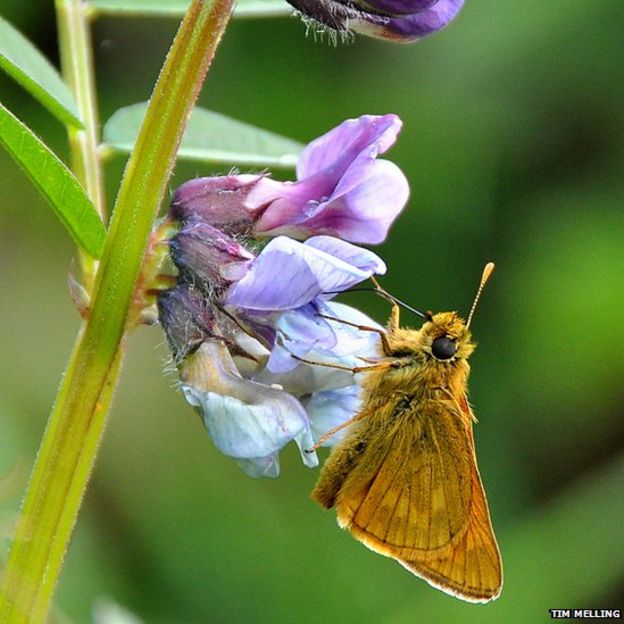
Large Skipper butterfly

Extinctions of species like the Large Skipper could happen by 2050 under some warming scenarios
They are concerned that, because of landscape changes in the UK throughout the 20th century, populations of some of the threatened species might be too low for them to recover from frequent droughts.The authors say that even people who are not impressed by the aesthetic appeal of butterflies should still be concerned about their demise.
"Butterflies are important culturally as part of our natural heritage, but there are other functions that could be impacted by their extinction including pollution, pest control and decomposition of waste," said Dr Oliver.
"Those un-swayed by the beauty and importance of having butterflies in the countryside ought to be concerned about the disruption to these functions provided by these species."
 From BBC Science/Encironment

Monday, August 03, 2015

More than £300,000 raised for Cecil the lion

More than £300,000 has been raised for the project that was tracking Cecil the lion, since his death last month.

Cecil the lion
Cecil was a major tourist attraction in Zimbabwe's Hwange National Park
Cecil was a big tourist attraction in Zimbabwe in Africa and his death by the American Walter Palmer has made headlines this week.
It's all because Cecil was protected as part of a study by Oxford University looking at how lions live in the wild.
Mr Palmer has said he regrets what happened and he thought the hunt he was on was legal.
Now it's hoped the donations will help the university group to do more to protect other lions in the wild.
From CBBC Newsround

Friday, July 03, 2015

‘Irreversible change’ to sea life from CO2

A major report warns that life in the seas will be irreversibly changed unless CO2 emissions from industrial society are drastically cut
Twenty-two experts in the journal Science say the oceans are heating, losing oxygen and becoming more acidic - all in response to our carbon dioxide.
The scientists in Germany have been studying an event five million years ago that could throw light on today's challenges.
From BBC Science


Friday, June 26, 2015

Madagascar's lemurs cling to survival

The famous lemurs of Madagascar face such severe threats to their survival that none of them may be left in the wild within 25 years.

null
Deforestation and hunting in Madagascar are taking a devastating toll on lemurs

That stark warning comes from one of the world's leading specialists in the iconic animals.
Deforestation and hunting are taking an increasing toll, according to Professor Jonah Ratsimbazafy, director of GERP, a centre for primate research in Madagascar.
"My heart is broken," he told the BBC, "because the situation is getting worse as more forests disappear every year. That means the lemurs are in more and more trouble."
So far 106 species of lemur have been identified and nearly all of them are judged to be at risk of extinction, many of them critically endangered.
The habitats they depend on - mostly a variety of different kinds of forest - only exist in Madagascar.
"Just as fish cannot survive without water, lemurs cannot survive without forest, but less than 10% of the original Madagascar forest is left," said Prof Ratsimbazafy, who is also a co-vice chair of the Madagascar primates section of the International Union for the Conservation of Nature (IUCN).
"I would believe that within the next 25 years, if the speed of the deforestation is still the same, there would be no forest left, and that means no lemurs left in this island."
null
A form of slash-and-burn agriculture known as 'tavi' sees trees felled and undergrowth scorched

The pressure to clear the forests comes from a rapidly growing but extremely poor population seeking to open up new farmland. At least 92% of people in Madagascar live on less than the equivalent of $2 a day.
A form of slash-and-burn agriculture known as "tavi" sees trees felled and undergrowth scorched to make way for fields of rice and other crops.
Video of one recent forest clearance shows an apocalyptic scene of an entire hillside of charred stumps and smouldering vegetation.
In one supposedly protected area I visited in eastern Madagascar, a sign announcing a prohibition on tree felling stood ignored amid new plantations of banana palms and maize.
Conservationists have long argued that slash-and-burn farming is needlessly damaging, leaving the soil unproductive after a few years, and that more intensive forms of cultivation would allow more forests to be left standing.
The government of Madagascar has recently confirmed that as much as 10% of the country is now earmarked in some way for wildlife - from national parks to what are called protected areas - but the rules are often not enforced at a local level.


Sunday, June 21, 2015

Earth 'entering new extinction phase' - US study

The Earth has entered a new period of extinction, a study by three US universities has concluded, and humans could be among the first casualties.


The dried out sea bed of the Soyang River in Chuncheon, Gangwon Province, northeastern South Korea, 16 June 2015
Climate change and deforestation are among the reasons we may be facing an extinction event
The report, led by the universities of Stanford, Princeton and Berkeley, said vertebrates were disappearing at a rate 114 times faster than normal.
The findings echo those in a report published by Duke University last year.
One of the new study's authors said: "We are now entering the sixth great mass extinction event."
The last such event was 65 million years ago, when dinosaurs were wiped out, in all likelihood by a large meteor hitting Earth.
"If it is allowed to continue, life would take many millions of years to recover and our species itself would likely disappear early on," said the lead author, Gerardo Ceballos.
null
Pollination by bees could disappear within three generations, the report warns
The scientists looked at historic rates of extinction for vertebrates - animals with backbones - by assessing fossil records.
They found that the current extinction rate was more than 100 times higher than in periods when Earth was not going through a mass extinction event.
Since 1900, the report says, more than 400 more vertebrates had disappeared.
Such a loss would normally be seen over a period of up to 10,000 years, the scientists say.
The study - published in the Science Advances journal - cites causes such as climate change, pollution and deforestation.
Given the knock-on effect of ecosystems being destroyed, the report says benefits such as pollination by bees could be lost within three human generations.
null
Extinction may be more gradual than when the dinosaurs died, the report says
Stanford University professor Paul Ehrlich said: "There are examples of species all over the world that are essentially the walking dead.
"We are sawing off the limb that we are sitting on."
The International Union for Conservation of Nature (IUCN) says at least 50 animals move closer to extinction every year.
Around 41% of all amphibians and 25% of mammals are threatened with extinction, it says.
null

Most at risk: the lemur

According to the IUCN, the lemur faces a real struggle to avoid extinction in the wild in the coming years.
The group says that 94% of all lemurs are under threat, with more than a fifth of all lemur species classed as "critically endangered".
As well as seeing their habitat in Madagascar destroyed by illegal logging, lemurs are also regularly hunted for their meat, the IUCN says.
Last year, a report by Stuart Pimm, a biologist and extinction expert at Duke University in North Carolina, also warned mankind was entering a sixth mass extinction event.
But Mr Pimm's report said the current rate of extinction was more than 1,000 times faster than in the past, not 114, as the new report claims.
The new report's authors said it was still possible to avoid a "dramatic decay of biodiversity" through intensive conservation, but that rapid action was needed.
From BBC News

Wikipedia

Search results