To my dear visitors and commenters

Hi, everybody! I've noticed with lots of joy and happiness, that thousands of comments have been written in my posts. It's wonderful that so may people around the world appreciate my work. Therefore, I want to thank you for that and ,at the same time I want to ask you to be this blog's followers. It's fast and easy! Make it be even more visited and spread all over the world! I'm a woman, a teacher of English in Portugal, and I've been away for quite a long time because of my father's health. Unfortunately he died from Covid19 a few months ago. Now I felt it was time to restart my activity in this and other blogs I owe. I've recently created a new one in a partnership with a street photographer, Mr. Daniel Antunes. He's fabulous! https://pandpbydandd.blogspot.com I'd like you to visit it and, who knows, become our followers. The poems, chronicles and thoughts are all mine. Thank you so much! Kisses :-)

Search This Blog

Showing posts with label Environmental organizations. Show all posts

Sunday, April 03, 2016

'Drastic' Antarctic melt could double global sea-level rise

Global sea levels could rise by more than double the current best estimate, according to a new analysis of climate change in Antarctica.

Ice melt
The latest model suggests that Antarctic melting could double projections of sea-level rise

The modelling assessment says that Antarctic melting alone could contribute more than a metre to sea level by the end of this century.
By 2500, according to the study, the same source could cause levels across the world to rise by 13m.
The authors say that rapid cuts in carbon emissions could limit this risk.

Competing ideas

In 2013, the Intergovernmental Panel on Climate Change (IPCC) predicted that, without any restrictions on carbon emissions, the seas around the world likely rise by up to 98cm by 2100.
However, the IPCC estimates contained a minimum contribution from Antarctica.
Other analyses since then have projected bigger increases, with a recent studysuggesting that the oceans were rising faster than at any time in the past 2,800 years and by 2100 they could be up to 1.31m higher.
The exact level of Antarctica's impact on these projections has been vigorously debated. Late last year, a research paper suggested that projections of a contribution of a metre or more were not plausible.
But this new study argues that by 2100 the world could see 1.14m of sea-level rise from Antarctica alone.

Additions to the model

The scientists say that their model is able to provide a more accurate prediction because it incorporates the impacts of some physical processes for the first time.
While other models have focussed on the impact of warmer waters melting the ice shelves from below, this new study also includes the effect of surface melt-water and rain trickling down from above and fracturing supporting ice, hastening its slide to the sea.
The model also calculates the impact of the disintegration of floating ice shelves. If this happens, it will reveal walls of ice so tall that they cannot support their own weight.
The scientists involved expect that these extra factors will kick in over the coming decades, as warming from the atmosphere (not just from warmer waters below) becomes the dominant driver of ice loss.
ice melt
The collapse of ice cliffs could be a significant factor in the new projection
"One reason that other models didn't include the atmospheric warming is because it hasn't started to happen just yet," said co-author Dr David Pollard from Penn State University, US.
"In Antarctica, around the edges at sea level, it's just beginning to get up to the melt point in summer.
"With that warming, the flanks of Antarctica will start to melt drastically in about 50 to 100 years - and then it will start to kick in according to our model."
The authors believe that they have demonstrated the accuracy of the new model by correctly replicating sea-level rise in warm periods, millions of years into the past.
"Recently, we looked at the long-standing problem posed by geological evidence that suggests sea level rose dramatically in the past, possibly up to 10 to 20 metres around 3 million years ago, in the Pliocene," said Dr Pollard.
"Existing models couldn't simulate enough ice-sheet melting to explain that."

'Right questions'

If the world continues to emit "business as usual" levels of carbon dioxide over the coming decades, the scientists argue that sea-level rise will be double what has already been estimated for the coming 100 years.
"If these processes do kick in and they end up being as important as we think that they could be, then they really do have a big impact," said Prof Robert DeConto from the University of Massachusetts, Amherst.
"West Antarctica is responding very soon in these simulations and that ends up having a big impact on North America in particular."
Other researchers have praised the development of the new model for including impacts such as surface melt water and ice-cliff collapse, but they are uncertain about the conclusions.
"I have no doubt that on a century to millennia timescale, warming will make these processes significant in Antarctica, as well as Greenland, and drive a very significant Antarctic contribution to sea-level rise," commented Prof David Vaughan of the British Antarctic Survey.
"The big question for me is, how soon could this all begin, and could it be early enough to drive substantially higher sea levels by 2100? I'm not sure, but these guys are definitely asking the right questions."
The authors believe that there is "good news" in their report. If global emissions of carbon are curtailed significantly then the extra factors that substantially boost Antarctic melting will be avoided.
Seas will continue to rise, but not at the runaway rates suggested by this paper,which has been published in the journal Nature.
From BBC news-Science/ Environment


Saturday, January 02, 2016

South Africa's rhinos 'could be extinct in 10 years'!!!

Africa's rhino population could face extinction within 10 years, animal welfare experts have warned.

white rhino
There are now less than 30,000 rhinos in the wild

South Africa has the largest population of the species in the world but their existence is under threat from poaching.
Demand from Asian markets for their horns has led to a dramatic increase in the numbers killed. It is thought more than 1,000 rhinos have been killed in South Africa's game reserves in 2015 alone.( BBC News)

A shocking 1,215 rhinos were poached in South Africa alone during the last year, according to South Africa's National Wildlife Crime Reaction Unit.
This alarming figure is DOUBLE the amount that were poached in South Africa three years ago, and it has risen a staggering 9,000 per cent in just seven years.
There are now less than 30,000 rhinos in the wild and there are fears they will be wiped off the planet by 2026 if the illegal slaughter continues at its rapid rate.
Soaring demand for their horns from Asia has led to 2014 being branded "the worst poaching year on record" by international wildlife charity Save The Rhino.
Katherine Ellis, Office and Communications Manager for Save The Rhino, said: "According to South Africa’s National Wildlife Crime Reaction Unit, 1,215 rhinos were poached in South Africa alone during 2014, making last year the worst poaching year on record.
"This would represent over a 9,000 per cent increase in the number of South African rhinos poached since 2007, when just 13 rhinos were killed."
rhino
Save The Rhinos blamed one factor of this increase in rhino deaths on a soaring demand for horns
At the beginning of the 20th century there were 500,000 rhinos across Africa and Asia, according to Save The Rhino.
This number dramatically fell to 70,000 by 1970 and finally to around just 29,000 left in the wild today.
But if they continue to be poached at their current rates, Save The Rhino warned that they could become extinct in the wild by as soon as 2026.
"Depending on the rate that poaching increases, and also the breeding rate of rhinos, overall rhino deaths could overtake births sometime between 2015 and 2021, which would push rhino populations into decline," said Ms Ellis.
"Sadly if poaching continues to increase at current rates, rhinos could be effectively extinct in the wild as soon as 2026."
But there are crucial moves currently underway which aim at reversing the rhino decline.
These include attempts at thwarting poachers and conservation programmes to help protect the rhinos from both human and natural danger. ( express_logo)

Friday, November 06, 2015

Greenpeace loses Indian registration

Greenpeace says its charitable registration to operate in India has been revoked.


Greenpeace office in Bangalore

The environmental campaign group says that the decision effectively shuts it down in India.
The government of Narendra Modi has previously accused Greenpeace of flouting tax laws and having an anti-development agenda.
The pressure group has been working in India for 14 years and employs more than 300 people.
The BBC's correspondent in Delhi, Justin Rowlatt, says Mr Modi's government has been accused of a major crackdown on NGOs and charitable groups ever since he came to power in 2014.
Greenpeace says it plans to challenge this latest decision. It follows a ruling that the organisation could not raise money abroad - which was itself successfully challenged.
Interim Executive Director Vinuta Gopal said in a statement:
"We are confident that we are on strong legal ground. We have faith in the legal process and are confident of overcoming this order."
From BBC Scirnce/Environment

Tuesday, July 28, 2015

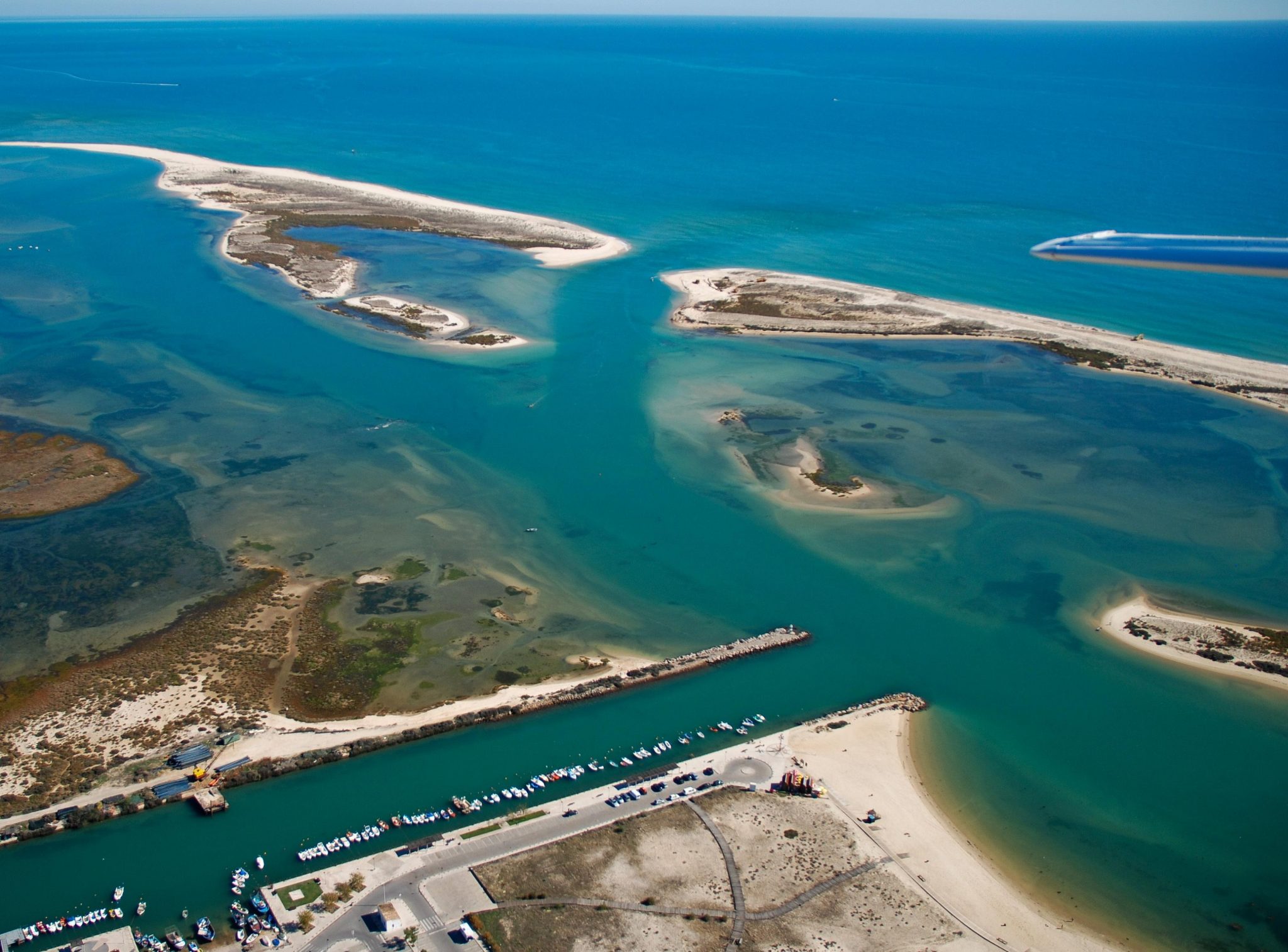
Ria Formosa Natural Park- Algarve, Portugal


There are many wild and interesting places to visit in the Algarve, but this is my favourite nature reserve in the region.
Although Parque Natural da Ria Formosa Centre is not signed from any direction and is difficult and frustrating to find, this important wildlife site (it is designated under the RAMSAR convention as a wetlands reserve of worldwide signficance) is very well worth a visit. It took us four attempts on separate visits to the Algarve to finally find it, and as we were travelling from the mid-Algarve by car, our wandering cannot be described as an environmentally-friendly activity, but it was worth the effort.


The Ria Formosa lagoon, located in the Algarve, in southern Portugal, is a system of barrier islands that communicates with the sea through six inlets. Five of these inlets are natural and have mobility characteristics. The sixth is an artificial inlet that was opened with the purpose of allowing easier access to the port of Faro, the capital of the Algarve.
Presently the main inlet of the system is the Faro-Olhão inlet, which was artificially opened. The process started in 1927 but only in 1952 were the engineering works completed and it assumed the present configuration.
Within the Ria Formosa system, different and sometimes antagonistic uses may be found. Part of the system is a Natural Park but Ria Formosa also plays an important role in the region's economy. Beyond the tourist use the system also supports other economic activities like seafood farms (including grooved carpet shell harvesting) and the port of Faro.
The Ria Formosa is also a designated Natural Park of over 170 km² and a stopping place for hundreds of different birds during the spring and autumn migratory periods.
It is also a reserve for various animal and plant species which can be  watched
in birdwatching programmes


The most important cities near the Ria Formosa are Tavira, Faro and Olhão.
There are also some towns in this area, whose names are: Fuzeta (which belongs to the municipality of Olhão), Santa Luzia, Cabanas de Tavira (these last two belonging to Tavira) and Cacela Velha (which belongs to Vila Real de Santo António).
Several buses run from Tavira to Cabanas and back each weekday, but there are no buses on Saturday afternoons nor all day Sundays and Holidays, even in summer. The nearest train station is in nearby Conceição which is on the Tavira to Vila Real line. That's about 1 mile /1.6km and an easy walk. 
Classified as a Natural Park in 1987, the Ria Formosa encompasses an area of about 18 000 hectares, and is protected from the sea by 5 barrier-islands and 2 peninsulas: the Peninsula of Ancão that the locals call island of Faro, the Barreta Island also known as Ilha Deserta, the Culatra Island (where the lighthouse of Santa Maria is located), the Island of Armona, the Island of Tavira, Cabanas Island and, finally, the Peninsula of Cacela. This awesome area extends along the leeward coast of the Algarve through the municipalities of Loulé, Faro, Olhão, Tavira and Vila Real de Santo António. 

Commercial activities like salt extraction and shellfish farming are quite important for the local populations. For instance the Ria Formosa is responsible for approximately 60% of the total of shellfish produced in the country.

Shellfish of every kind are found in Ria Formosa and a festival is held in Faro every year in summer


Sources.

Saturday, July 25, 2015

Iberian lynx returns to Spain from verge of extinction

An intense conservation campaign has brought the Iberian lynx back to the south of Spain from the verge of extinction barely 10 years ago, Guy Hedgecoe reports from Spain.
Female lynx with cubs (July 2015)
On it they watch an Iberian lynx cub learn to hunt by playing with a domestic rabbit in one of the centre's compounds. The lynx, the size of a small cat, is only a few weeks old but already has the sharply pointed ears and mottled fur that make the species so recognisable.
It swipes playfully at the rabbit with its paws, but still has a long way to go before it graduates to killing its own prey.
When it does, it will probably be released into the wild, following in the tracks of many other animals born in captivity here.
Just over a decade ago, the Iberian lynx, also known as Lynx pardinus, was on the verge of extinction, with only 90 animals registered, in the Andujar and Donana areas of southern Spain.

'Saving the species'

But an intense campaign over recent years has brought it back from the brink, with 327 lynxes believed to be roaming southern, central and western Spain, as well as parts of Portugal, last year.
Lynx in Donana national park
It is feared that rabbit haemorrhagic disease, a highly contagious virus, may harm the comeback of lynxes
Inside La Olivilla lynx breeding centre control room

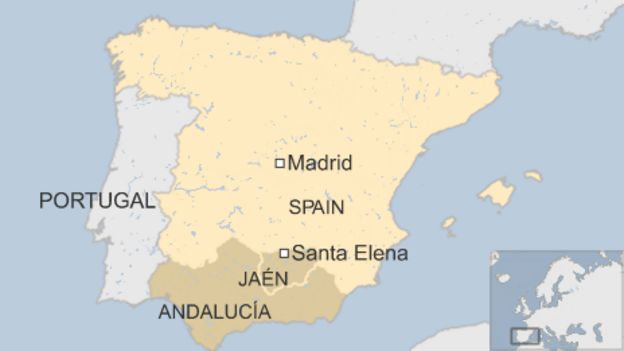
The La Olivilla lynx breeding centre in Santa Elena is at the forefront of the conservation programme

"We're on the way to saving the species," says Miguel Simon, director of the Iberlince lynx conservation programme.
"Losing this unique natural treasure would have been as bad for us as losing the Great Mosque in Cordoba or the Alhambra in Granada."
In June, the International Union for the Conservation of Nature (IUCN) improved the status of the Iberian lynx from "critically endangered" to "endangered". In its appraisal, the organisation saw the mammal's recovery as "excellent proof that conservation really works".
Around 140 specimens have been released into the wild, with the Iberian wildcat programme borrowing reintroduction techniques used by German conservationists.

Not all good news

But this success has not been cheap. Between 2002 and 2018, the programme will have received €69m (£49m; $76m) in funding, mainly from the European Union.
Much of that money has gone into three breeding centres in Spain, including in Santa Elena and one in Portugal.
Lynx undergoing treatment
Last year 22 lynxes were killed by vehicles on Spanish roads
Veterinarian Maria Jose Perez (left) and Miguel Simon (right) at La Olivilla breeding centre (July 2015)
Miguel Simon (right) - seen here with veterinarian Maria Jose Perez at La Olivilla breeding centre - says forecasts of the imminent demise of lynxes are "alarmist"
A lynx cub (July 2015)

Some wonder whether the IUCN was right to take the lynx off the "critically endangered" list

Teresa del Rey Wamba, a veterinarian who works on the conservation programme in southern Spain, says that prior to the animal's recent comeback, a lack of appropriate prey was a major problem, as was illegal hunting.
Clamping down on poaching and encouraging the growth of rabbit populations - the lynx's favoured food - were therefore key, with private landowners, local governments and hunting federations all supporting the programme.
But it is not all good news. Last year, 22 lynxes were killed by vehicles on Spanish roads.
Map
Miguel Simon says that while this is a problem, it also reflects how the lynxes' movement has increased as their numbers have risen.
His team has overseen the installation of underground tunnels, custom-built for the animals to cross busy roads, and more are planned.
Of greater concern however is a recent outbreak across southern Europe of rabbit haemorrhagic disease, a highly contagious virus that has been killing off the lynxes' staple diet since 2011 and reducing their reproductive rate.
In light of this threat, the IUCN decision to take the lynx off the "critically endangered" list was incorrect, according to Emilio Virgos, a lynx expert at Rey Juan Carlos University in Madrid.
"If all the data we have so far about how lynxes live and survive and reproduce are correct, and we have no reason to think otherwise, the number of lynxes… will drop drastically," he says of the outlook for the next few years.
He warns that extinction is still a possibility within decades.

line break

What is a lynx?

  • A medium-sized cat which lives in the wild
  • There are four different species - Eurasian, Iberian, Canada and Bobcat
  • The Eurasian lynx is the biggest - about 60cm tall - roughly the same size as a Labrador
  • The Iberian lynx is one of the rarest smaller wildcats in the world - mainly found in parts of Spain and Portugal
  • The Bobcat is found in North America while the Canada lynx lives in Canada and Alaska
  • Most lynxes are listed as threatened or endangered and are prized by poachers for their fur
  • Lynxes are usually only active at night and hunt deer, rabbits and hares for food

line break

While Mr Simon is worried about the rabbit virus, he describes such forecasts as "alarmist" and points to an emergency plan to boost rabbit numbers. Its success, he says, will depend in great part on continued funding.
"The battle for conservation of the lynx is never-ending," he says.
From BBC News Science/Environment

Sunday, December 14, 2014

Countries reach climate change agreement

Countries from all over the world have reached an agreement on how to limit the effects of climate change in the future.

Smoke from factory in Ahmadabad, India, Dec 2014

Leaders from 195 countries have been meeting in Peru, in South America, for two weeks.
They were trying to agree on plans and targets that each country would have to meet to reduce the amount of harmful gases it produces, and the amount energy it uses.
There were disagreements between richer and poorer countries at the summit about whether all nations should have the same targets.
Negotiators have now come up with a plan for countries to make their own pledges, which will be submitted at another conference next year.
Environmental groups have criticised the deal saying it weakens international climate rules.
United Nations members have reached an agreement on how countries should tackle climate change.
Delegates have approved a framework for setting national pledges to be submitted to a summit next year.
Differences over the draft text caused the talks in Lima, Peru, to overrun by two days.
Environmental groups have criticised the deal as a weak and ineffectual compromise, saying it weakens international climate rules.
The talks proved difficult because of divisions between rich and poor countries over how to spread the burden of pledges to cut carbon emissions.
'Not perfect'
The BBC's Matt McGrath in Lima says none of the 194 countries attending the talks walked away with everything they wanted, but everybody got something.
There was a great sense of relief among delegates when the announcement came in the early hours of Sunday morning, he adds, following 48 hours of talks without a break.
Peru's environment minister, Manuel Pulgar-Vidal, who chaired the summit, told reporters: "As a text it's not perfect, but it includes the positions of the parties."


The agreement was adopted hours after a previous draft was rejected by developing countries, who accused rich nations of shirking their responsibilities to fight global warming and pay for its impacts.
The final draft is said to have alleviated those concerns with by saying countries have "common but differentiated responsibilities".
The agreed document calls for:
  • An "ambitious agreement" in 2015 that reflects "differentiated responsibilities and respective capabilities" of each nation
  • Developed countries to provide financial support to "vulnerable" developing nations
  • National pledges to be submitted by the first quarter of 2015 by those states "ready to do so"
  • Countries to set targets that go beyond their "current undertaking"
  • The UN climate change body to report back on the national pledges in November 2015
Environmental groups were scathing in their response to the document, saying the proposals were nowhere need drastic enough.
Sam Smith, chief of climate policy for the environmental group WWF, said: "The text went from weak to weaker to weakest and it's very weak indeed."
Jagoda Munic, chairperson of Friends of the Earth International, said fears the talks would fail to deliver "a fair and ambitious outcome" had been proven "tragically accurate".


The talks followed last month's agreement on emissions targets between the US and China, but hopes it would encourage wider global agreement faded once talks began in Lima on 1 December.
On Saturday, US climate envoy Todd Stern had warned that the deadlock in the negotiations threatened the chances of a new global deal next year, saying it would be seen as "a major breakdown".

From CBBC newswround and BBC news

Sunday, September 21, 2014

Street protests demanding urgent action on climate change have attracted hundreds of thousands of marchers in more than 2,000 locations worldwide.


The People's Climate March is campaigning for curbs on carbon emissions, ahead of the UN climate summit in New York next week.
In Manhattan, organisers said some 310,000 people joined a march that was also attended by UN chief Ban Ki-moon.
Earlier, huge demonstrations took place in Australia and Europe.
"This is the planet where our subsequent generations will live," Mr Ban told reporters. "There is no 'Plan B' because we do not have 'Planet B'."
The UN Secretary General was accompanied by primatologist Jane Goodall and the French Ecology Minister, Segolene Royal.
New York hosted the largest of Sunday's protests, drawing more than half of the 600,000 marchers estimated by organisers to have taken part in rallies around the world.
Manhattan march
In Manhattan, Ban Ki-moon (in blue hat) was flanked by primatologist Jane Goodall (to his right) and French ecology minister Segolene Royal
Manhattan echoed to the sound of chants, horns and drums as the colourful protest progressed through the streets.
Organisers of the Manhattan event said it surpassed the largest previous protest on climate change.
They said the massive mobilisation was aimed at transforming climate change "from an environmental concern to an everybody issue".
Business leaders, environmentalists and celebrities joined the demonstration.
Hollywood actor Leonardo DiCaprio also took part, having been appointed as a UN representative on climate change last week.
Marchers at climate change demonstration in New York
Many of the marchers in New York wore costumes associated with indigenous people

READ THE WHOLE ARTICLE

Saturday, September 07, 2013

Green compensation proposals outlined-By Paul Rincon Science editor, BBC News website

The UK government has outlined its proposals on compensating for the loss of biodiversity through development.

Blue butterfly
Government proposals would mean developers would have to pay compensation equal to any damage to habitats


The idea of "biodiversity offsetting" is controversial, with some campaigners dubbing it a "licence to trash".
It means developers planning to build houses in environmentally sensitive areas would be allowed to go ahead if they could offset damage by paying for conservation activities elsewhere.
The environment department Defra has published a green paper on the scheme.

"Offsetting is an exciting opportunity to look at how we can improve the environment as well as grow the economy," said environment secretary Owen Paterson.
Commenting on the consultation, which will conclude on 7 November, he said: "We want to hear from developer and wildlife groups alike on how we can simplify the existing planning process while enhancing our natural environment.
"There is no reason why wildlife and development can't flourish side by side."
In England, six pilot areas were selected in 2012 for two year trials of a voluntary approach to offsetting through the planning system.
In March this year, a report from the government's Ecosystems Markets Task Force recommended that the offsetting scheme should be rolled out nationwide as a matter of priority.
Offsetting, it said, would "revolutionise conservation in England by delivering restoration, creation and long term management on in excess of 300,000 hectares of habitat over 20 years".
'Irreplaceable' habitats
Similar schemes have been up and running for many years in other parts of the world. But environmental groups have highlighted problems with the idea.
The Woodland Trust has campaigned against the inclusion of ancient woodlands in any offsetting scheme and it rejects the suggestion that the future of these habitats should rest on the proposed economic benefit of a given development.
The Trust's chief executive Sue Holden said she welcomed the fact this green paper recognised the "irreplaceable" nature of these woodlands. But she added: "We need to see a more robust use of planning law to support this, ensuring that irreplaceable habitats are treated as such.
"Offsetting should only ever be a last resort when all other avenues have been explored to avoid loss or damage.
"It is critical that any habitats created to compensate for loss are placed within the local area that suffered the original impact. Unfortunately, this still appears open to debate."
The Trust says that, in theory, losses to biodiversity in Kent, for example, could be compensated for in Derbyshire - ignoring the local value of habitats.
'Sound concept'
Meanwhile, Friends of the Earth described the plans as a licence to "trash nature". FOE's nature campaigner Sandra Bell said that nature was "not something that can be bulldozed in one place and recreated in another at the whim of a developer.
"Instead of putting nature up for sale, the government should strengthen its protection through the planning system and set out bold plans to safeguard and restore wildlife across the UK."
Some critics also suggest that developers could be tempted to put money on the table to pay for offsetting and not feel obliged to go through the preliminary steps of trying to avoid damage.
Supporters say that despite potential difficulties, the overall concept is sound. They point to the fact that money received from developers for relatively minor damage could be pooled to create a much larger conservation area.
Mike Clarke, chief executive of the RSPB, also said offsetting should only be considered when other options have been exhausted. He said: "If government want to get this right, they will have to listen very carefully to the conservation community and heed our warnings.
"They will also need to ensure that planning authorities have the expertise to assess proposals for offsetting, otherwise, it will go horribly wrong for wildlife."

Tuesday, June 04, 2013

Cheap coal 'threatens UK pollution targets'

Coal on the global market is so cheap that it threatens government attempts to tackle climate change, the chairman of the Environment Agency has warned.
Lord Smith says the UK’s share of electricity generated by coal is up to 40% – the highest since 1996.
Unless this trend is curbed, he says, the UK will miss its targets on curbing climate change and sulphur pollution.
The price of coal has been driven down by the dash for shale gas in the US.
Gas is much less polluting than coal, so carbon dioxide (CO2) emissions have fallen in the US. But European power generators have gobbled up the resulting cheap coal, driving carbon emissions up in several nations.
The EU's statistical agency Eurostat estimates that from 2011 to 2012, CO2 emissions increased by 3.9% in the UK. The rise is most likely to be due to increased coal burning.
UK emissions of sulphur, which is damaging to health, have risen when they are supposed to be falling.
Lord Smith urges the government to commit to long-term targets to remove almost all carbon pollution from electricity generation by 2030. MPs are due to vote on this issue next week.
He also urges ministers to resist any attempts by power generators to keep open old coal stations which are due to close under an EU directive on air pollution.
Lord Smith told the BBC: “There’s lots of talk about a dash for gas but in effect we’re in a dash for coal that’s completely unsustainable. The government must ensure it doesn’t continue.”
Lord Smith says it is important the UK develops its own reserves of shale gas, so long as gas power stations are able to store the resulting CO2 emissions in the future.
"If we lock ourselves into gas generation for the next 40 years without capturing the CO2 emissions, we will never meet our targets on climate change,” he said.
"At the current rate of progress we will miss our future carbon budgets."
A government spokesman said measures were in place to ensure new coal power stations could not be built unless they captured their carbon emissions.
There were no plans, he said, to extend the life of old coal power stations.

Wikipedia

Search results