To my dear visitors and commenters

Hi, everybody! I've noticed with lots of joy and happiness, that thousands of comments have been written in my posts. It's wonderful that so may people around the world appreciate my work. Therefore, I want to thank you for that and ,at the same time I want to ask you to be this blog's followers. It's fast and easy! Make it be even more visited and spread all over the world! I'm a woman, a teacher of English in Portugal, and I've been away for quite a long time because of my father's health. Unfortunately he died from Covid19 a few months ago. Now I felt it was time to restart my activity in this and other blogs I owe. I've recently created a new one in a partnership with a street photographer, Mr. Daniel Antunes. He's fabulous! https://pandpbydandd.blogspot.com I'd like you to visit it and, who knows, become our followers. The poems, chronicles and thoughts are all mine. Thank you so much! Kisses :-)

Search This Blog

Showing posts with label technology. Show all posts

Monday, March 28, 2016

UN: 2015 record year for global renewables investment

Global investment in renewable energy hit a record US$285.9bn (£202.3bn) in 2015, beating the previous high of $278.5bn set in 2011, a study shows.

UK solar farm (Image: PA)
The solar and wind industries remain the driving force behind the growth in investment in the global renewable energy sector

The 10th Global Trends in Renewable Energy Investment also showed that investment in developing nations exceeded that in developed countries.
In another first, more new renewables capacity than fossil-fuel generation came online during 2015.
But it warned that much more had to be done to avoid dangerous climate change.
The assessment, produced by the Frankfurt School-Unep Collaborating Centre for Climate and Sustainable Energy Finance and Bloomberg New Energy Finance, showed that the developing world committed a total of US$156bn (up 19% on 2014 levels) in renewables (excluding large hydro) while developed nations invested US$130bn (down 8% from 2014 levels).
"A large element in this turnaround was China, which lifted its investment by 17% to US$102.9bn, or 36% of the world total," the report observed.
However, other developing nations also contributed as six of the top 10 investors were developing nations.
In the foreword, UN secretary-general Ban Ki-moon said the report's findings increased confidence that a low-carbon world was obtainable.
He wrote: "We have entered a new era of clean energy growth that can fuel a future of opportunity and greater prosperity for every person on the planet."
However, he warned that in order to avoid dangerous climate change required an "immediate shift away from fossil fuels".
Electricity generation, Germany (Getty Images)
At the Paris climate talks, nations agreed to decarbonise the global economy by the end of the 21st Century
UN Environment Programme Finance Initiative's Eric Usher, one of the assessment's co-authors, said the findings were, overall, positive and seemed to indicate that a shift was occurring.
"Renewables investment is at a new high, and investment is shifting geographically with developing countries investing more than developed countries for the first time (55%/45%)," he observed.
However, he did add that there were areas that caused concern when the focus shifted to regional or national levels.
"There is a still a lot of uncertainty, especially within Europe, with a degree of policy backtracking or the phasing down of support for the (renewables) industry," he told BBC News.
Fellow co-author Ulf Moslener, head of research at the Frankfurt School-Unep Centre, said the latest figures indicated that shifts in attitude, as well as structure, were occurring.
"This level of investment means... more than half of the capacity added to the global energy mix is renewables-based," he said.
Prof Moslener added that renewable generation was still dwarfed by fossil fuel-based sources, and only accounted for 10% of the global mix.
"That shows us that we are quite far from having a system that is based on renewables," he told BBC News.
Lead author Angus McCrone, chief editor at Bloomberg New Energy Finance, said that although global oil prices had fallen sharply recently, the cost of generating electricity via renewables had also decreased significantly, adding that there were also other factors that made the industry attractive to investors.
"One advantage that renewables has is that it can be built very quickly," he explained.
"If you are a power-hungry emerging market in Africa or South America, for instance, you can put up a wind farm in six to nine months, or a solar plant in three to six months.
"However, if you want to put up a coal-fired power station, it is going to take three or four years. A nuclear power plant is going to take substantially longer than that."
From BBC News-Science / Environment


Saturday, February 20, 2016

Awesome time-lapse of the sun over a year


This amazing timelapse footage of the sun was filmed over a whole year by the NASA
It was released to mark the six year anniversary of Nasa's Solar Dynamics Observatory, which was set up to capture changes in the sun. A photo was taken every 12 seconds over the course of a year.
(CBBC Newsround)


NASA’s Solar Dynamics Observatory (SDO) is always following the sun as it orbits the Earth. As part of its ongoing mission, the SDO captures high-resolution images of the sun at regular intervals, allowing scientists to monitor solar activity such as sun spots, solar flares, and coronal mass ejections. NASA’s multi-year mission just completed its sixth year of data collection and commemorated that milestone by releasing a stunning time-lapse video of the past year in review.
The six-minute video shows the sun over a period of just over a year, starting from January 1, 2015 and ending on January 28, 2016. The first half of the video shows the time-lapse with some celestial-inspired background music, while the second half explains the features and wavelengths that you are seeing. The ultra-high-definition images are shown on YouTube at a rate of approximately 30 frames per second with a resolution of 3,840 by 1,260 pixels. Each frame of the video corresponds to 2 hours of time on Earth. On its website, NASA also provides a downloadable version of the video that has a 59.94 fps frame rate with each frame representing one hour.

Friday, February 12, 2016

Einstein's gravitational waves 'seen' from black holes 100 years after his prediction

Scientists have made a huge discovery about the universe - they have detected the waves made after two black holes collided.

Black holes can't be seen, but scientists know they exist because of the way they move things around them in the universe.
In a far away galaxy, two black holes smashed together more than a billion years ago.
The shock waves from this crash have just reached earth, and scientists were able to detect the signal for the first time.

Prof. Stephen Hawking says discovery of gravitational waves provides ‘completely new way


They have observed the warping of space-time generated by the collision of two black holes more than a billion light-years from Earth.
The international team says the first detection of these gravitational waves will usher in a new era for astronomy.
It is the culmination of decades of searching and could ultimately offer a window on the Big Bang.
The research, by the Ligo Collaboration, has been published today in the journalPhysical Review Letters.
The collaboration operates a number of labs around the world that fire lasers through long tunnels, trying to sense ripples in the fabric of space-time.
From BBC News

Wednesday, January 20, 2016

First flower blooms in space on International Space Station

Astronauts have grown the first flower in space on-board the International Space Station.

Zinnia blooming in space
The zinnia flower is the first to grow in space
The orange zinnia flowers can be eaten and were grown in the 'Veggie' laboratory, which was installed on the space station in 2014.
Growing their own food in space is a big step for astronauts because it means they could go on longer missions in the future.
They've grown lettuce before but the zinnia is the first to bloom flowers.
It shows that it may be possible to grow other flowering crops like tomatoes.
Scott Kelly with lettuce on ISS
Scott Kelly took this selfie with his crop of lettuce in the Veggie Laboratory
Growing plants in space might be trickier than you think - watering flowers is much more difficult in a place without gravity!
Another problem was that the high levels of moisture in the air inside the space station led to mould growing on some leaves.
The astronauts cleaned the plants, cut away the mouldy leaves, and set up a fan to try and dry out the crop. But the high speed fan did its job a bit too well, and the plants got too dry.
Astronaut Scott Kelly took charge of the flowers, and worked hard to revive them over Christmas, and on 12 January, a few petals started to peak out.
When the flowers finally bloomed, Scott shared the photo saying 'first ever flower grown in space makes its debut!'
From CBBC Newsround

Wednesday, August 19, 2015

A solution for the drought problem in California?

The sea of 96MILLION plastic balls that LA hopes will save it from drought: Reservoir is covered in an ocean of black spheres to stop 300million gallons of water evaporating


Black plastic balls were this week released into the 175-acre Los Angeles Reservoir in Sylmar, California
  • They are designed to cover the water, prevent evaporation and protect it from dust, rain, chemicals and wildlife
  • The polyethylene balls, around the size of an apple, cost 36 cents each and are black to help deflect the UV rays.

  • With no apparent relief to California's record-breaking drought, Los Angeles has turned to more unusual methods to protect the city's water.
    Officials recently released 96 million floating 'shade balls' into the 75-acre Los Angeles Reservoir in Sylmar, California.
    The black plastic balls are designed to help protect the water against dust, rain, chemicals and wildlife, as well as prevent 300 million gallons of water from evaporating each year. 


  • With no apparent relief to California's record-breaking drought, Los Angeles has turned to more unusual methods to protect the city's water. City officials recently released ninety six million floating 'shade balls' into the Los Angeles Reservoir to cover the complex' water
    The balls work by floating on the surface and blocking the sun's rays.

    As well as protecting against evaporation, they also prevent the chemical reaction that creates the carcinogenic compound bromate.
    For most people, exposure to bromate - created from naturally-occurring bromide in water -is unlikely to be cause problems.
    But some people who ingest large amounts of bromate have suffered nausea, vomiting, diarrhea and abdominal pain.

    The balls also form a protective barrier across the surface that helps keep birds, animals and other contaminants out.
    Dr Brian White, a now-retired Los Angeles Department of Water and Power (LADWP biologist), was the first person to think of using shade balls for water quality.

    HOW DO THE SHADE BALLS WORK? 

    • The plastic black balls, around the size of an apple, cost 36 cents each.
    • They floating on the surface and block the sun's rays to prevent water from evaporating.
    • By doing this, they prevent the chemical reaction that creates the carcinogenic compound bromate.
    • The balls also form a protective barrier across the surface that helps keep birds, animals and other contaminants out away. 
    From Mailonline

    Saturday, July 25, 2015

    Step forward for computing by light

    Engineers and physicists have discovered a property of silicon which could aid the development of faster computers.

    Silicon detector
    Currently, copper wires transfer information in a computer; the process is slowed down as the wires heat up.
    "Photonic" and "spintronic" computing is the principle of transferring information by light or electron spin.
    This new property means that silicon-based light detectors identify spin, so more information can be transferred.
    Spin is a property of sub-atomic particles, which influences the ordering of electrons and nuclei in atoms and molecules.
    The discovered property is usually observed in materials containing heavy elements, which are difficult to integrate into existing computing systems that are composed mainly of silicon.
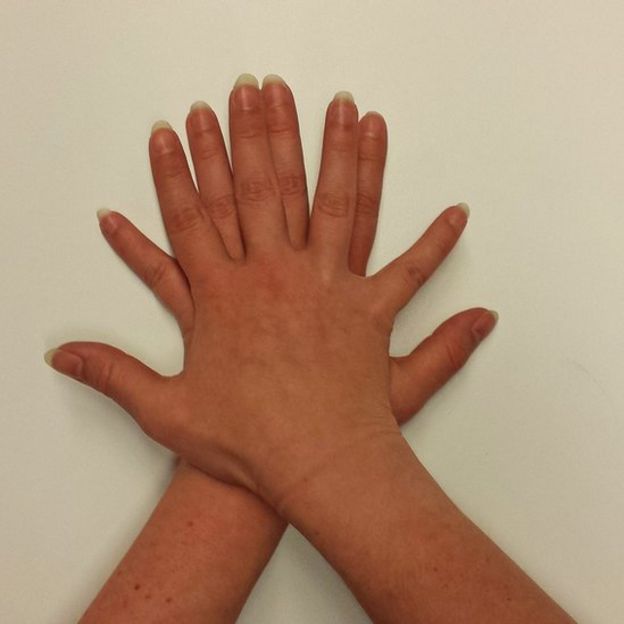
    Silicon is a highly symmetrical crystal, but by changing the geometry of it, the team was able to impart "chiral" properties to it. Something is chiral if the mirror image of the object cannot be superimposed on the original.
    Hands
    Something is chiral if the mirror image of the object cannot be superimposed on the original; one example is your hands
    From BBC News -Science/ Environment

    Monday, April 06, 2015

    The dystopian lake filled by the world’s tech lust

    Hidden in an unknown corner of Inner Mongolia is a toxic, nightmarish lake created by our thirst for smartphones, consumer gadgets and green tech, discovers Tim Maughan.

    " I’d seen some photos before I left for Inner Mongolia, but nothing prepared me for the sight "
    — The alien environment at Baotou lake

    (Credit: Liam Young/Unknown Fields)
    Black sludge pours into the lake - one of many pipes lining the shore (Credit: Liam Young/Unknown Fields)

    From where I'm standing, the city-sized Baogang Steel and Rare Earth complex dominates the horizon, its endless cooling towers and chimneys reaching up into grey, washed-out sky. Between it and me, stretching into the distance, lies an artificial lake filled with a black, barely-liquid, toxic sludge.
    Dozens of pipes line the shore, churning out a torrent of thick, black, chemical waste from the refineries that surround the lake. The smell of sulphur and the roar of the pipes invades my senses. It feels like hell on Earth.
    Welcome to Baotou, the largest industrial city in Inner Mongolia. I'm here with a group of architects and designers called the Unknown Fields Division, and this is the final stop on a three-week-long journey up the global supply chain, tracing back the route consumer goods take from China to our shops and homes, via container ships and factories.
    You may not have heard of Baotou, but the mines and factories here help to keep our modern lives ticking. It is one of the world’s biggest suppliers of “rare earth” minerals. These elements can be found in everything from magnets in wind turbines and electric car motors, to the electronic guts of smartphones and flatscreen TVs. In 2009 China produced 95% of the world's supply of these elements, and it's estimated that the Bayan Obo mines just north of Baotou contain 70% of the world's reserves. But, as we would discover, at what cost?
    Element of success
    Rare earth minerals have played a key role in the transformation and explosive growth of China's world-beating economy over the last few decades. It's clear from visiting Baotou that it's had a huge, transformative impact on the city too. As the centre of this 21st Century gold-rush, Baotou feels very much like a frontier town.
    Workers in a factory in Shenzhen make MP3 players (Credit: Kate Davies/Unknown Fields)
    Workers in a factory in Shenzhen make MP3 players (Credit: Kate Davies/Unknown Fields)
    In 1950, before rare earth mining started in earnest, the city had a population of 97,000. Today, the population is more than two-and-a-half million. There is only one reason for this huge influx of people - minerals. As a result Baotou often feels stuck somewhere between a brave new world of opportunity presented by the global capitalism that depends on it, and the fading memories of Communism that still line its Soviet era boulevards. Billboards for expensive American brands stand next to revolution-era propaganda murals, as the disinterested faces of Western supermodels gaze down on statues of Chairman Mao. At night, multicoloured lights, glass-dyed by rare earth elements, line the larger roads, turning the city into a scene from the movie Tron, while the smaller side streets are filled with drunk, vomiting refinery workers that spill from bars and barbecue joints.

    Even before getting to the toxic lake, the environmental impact the rare earth industry has had on the city is painfully clear. At times it’s impossible to tell where the vast structure of the Baogang refineries complex ends and the city begins. Massive pipes erupt from the ground and run along roadways and sidewalks, arching into the air to cross roads like bridges. The streets here are wide, built to accommodate the constant stream of huge diesel-belching coal trucks that dwarf all other traffic.
    A coal mine in Baotou (Credit: Liam Young/Unknown Fields)
    A coal mine in Baotou (Credit: Liam Young/Unknown Fields)
    From BBC News

    Wednesday, March 11, 2015

    Solar Impulse: Oman to India journey sets new record

    Solar Impulse, the fuel-free aeroplane, has successfully completed the second leg of its historic attempt to fly around the world.

    Solar Impulse
    Project chairman, Bertrand Piccard, piloted the vehicle from Muscat in Oman to Ahmedabad in India, crossing the Arabian Sea in the process.
    Tuesday's journey took just over 15 hours.
    The distance covered - 1,468km - set a new world record for a flight in a piloted solar-powered plane.
    The vehicle has another 10 legs ahead of it over the course of the next five months.
    Included in that itinerary will be demanding stretches when the craft has to fly over the Pacific and Atlantic oceans.
    Solar Impulse
    Piccard is sharing the flying duties with project partner and CEO, Andre Borschberg, who made Monday's inaugural trip from Abu Dhabi to Muscat.
    Solar Impulse arrived in Ahmedabad in darkness, its wings illuminated by LEDs, and its propellers driven by the energy stored in its batteries.
    The plane had left Muscat at 06.35 (02:35 GMT) and put its wheels down at Sardar Vallabhbhai Patel International Airport at 23.25 local time (17:55 GMT).
    Preparations are already under way for the next leg to Varanasi in northeast India, although mission planners say that will not be for another four days, at least.
    The time will be spent carrying a campaigning message on the topic ofclean technologies to the local Ahmedabad people, and the wider Indian population.
    Solar Impulse heads out over the Arabian Sea
    Solar Impulse heads out over the Arabian Sea
    Global map
    The Solar Impulse project has already set plenty of other world records for solar-powered flight, including making a high-profile transit of the US in 2013.
    But the round-the-world venture is altogether more dramatic and daunting, and has required the construction of an even bigger plane than the prototype, Solar Impulse-1.
    This new model has a wingspan of 72m, which is wider than a 747 jumbo jet. And yet, it weighs only 2.3 tonnes.Its light weight will be critical to its success.
    So, too, will the performance of the 17,000 solar cells that line the top of the wings, and the energy-dense lithium-ion batteries it will use to sustain night-time flying.Operating through darkness will be particularly important when the men have to cross the Pacific and the Atlantic.
    The slow speed of their prop-driven plane means these legs will take several days and nights of non-stop flying to complete.Piccard and Borschberg - they take it in turns to fly solo - will have to stay alert for nearly all of the time they are airborne.
    They will be permitted only catnaps of up to 20 mins - in the same way a single-handed, round-the-world yachtsman would catch small periods of sleep.They will also have to endure the physical discomfort of being confined in a cockpit that measures just 3.8 cubic metres in volume - not a lot bigger than a public telephone box.
    Bertrand Piccard
    Bertrand Piccard looking fresh after more than 15 hours in the cockpit of Solar Impulse
    The Solar Impulse venture recalls other great circumnavigation feats in aviation - albeit fuelled ones.In 1986, the Voyager aircraft became the first to fly around the world without stopping or refuelling.
    Piloted by Dick Rutan and Jeana Yeager, the propeller-driven vehicle took nine days to complete its journey.Then, in 2005, this time was beaten by the Virgin Atlantic GlobalFlyer, which was solo-piloted by Steve Fossett. A jet-powered plane, GlobalFlyer completed its non-stop circumnavigation in just under three days.
    From BBC Sci/ Environment

    Saturday, March 07, 2015

    World's first lagoon power plants unveiled in UK

    Plans to generate electricity from the world's first series of tidal lagoons have been unveiled in the UK.

    Swansea Bay lagoon scheme
    The proposed Tidal Lagoon Swansea Bay project would be the world's first man-made, energy-generating lagoon
    The six lagoons - four in Wales and one each in Somerset and Cumbria - will capture incoming and outgoing tides behind giant sea walls, and use the weight of the water to power turbines.
    A £1bn Swansea scheme, said to be able to produce energy for 155,000 homes, is already in the planning system.
    Energy Secretary Ed Davey says he wants to back the project.
    The cost of generating power from the Swansea project will be very high, but the firm behind the plan says subsequent lagoons will be able to produce electricity much more cheaply.
    It says the series of six lagoons could generate 8% of the UK's electricity for an investment of £30bn.
    As well as Swansea, the proposed lagoon sites are Cardiff, Newport, and Colwyn Bay in Wales; Bridgwater in Somerset; and West Cumbria.
    Each will require engineering on a grand scale. In Swansea, the sea wall to contain the new lagoon will stretch more than five miles and reach more than two miles out to sea.
    The Cardiff lagoon could include up to 90 turbines set in a 14-mile (22km) breakwater around Cardiff Bay and could generate power for about 14 hours each day.
    A planning application for the project is expected in 2017.
    If approved, it could be generating power by 2022.
    Swansea Bay lagoon scheme
    Some anglers fears the lagoon might affect migrating fish, but planners say the new sea wall would act as a reef

    Swansea Bay lagoon scheme
    The firm proposing the lagoon say they want it to become a venue for culture and sports

    The cost would be funded by electricity bill-payers under the existing government scheme to promote home-grown, low-carbon energy.
    Tidal Lagoon Power is in negotiations with the government over how much it can charge for its power.
    It wants £168 per MWh for electricity in Swansea, reducing to £90-£95 per MWh from a second, more efficient lagoon in Cardiff.
    'Energy dance'
    The £90 figure compares favourably with the £92.50 price for power from the planned Hinkley nuclear station, especially as the lagoon is designed to last 120 years - at a much lower risk than nuclear.
    Mr Davey told BBC News: "I can't make a decision on this yet because discussions are ongoing. But I'm very excited by the prospect of tidal power.
    "We have got some of the biggest tidal ranges in the world and it would be really useful if we could harness some of that clean energy."


    From BBC Sci/ Environment

    Wednesday, October 29, 2014

    App that can recognise bird sounds set for launch

    Are you a fan of birdwatching?
    This is the right app for you!

    Florence Wilkinson, Warblr chief executive, demonstrates the app

    Is it a swallow, a lark or a dove?
    A new app that can automatically recognise bird sounds is to be launched in spring.
    Warblr has been developed by two scientists.
    The app works by identifying a recorded sound and then returns a list of the most likely results.
    Dan Stowell, who helped developed the technology said the app was similar to the music-recognition service Shazam.
    But there are still problems that need to be solved.
    In three separate attempts, as part of a BBC test, the app was unable to correctly identify the bird.
    Canada geese
    Warblr struggled to distinguish between a canada goose and screaming child
    "It is not perfect... this is obviously very new technology, so we have a bit of work to do still," said Warblr's co-founder Florence Wilkinson.
    She demonstrated the app to the BBC by recording a Canada goose.
    But she said that interference from a "screaming child" caused the app to mis-identify the calls as being a crow.
    The correct answer appeared in second place.
    From CBBC nerwsround
    In test two, she tried to identify a moor hen and some coots.
    "I don't know if we can count that as a victory because the coot came up as the last result on the list although they are all pretty close," she said.
    Moor hen
    Warblr also had trouble identifying the moor hen
    "We've got a few that are clearly wrong there, we've got the black-tailed godwit, a fieldfare, for example.
    Although other apps, such as Bird Song ID, which can recognise and identify bird calls exist, Warblr's developers claim its database is significantly larger.

    Saturday, October 04, 2014

    Green phone boxes to charge mobile phones in London

    Old phone boxes in London are being brought back to life with a new use - as solar-powered charging stations for mobile phones.


    The first of six boxes was unveiled on Tottenham Court Road in the capital this week.
    The service is free to use although users will be shown adverts as they wait for their phone to charge.
    BBC technology reporter Dougal Shaw checked one out with Harold Craston, one of the team of newly-graduated students from London School of Economics who developed the new 'solarbox'.
    From CBBC nEwsround

    Wednesday, August 06, 2014

    Dispute over 'bonkers' EU energy savings plan

    EU commissioners are meeting today to agree an energy savings target for 2030 amid serious disagreement about how ambitious it should be.

    insulation
    Fibre glass wall insulation is one of the ways of curbing energy loss in homes across Europe


    Several countries, anxious over the security of their Russian gas supplies, are pushing for a tough, binding goal.
    But EU officials are reluctant to agree because they fear it might damage the overall energy and climate package.
    Campaigners and industry have described the reluctance to embrace ambitious savings goals as "bonkers".
    Compared to the attention given to cutting carbon or investing in renewables, energy efficiency has long been the Cinderella of the EU's climate and energy policies.
    But the crises in the Crimea and Ukraine earlier this year have pushed energy savings up the political ladder. Several governments are now pushing for a tough target as they believe it will help them to limit their dependence on Russia.
    In January, after difficult negotiations, the EU published outline proposals on what its targets for 2030 should be.
    They proposed a 40% cut in carbon, while renewables would make up 27% of energy consumed. Energy efficiency was due to be increased by 27%.
    Under pressure from countries like Germany, the Commission examined a range of higher efficiency targets up to 40%.
    The result of an internal review showed that while a 27% goal would cut gas imports by roughly 16%, this would double to around 33% if the savings target was raised to 35%.
    The review also pointed out that the costs of going for these targets would be dramatically offset by gains in employment from all the insulation jobs that would be created plus the reduction in fuel consumed.
    drilling
    Incentives to insulate would be expensive but generate jobs according to reports

    From BBC Sci/Environment 


    Sunday, March 02, 2014

    Japan earthquake spurs technology innovation

    The technology-loving nation of Japan made good use of its unique innovations and social networks in the aftermath of the 2011 earthquake and tsunami that followed.


    And the disaster has continued to spur developments in the country in everything from energy generation, smartphones, transport and emergency response technology.
    Dan Simmons reports on a range of advances that aim to help the population prepare for future disasters.

    Tuesday, January 14, 2014

    Drones being tested to protect rhinos

    Rhinos in Kenya could soon be protected by remote controlled helicopters kitted out with the latest gadgets.

    Rhinos

    A team of US engineers from Airware travelled to Kenya to test their drones in East Africa's largest black rhino sanctuary, Ol Pejeta.
    Their remote controlled drones can fly anywhere in the park, sending live video back to base.
    The drones also have a heat detecting camera which makes animals and poachers easy to spot.
    It's zhoped devices like this will help park rangers keep a close eye on their animals, and deter poachers from hunting in the park.
    Airware boss Jonathan Downey said: "We still have more development to do but we're extremely encouraged and quite proud to be pioneering drones that can preserve some of our planet's most threatened species."

    CBBC newsround

    Over the two-week test, Airware used three different drones: two fixed-wing aircraft and one flexible wing. "They were designed to operate completely autonomously, well out of the line of sight of the pilot," says Airware founder and CEO Jonathan Downey. Before the drones, park rangers had been using jeeps and small aircraft to patrol for poachers and check up on the animals. "Using drones allows them to spend a lot more time in the air, seeing a lot more detail, and for far cheaper than using traditional aircraft or jeeps," says the founder.


    Sunday, October 13, 2013

    Trying to be green in the desert

    Cities in desert locations - such as Dubai, Doha, Abu Dhabi and Kuwait - take a bigger toll on the environment than those elsewhere.
    The air conditioning alone requires a huge amount of power - but that has not stopped some people trying to be environmentally friendly.
    Desley Humphrey visited The Change Initiative - a company that has won awards for being green.
    From BBC Sci/ Environment
    This video shows an example of how people can be environment friendly even in places where nothing is easy, what echology is concerned, because of the extremely high temperatures and the lack of materials as most of these places are located in desert areas.
    Watch the video and find out how human capacity, willingness and preseverance may be used to protect the environment and can creat sustainable buildings.

    Thursday, July 04, 2013

    Unmanned Russian rocket crashes in Kazakhstan

    An unmanned Russian Proton-M rocket has crashed just seconds after its launch from the Russian Baikonur facility in Kazakhstan.


    The rocket exploded over the Russian-leased Baikonur launch facility in Kazakhstan where it was launched

    Dramatic video footage broadcast by Russian TV shows the rocket break up before exploding into a fireball over the Baikonur cosmodrome.
    Russia's Interfax news agency reported that up to 500 tonnes of poisonous rocket fuel may have been released and contaminated the crash site.
    There were no reported injuries.
    The rocket was carrying three satellites for Russia's Glonass (global) navigation satellite system.
    It is not yet clear what caused the accident.
    It is not the first incident involving a Proton-M rocket, according to the BBC's Steve Rosenberg in Moscow.
    A similar rocket crashed shortly after it was launched six years ago, and in 2010 another rocket failed to put three navigation satellites into orbit.

    From BBC News- Sci/Environment

    Wikipedia

    Search results