To my dear visitors and commenters

Hi, everybody! I've noticed with lots of joy and happiness, that thousands of comments have been written in my posts. It's wonderful that so may people around the world appreciate my work. Therefore, I want to thank you for that and ,at the same time I want to ask you to be this blog's followers. It's fast and easy! Make it be even more visited and spread all over the world! I'm a woman, a teacher of English in Portugal, and I've been away for quite a long time because of my father's health. Unfortunately he died from Covid19 a few months ago. Now I felt it was time to restart my activity in this and other blogs I owe. I've recently created a new one in a partnership with a street photographer, Mr. Daniel Antunes. He's fabulous! https://pandpbydandd.blogspot.com I'd like you to visit it and, who knows, become our followers. The poems, chronicles and thoughts are all mine. Thank you so much! Kisses :-)

Search This Blog

Showing posts with label Extinction. Show all posts

Thursday, April 07, 2016

War threatens world's largest gorilla

Numbers of the world's largest type of gorilla, the Grauer's gorilla, have fallen dramatically.

Gorilla

The gorilla is now considered "critically endangered" which means they might soon be totally wiped out.

Where do they live?

The gorilla lives in the eastern part of the Democratic Republic of Congo, in central Africa.
The number of gorillas there has fallen from 17,000 in 1994 to just 3,800 today.

Why is it happening?

War in the the Democratic Republic of Congo has affected the number of Grauer's gorillas living there.
The forests where they live are being destroyed because of the fighting.
They have also been illegally hunted for their meat because in some areas there is not enough food to eat.
From CBBC Newsround

Saturday, April 02, 2016

Number of wild tigers could treble

The number of tigers living in the wild could rise in the next 20 years.

Tiger
At the moment there are only around three-thousand wild tigers living in Asia. The WWF believe that's 97% fewer than there were 100 years ago. Now experts say that number could treble if action is taken to protect their habitats.
Tiger yawning
Tigers can be found in 13 different countries around the world
Tiger populations have been affected by hunting, poaching and the loss of their habitats, to make way for roads, railways and towns.
Four of the sub-species of tigers are thought to be endangered and two are listed as 'critically' threatened.
Tiger skins
Tigers are poached for their skin, which some people use as decoration or rugs
But experts in the US say the population could grow.
A team at the University of Minnesota in the US have studied satellite images of places where tigers live, like forests.
The technology has helped identify specifically where tigers are losing their habitat.
They say that if the animals are given special 'corridors' or areas to make their territory bigger, the numbers could treble.
Dr Anup Joshi said: " Enough wild habitat remains to allow a range-wide doubling of the wild tiger population."
"The global population could approach a trebling in the next two decades." he added.
From CBBC Newsround

Monday, March 28, 2016

Ash tree set for extinction in Europe

The ash tree is likely to be wiped out in Europe, according to a review of the evidence.

Ash tree with suspected dieback
The chalara dieback has devastated ash trees across Europe

The trees are being killed off by the fungal disease ash-dieback along with an invasive beetle called the emerald ash borer.
According to the research, published in the Journal of Ecology, the British countryside will never look the same again.
The paper says that the ash will most likely be "eliminated" in Europe.
This could mirror the way Dutch elm disease largely wiped out the elm in the 1980s.
Ash trees are a key part of the treescape of Britain. You don't have to go to the countryside to see them. In and around towns and cities there are 2.2 million. In woodland, only the oak is more common.
However, according to a review led by Dr Peter Thomas of Keele University and published in the Journal of Ecology, "between the fungal disease ash dieback and a bright green beetle called the emerald ash borer, it is likely that almost all ash trees in Europe will be wiped out - just as the elm was largely eliminated by Dutch elm disease".
Ash dieback, also known as Chalara, is a disease that was first seen in Eastern Europe in 1992. It now affects more than 2 million sq km, from Scandinavia to Italy.

Thursday, March 24, 2016

Turtles in trouble as warming beaches turn eggs female

Can you imagine if the temperature decided whether you were born a girl or a boy?
Well that's exactly what happens with turtles.
But experts in Australia are now worried that rising temperatures over time could cause chaos for turtle populations by creating too many female turtles.

From CBBC Newsround


Researchers investigating the impact of rising temperatures on sea turtles are travelling to some of the most remote beaches in Australia to work out which populations are at risk of being feminised into extinction.
In a phenomenon being seen worldwide, warming temperatures are resulting in an increasing number of turtle eggs hatching female.
The race is now on to work out which rookeries are most at risk in Australia, with a University of Western Australia (UWA) team focused on turtle breeding areas on the Kimberley coast.

"This is very fundamental research, and will give us insights fifty years ahead about whether sex ratios will change, where distributions might shift to, and what impact climate change is going to have," team leader Nicki Mitchell said.
Blair Bentley holding a baby turtle on a beach on the Kimberley coast.
The tipping point for sex determination in turtles is thought to be just over 29 degrees Celsius. If the beach sand is any warmer the incubating eggs will hatch female, however if it is any cooler, the hatchlings will be male.
The problem is that beaches are heating up across much of the globe, and that could have big implications for turtle rookeries.
Researcher Blair Bentley said whole populations could be at risk.
"If it keeps getting warmer there are going to be more females being produced, and over time the males will keep dying at a greater rate than they are being replenished, so it's what's called demographic collapse," he said.
"There might still be males in the population, but there'll be far more females, and reproductive success will go down significantly."

Friday, March 18, 2016

Great Barrier Reef coral 'bleaching' level increased

Authorities in Australia have raised the threat level for coral 'bleaching' in the Great Barrier Reef, after divers found that lots of coral had died.

Divers
The Great Barrier Reef is the world's largest living structure, and is home to thousands of plants and animals - it is so big it can even be seen from space.
Divers have found that an increase in the sea's temperature has been putting the coral which grows there under a lot of stress causing 'bleaching', which means a loss of colour.
bleached coral

What is bleaching?

Many types of coral have a special relationship with tiny algae that live in the coral.
These tiny algae produce about 90% of the food the coral needs to grow, and give them their bright colours.
Bleaching happens when sea temperatures get too high or low, causing the algae to get 'stressed out' and leave the coral.
This turn the coral white and leaves it very vulnerable.
An increase of just one degree Celsius for four weeks can cause bleaching. If this continues for more than eight weeks, the coral can die.
diver looking at coral bleaching

Has this happened before?

In 2002 the surface temperature of the sea water in the Great Barrier Reef increased by around 2-3 degrees causing one of the worst bleaching incidents on record, affecting more than 60% of the coral.
While some coral reefs can recover from bleaching in a few years, others don't recover at all.
The Great Barrier Reef Marine Park Authority have now raised the bleaching threat level, and have said that there is a very high risk of mass coral bleaching this month.
The Australian government said it is working closely with the marine rangers to help keep an eye on the coral for the next few months to see how it is doing.
From CBBC Newsround

Sunday, March 13, 2016

Europe's rarest seabird 'faces extinction'

Europe's rarest seabird will be extinct within 60 years, according to a new analysis.

The bird breeds in caves off Mallorca

Urgent action is needed to stop the Balearic sheerwater being drowned in fishing lines and nets, say scientists.
The bird breeds in the Balearic Islands, sometimes stopping off in British waters as it migrates north.
Research shows the global population is not sustainable in the long term. There are about 3,000 breeding pairs left.
The main threat to the bird is becoming entangled in fishing gear, according to findings published in the Journal of Applied Ecology.
Other risks include hunting by the likes of cats and other small mammals.


Prof Tim Guilford of the Department of Zoology at the University of Oxford is co-researcher on the study.
He told BBC News: "The survival of adults from one year to the next and especially of young adults is much lower than we thought.
"The species is unsustainable - it is on the road to extinction."

Night fishing

Estimates suggest about half of deaths in adult birds are due to accidental capture in fishing lines and nets.
Fishing on the seabed is a particular risk as birds can become entangled and drown when lines are immersed, say researchers in the UK and Spain.
Changes such as setting fishing gear at night when the bird does not dive "could make a massive difference", said Prof Guilford.
"The science shows just how serious the problem is, but also that there is a technically simple solution - the setting of demersal long-lines at night," he added.
The Balearic shearwater (Puffinus mauretanicus) is one of the rarest seabirds in the world.
The seabird is classified as critically endangered on the IUCN Red List of species.
It breeds on cliffs and small islets and lays only one egg.
From BBC News-Science / Environment

Friday, March 04, 2016

Poaching for ivory stabilises but elephant decline continues

The number of elephants being killed for their ivory has stabilised but overall species numbers have continued to decline.

elephant
Another elephant killed for its tusks, this time in the Democratic Republic of Congo

Data produced for 2015 shows that poachers are still killing more elephants than are born every year.
The report also highlighted a rising trend in poaching in South Africa's Kruger National Park, considered one of the safest havens.
But there was positive news from Eastern Africa where elephant number have outpaced poachers for the fourth year in a row.

Peak deaths

The Convention on the Trade in Endangered Species of Wild Fauna and Flora(CITES) compiles an authoritative set of figures on the annual trends in elephant numbers.
Called MIKE (Monitoring the Illegal Killing of Elephants), the latest data indicate that the rise in the numbers of elephant deaths, witnessed since 2006, peaked in 2011.
Since then the numbers have stabilised but the level remains "unacceptably high overall".
In 2015, the programme recorded the deaths of 14,606.
The researchers estimate that half of these were illegally killed putting the population well above the sustainability threshold, where deaths outweigh births.
"African elephant populations continue to face an immediate threat to their survival from unacceptably high levels of poaching for their ivory, especially in Central and West Africa where high levels of poaching are still evident," said John Scanlon, CITES Secretary General.
"There are some encouraging signs, including in certain parts of Eastern Africa, such as in Kenya, where the overall poaching trends have declined, showing us all what is possible through a sustained and collective effort with strong political support."


Kruger elephant
An elephant in Kruger National Park in South Africa, which saw a rise in killings in 2015
The mixed picture for the iconic species continued in Southern Africa. The overall levels of poaching remained below the sustainability threshold, but an upward trend in killing was seen in Kruger National Park for the first time.
CITES have demanded that the 19 countries most heavily involved in the killing of elephants or the consumption of ivory produce national ivory action plans to show how they plan to tackle the issue.
From BBC News- Science / Environment


Wednesday, February 17, 2016

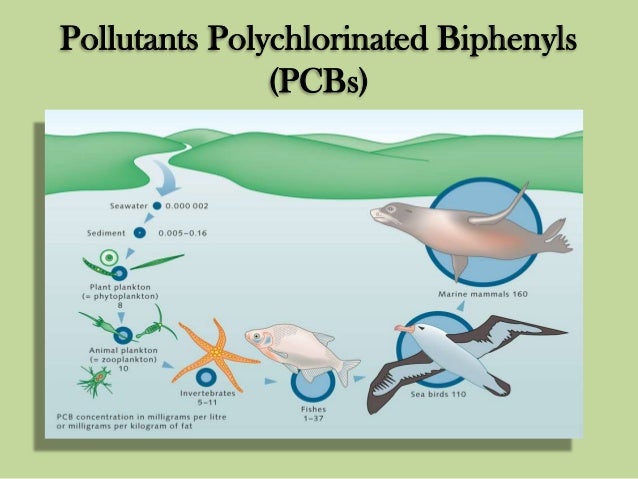
Banned pollutant PCB threatens Europe's whales

Scientists are warning that a banned pollutant could wipe out Europe's killer whales and dolphins.The use of the PCB chemical was prohibited from the 1980s but it still exists in the environment. (BBC News)


polychlorinated biphenyl (PCB) is a synthetic organic chemical compound ofchlorine attached to biphenyl, which is a molecule composed of two benzene rings. There are 209 configurations of organochlorides with 1 to 10 chlorine atoms. The chemical formula for a PCB is C12H10−xClx. Of the different PCB arrangements and orientations 130 are used commercially.
Polychlorinated biphenyls were widely used as dielectric and coolant fluids in electrical apparatus, cutting fluids for machining operations, carbonless copy paper and in heat transfer fluids. Because of PCBs' environmental toxicity and classification as a persistent organic pollutant, PCB production was banned by the United States Congress in 1979 and by the Stockholm Convention on Persistent Organic Pollutants in 2001. The International Research Agency on Cancer (IRAC), rendered PCBs as definite carcinogens in humans. According to the U.S. Environmental Protection Agency (EPA), PCBs cause cancer in animals and are probable human carcinogens.Many rivers and buildings including schools and other sites are contaminated with PCBs, and there have been contaminations of food supplies with the toxins.

Some PCBs share a structural similarity and toxic mode of action with dioxin. Other toxic effects such asendocrine disruption (notably blocking of thyroid system functioning) and neurotoxicity are known. The maximum allowable contaminant level in drinking water in the United States is set at zero, but because of water treatment technologies, a level of 0.5 parts per billion is the de facto level.
in Wikipedia

Tuesday, February 09, 2016

How do you prepare orangutans to go back into the wild?

Orangutans living at a sanctuary in Indonesia are being prepared for release back into the wild.


Forest fires and poaching have led to a decrease in the population.
Some baby orangutans don't have parents to teach them how to look after themselves.
International Animal Rescue has more than 100 of the animals at its sanctuary in Ketapang in western Kaliman province.
It's set up a forest school so the oraguntans can play and learn how to survive in the wild.
It can take up to eight years for the babies to be ready to be released.
From CBBC Newsround


Sunday, January 31, 2016

British helicopter pilot killed by poachers in Tanzania

A British helicopter pilot working for a wildlife charity in Tanzania has been shot dead by elephant poachers.
Mr Gower was originally from Birmingham and worked in London before moving to East Africa to work as a helicopter pilot.
His brother Max told the BBC: "He would not have gone anywhere near those poachers if he'd known that they were armed.
"As I understand it, he knew they were around but came across them by accident. He didn't really have enough time to evaluate the situation before they opened fire on him."
Roger Gower
Tropic Air Kenya
The Friedkin Conservation Fund said Roger Gower had been helping to find the criminals when they fired on his aircraft.
Tanzanian police have arrested three suspects over the death of the pilot working for a conservation fund .
Natural Resources and Tourism Minister Jumanne Maghembe told AFP news agency that those detained were co-operating.
"Soon more people making up the poaching gang will be netted and brought to justice," he said.
Roger Gower, 37, had been flying near an elephant killed by poachers when his helicopter came under fire.
The incident happened in Maswa Game Reserve, which borders the Serengeti National Park in northern Tanzania.
Mr Gower managed to land his helicopter, but died before he could be rescued, a Tanzanian MP and former minister for natural resources and tourism, Lazaro Nyalandu, said in a tweet.

Max Gower also said his brother would be remembered as "very much his own man".
"He had a very strong moral compass. He just loved having fun, he couldn't be with his friends without making sure that everybody had fun."
The Gower family have invited donations to a fund established in Roger's memory that will contribute towards anti-poaching efforts in Tanzania.
The Friedkin Conservation Fund, for which Mr Gower had been working, said the organisation had lost "a dear friend".
The charity's founder, Dan Friedkin, said: "We believe that Roger can best be honoured by redoubling our commitment to protect elephants and our priceless wildlife heritage.
"This tragic event again highlights the appalling risk and cost of protecting Tanzania's wildlife."

Map of Tanzania
From BBC News

Wednesday, January 06, 2016

Australian Monitor lizards trained not to eat toxic cane toads

Scientists have worked out a radical solution for Australia's deadly cane toad problem.

Goanna
Goanna numbers have dramatically declined in Australia

They have trained wild monitor lizards, known locally as goannas, not to eat the toxic cane toads.
They did this by feeding the reptiles smaller, younger and less poisonous cane toads. Many that tried the toads once did not make the same mistake again.
The study is published in a Royal Society journal, called Biology Letters.
Lead researcher Georgia Ward-Fear, from the University of Sydney, said: "We've been very surprised by the results, by the amount of time that some of these lizards have actually retained this knowledge and survived in the presence of a high-density of cane toads, which is basically unheard of in the wild."
Cane toad
Smaller cane toads are less of a toxic mouthful than the adult goannas
Cane toads were introduced to Australia in the 1930s to control sugar cane pests. But their numbers have rapidly increased, killing many of the continent's animals, because they are poinonous.
Among the hardest hit are the yellow-spotted monitors (Varanus panoptes). Their population is estimated to have plummeted by 90%. When the toads invade a new area, these yellow-and-black-spotted reptiles feast on the amphibians, and die.
Radiotracking
The research team used radiotrackers to monitor the lizards' survival rates
The scientists say the study suggests goannas have the ability to learn from experience and keep that knowledge over a long period of time.
One of the scientists, Dr Ward-Fear, said: "This study provides the proof of principle that this strategy could be very effective. Employing it in the wild could potentially have a really large positive impact on the goanna population."
From CBBC Newsround

Saturday, January 02, 2016

South Africa's rhinos 'could be extinct in 10 years'!!!

Africa's rhino population could face extinction within 10 years, animal welfare experts have warned.

white rhino
There are now less than 30,000 rhinos in the wild

South Africa has the largest population of the species in the world but their existence is under threat from poaching.
Demand from Asian markets for their horns has led to a dramatic increase in the numbers killed. It is thought more than 1,000 rhinos have been killed in South Africa's game reserves in 2015 alone.( BBC News)

A shocking 1,215 rhinos were poached in South Africa alone during the last year, according to South Africa's National Wildlife Crime Reaction Unit.
This alarming figure is DOUBLE the amount that were poached in South Africa three years ago, and it has risen a staggering 9,000 per cent in just seven years.
There are now less than 30,000 rhinos in the wild and there are fears they will be wiped off the planet by 2026 if the illegal slaughter continues at its rapid rate.
Soaring demand for their horns from Asia has led to 2014 being branded "the worst poaching year on record" by international wildlife charity Save The Rhino.
Katherine Ellis, Office and Communications Manager for Save The Rhino, said: "According to South Africa’s National Wildlife Crime Reaction Unit, 1,215 rhinos were poached in South Africa alone during 2014, making last year the worst poaching year on record.
"This would represent over a 9,000 per cent increase in the number of South African rhinos poached since 2007, when just 13 rhinos were killed."
rhino
Save The Rhinos blamed one factor of this increase in rhino deaths on a soaring demand for horns
At the beginning of the 20th century there were 500,000 rhinos across Africa and Asia, according to Save The Rhino.
This number dramatically fell to 70,000 by 1970 and finally to around just 29,000 left in the wild today.
But if they continue to be poached at their current rates, Save The Rhino warned that they could become extinct in the wild by as soon as 2026.
"Depending on the rate that poaching increases, and also the breeding rate of rhinos, overall rhino deaths could overtake births sometime between 2015 and 2021, which would push rhino populations into decline," said Ms Ellis.
"Sadly if poaching continues to increase at current rates, rhinos could be effectively extinct in the wild as soon as 2026."
But there are crucial moves currently underway which aim at reversing the rhino decline.
These include attempts at thwarting poachers and conservation programmes to help protect the rhinos from both human and natural danger. ( express_logo)

Sunday, December 27, 2015

Zoo in effort to save beautiful rare Indonesian magpie

Rare bird experts at a zoo in Cheshire have started a project that they hope will save one of the world's most endangered birds.
Twelve Javan green magpies have moved to Chester Zoo in a bid to save the rare species (Chester Zoo/PA)
The Javan green Magpie, Cissa thalassina from Indonesia has been poached almost to extinction.

    Now, four pairs of the birds have been brought to the UK in the hope that they will breed.Andrew Owen, who looks after the birds at Chester Zoo, hopes the project will stop these types of birds from dying out.
There is thought to be fewer than 100 of the Javan green magpie left in the world, putting the inquisitive bird with distinctive green plumage, black eye feathers and a pink beak on the critically endangered list.

The zoo is hoping to boost survival rates by developing the first captive breeding programme outside of Indonesia, where a passion for keeping caged birds has seen numbers in the wild decimated. As the birds become rarer, their value increases, leaving many species on the brink of disappearing altogether.


The zoo's curator of birds, Andrew Owen, explains: "We really are fighting against time to save the incredibly rare Javan green magpie from extinction. Sadly, there is evidence that the species is fast disappearing in the wild as they have fallen victim to the pet trade and an ever shrinking habitat.

"In fact, they have only been found once in the last 10 years in the wild by ornithologists. By bringing twelve of the birds to the UK, we are hoping our new conservation breeding programme will begin to address the desperate plight of this species and ensure a protected population for the future.
"We've been working with the Cikananga Conservation Breeding Centre in Java for five years and our mission to track down the birds with the beautiful green plumage has included trawling markets and interviewing traders.
"Over time we have managed to rescue a handful of birds and set up a breeding centre and, together, we have been successful in breeding the birds on their country of origin. However, so prized are they in Java, the breeding centre has suffered from a number of break-ins - the magpies being a prime target given their beauty and increasing value on the pet trade."
Press Association

Thursday, December 17, 2015

Giving Endangered African Penguins a Second Chance at Life

This short video produced by IFAW shows the plight facing endangered African Penguins due to overfishing, pollution, and climate change. But there is hope as IFAW is working with the Southern African Foundation for the Conservation of Coastal Birds (SANCCOB) in Capetown, South Africa to rescue, rehabilitate, and release African penguins back to the wild. 

To learn more, visit www.ifaw.org.


The number of African penguins in South Africa and Namibia has dramatically fallen in the past ten years.
The penguins pair for life and have their chicks - but the number of pairs has dropped from over 30,000 in 2004 to just over 3,000 in 2014.
Nicky Stander, a Penguin Conservationist says: ''There used to be over a million penguins in the 1930's but now the population is down by around 98 per cent.''
Experts say it's because the sardines and anchovies they eat are disappearing.
They believe it's because of over-fishing and the sea getting warmer. (CBBC Newsround)

Wednesday, November 25, 2015

Primates need protecting scientists warn

Scientists have called for governments to do more to protect primates.


Red ruffed lemur
It's unknown how many Red ruffed lemurs are left in the wild.
It's after warning that more than half the world's primate population is facing extinction.
A new list of the world's 25 most endangered primates has been published.
Baby Gorilla clinging on to it's mum.
The population has been decreasing for a number of reasons.
Including the burning and clearing of tropical forests.
As well as being hunted for food or for use in traditional medicine in Asia .
The Philippine tarsier primate.
There are more 700 different types of primates in the world.
The Philippine tarsier and the Lavasoa Mountains dwarf lemur from Madagascar have been added to the list for the first time.
The hope is to convince governments across the world to look at ways of better protecting habitats and the animals.
From CBBC Newsround

Monday, November 23, 2015

One of the world's last northern white rhinos dies in the US

An extremely rare northern white rhino has died in the US, leaving only three others in the world.

Nola at the San Diego Zoo Safari Park, Dec 2014
Nola was one of four northern white rhinos left in the world.
The 41-year-old rhino, Nola, died after surgery to her hip at San Diego Zoo.
Nola's death means that there are only three other northern white rhinos in the world.
They live in Kenya and are kept closely guarded.
Northern white rhino named Nola receives a veterinary exam, Dec 2014
Nola had surgery on 13 November but her health got worse.
Poachers have been blamed for the devastating drop in northern white rhino numbers.
They kill many rhinos to get their horns, which are worth a lot of money in some cultures.
However, there is hope that there may be more northern white rhinos born in the future.
San Diego Zoo has recently brought in six southern white rhinos, hoping to use them as mothers to new northern white rhino calves.
Zoo researchers are still working out if it's possible, but they say they're hopeful that a northern white rhino calf could be born within 10 to 15 years.
From CBBC Newsround

Wikipedia

Search results