To my dear visitors and commenters

Hi, everybody! I've noticed with lots of joy and happiness, that thousands of comments have been written in my posts. It's wonderful that so may people around the world appreciate my work. Therefore, I want to thank you for that and ,at the same time I want to ask you to be this blog's followers. It's fast and easy! Make it be even more visited and spread all over the world! I'm a woman, a teacher of English in Portugal, and I've been away for quite a long time because of my father's health. Unfortunately he died from Covid19 a few months ago. Now I felt it was time to restart my activity in this and other blogs I owe. I've recently created a new one in a partnership with a street photographer, Mr. Daniel Antunes. He's fabulous! https://pandpbydandd.blogspot.com I'd like you to visit it and, who knows, become our followers. The poems, chronicles and thoughts are all mine. Thank you so much! Kisses :-)

Search This Blog

Showing posts with label Natural Parks. Show all posts

Saturday, November 07, 2015

European snow vole discovered in Portugal


A wildlife photographer discovered, by chance, the European snow vole (Chionomys nivalis) in the summer of 2014, in Montesinho, North of Portugal. This is the first record for this species in the country and was published in Italian Journal of Zoology on 2 November.
Gonçalo didn’t know what he was looking at. Two little “strange” mice passing by, on a summer night in 2014, in a gorse and heather meadow in Montesinho mountain region, at 1300 m. The infrared images recorded by a camera that he placed under a big rock confronted him with a different kind of mouse. “It was a species that I didn’t recognise. I couldn’t tell what it was. It was a very peculiar animal”, he told Wilder.
This wildlife photographer was in Montesinho looking for mammals for an awareness conservation project. But it turned out that his images helped science discover a new species to Portugal. “Everything happened by chance”, he said.
Gonçalo sent his images to a team of biologists in UTAD University (Universidade de Trás-os-Montes e Alto Douro), in Bragança district. Soon enough they realized it was a new species of mammal no one had ever seen in the country. Could it be a snow vole? There were no historic records of it in Portugal. There was still a lot of work to do.
Zona onde foram detectados os animais. Foto: Gonçalo Rosa
That same team of biologists travelled to Montesinho in October 2014, to a place called Lama Grande, to look for the mouse and to be sure. They set 27 traps, baited with fresh apples and carrots, and with hydrophobous cotton as bedding material.
“We were able to capture two snow voles, an adult male and a juvenile female”, said Hélia Vale-Gonçalves, a biologist working with small mammals at UTAD, and one of the paper authors. “The animals were weighed and sexed, and the reproductive status and standard biometric measurements were recorded. Also, tissue samples were collected”. Then, the mice were released at the trapping location.
Next to the traps “we found many traces of snow voles’ presence, such as little tunnels on the vegetation and lots of galleries”, she told Wilder.
From Wilder

Monday, August 03, 2015

More than £300,000 raised for Cecil the lion

More than £300,000 has been raised for the project that was tracking Cecil the lion, since his death last month.

Cecil the lion
Cecil was a major tourist attraction in Zimbabwe's Hwange National Park
Cecil was a big tourist attraction in Zimbabwe in Africa and his death by the American Walter Palmer has made headlines this week.
It's all because Cecil was protected as part of a study by Oxford University looking at how lions live in the wild.
Mr Palmer has said he regrets what happened and he thought the hunt he was on was legal.
Now it's hoped the donations will help the university group to do more to protect other lions in the wild.
From CBBC Newsround

Tuesday, July 28, 2015

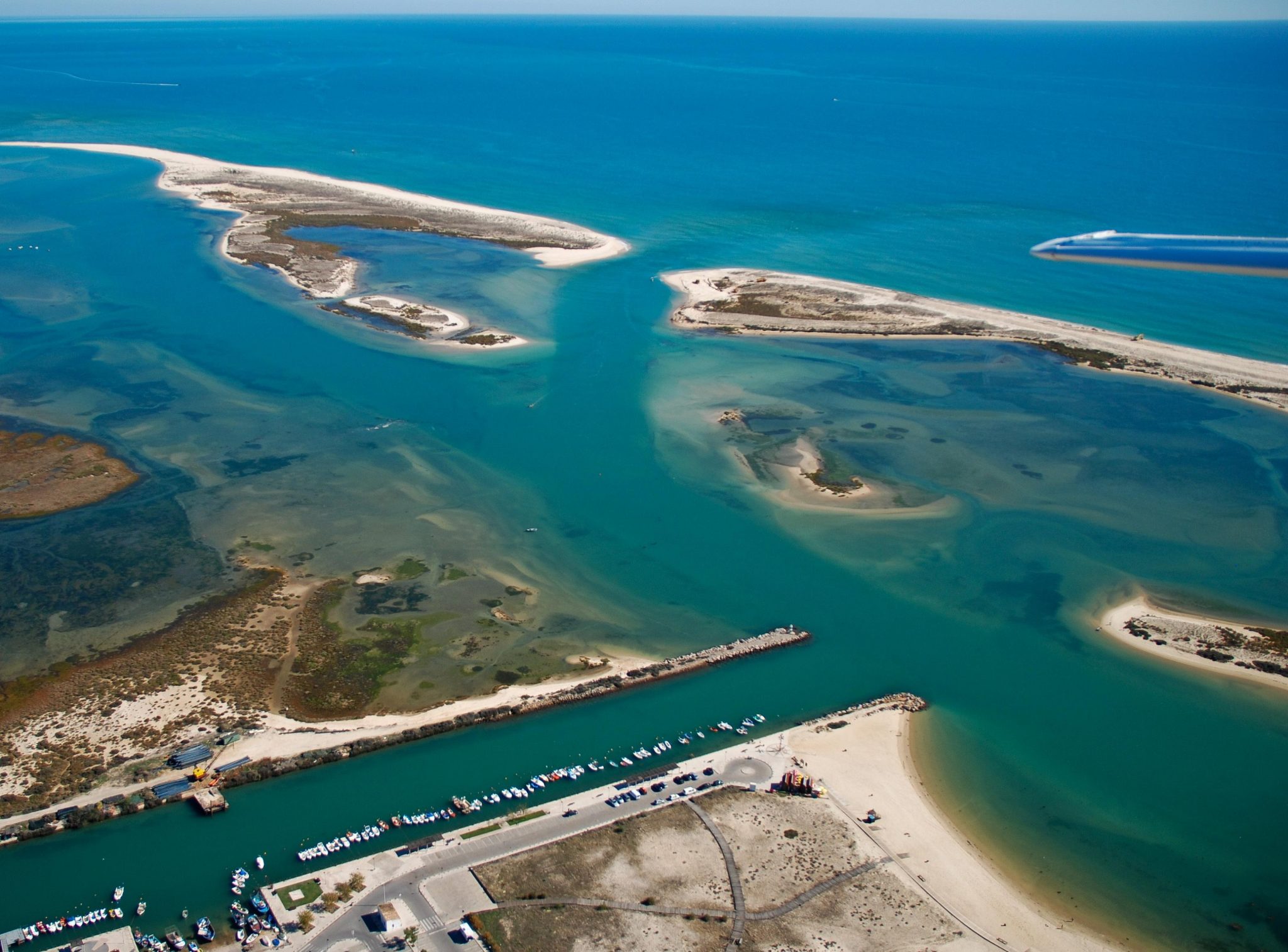
Ria Formosa Natural Park- Algarve, Portugal


There are many wild and interesting places to visit in the Algarve, but this is my favourite nature reserve in the region.
Although Parque Natural da Ria Formosa Centre is not signed from any direction and is difficult and frustrating to find, this important wildlife site (it is designated under the RAMSAR convention as a wetlands reserve of worldwide signficance) is very well worth a visit. It took us four attempts on separate visits to the Algarve to finally find it, and as we were travelling from the mid-Algarve by car, our wandering cannot be described as an environmentally-friendly activity, but it was worth the effort.


The Ria Formosa lagoon, located in the Algarve, in southern Portugal, is a system of barrier islands that communicates with the sea through six inlets. Five of these inlets are natural and have mobility characteristics. The sixth is an artificial inlet that was opened with the purpose of allowing easier access to the port of Faro, the capital of the Algarve.
Presently the main inlet of the system is the Faro-Olhão inlet, which was artificially opened. The process started in 1927 but only in 1952 were the engineering works completed and it assumed the present configuration.
Within the Ria Formosa system, different and sometimes antagonistic uses may be found. Part of the system is a Natural Park but Ria Formosa also plays an important role in the region's economy. Beyond the tourist use the system also supports other economic activities like seafood farms (including grooved carpet shell harvesting) and the port of Faro.
The Ria Formosa is also a designated Natural Park of over 170 km² and a stopping place for hundreds of different birds during the spring and autumn migratory periods.
It is also a reserve for various animal and plant species which can be  watched
in birdwatching programmes


The most important cities near the Ria Formosa are Tavira, Faro and Olhão.
There are also some towns in this area, whose names are: Fuzeta (which belongs to the municipality of Olhão), Santa Luzia, Cabanas de Tavira (these last two belonging to Tavira) and Cacela Velha (which belongs to Vila Real de Santo António).
Several buses run from Tavira to Cabanas and back each weekday, but there are no buses on Saturday afternoons nor all day Sundays and Holidays, even in summer. The nearest train station is in nearby Conceição which is on the Tavira to Vila Real line. That's about 1 mile /1.6km and an easy walk. 
Classified as a Natural Park in 1987, the Ria Formosa encompasses an area of about 18 000 hectares, and is protected from the sea by 5 barrier-islands and 2 peninsulas: the Peninsula of Ancão that the locals call island of Faro, the Barreta Island also known as Ilha Deserta, the Culatra Island (where the lighthouse of Santa Maria is located), the Island of Armona, the Island of Tavira, Cabanas Island and, finally, the Peninsula of Cacela. This awesome area extends along the leeward coast of the Algarve through the municipalities of Loulé, Faro, Olhão, Tavira and Vila Real de Santo António. 

Commercial activities like salt extraction and shellfish farming are quite important for the local populations. For instance the Ria Formosa is responsible for approximately 60% of the total of shellfish produced in the country.

Shellfish of every kind are found in Ria Formosa and a festival is held in Faro every year in summer


Sources.

Wikipedia

Search results