To my dear visitors and commenters

Hi, everybody! I've noticed with lots of joy and happiness, that thousands of comments have been written in my posts. It's wonderful that so may people around the world appreciate my work. Therefore, I want to thank you for that and ,at the same time I want to ask you to be this blog's followers. It's fast and easy! Make it be even more visited and spread all over the world! I'm a woman, a teacher of English in Portugal, and I've been away for quite a long time because of my father's health. Unfortunately he died from Covid19 a few months ago. Now I felt it was time to restart my activity in this and other blogs I owe. I've recently created a new one in a partnership with a street photographer, Mr. Daniel Antunes. He's fabulous! https://pandpbydandd.blogspot.com I'd like you to visit it and, who knows, become our followers. The poems, chronicles and thoughts are all mine. Thank you so much! Kisses :-)

Search This Blog

Monday, March 30, 2015

Bottlenose Dolphins rescued from lake in Australia

Resultado de imagem para Bottlenose Dolphins rescued from lake in Australia

Two bottlenose dolphins have been rescued after getting trapped for three days in a shallow river, in Australia.

The species are usually only found in deep ocean waters but experts think they got stuck after coming inland to find fish to eat.
It took ten rescuers three hours to get them to safety.
They were lifted out of the river using special harnesses before being released back into the sea.
The rescue team in Mandurah, where the the dolphins were discovered, say the pair were healthy when they were released and they've shown no signs of wanting to head back into the river.

From BBC News

Thursday, March 26, 2015

River health revealed in 'shocking' figures

Just 17% of England's rivers are judged to be in good health, according to Environment Agency figures.


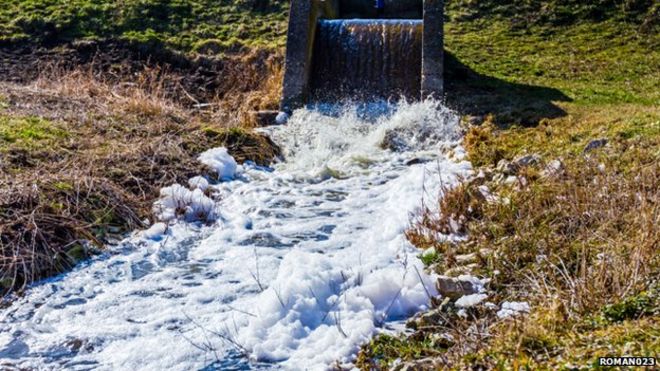
Rivers can become polluted from farms, roads and sewage works
Rivers can become polluted from farms, run-off from roads and sewage works
This is down from 29% with a good ecological status in 2014. The analysis is shocking, say environmentalists.
Problems are caused by over-abstraction and pollution from farms, run-off from roads and effluent from sewage works - as well as invasive species.
The Environment Agency says the figures look bad because the EU's assessment criteria have been tightened.

"Threatens wildlife"

The EU asks nations to grade rivers into poor, moderate, good and high. Governments should aim for rivers to be "good" - that is relatively unaffected by human activity. "High" refers to upland streams in sparsely-populated areas.
The statistics show 0.08% of England's rivers are high quality; 17.06 good; 62.4% moderate; 17.22% poor and 3.24% bad.
Rose O'Neill from WWF said: "The figures released today are shocking and show us that things are worse than we thought. This is unacceptable and threatens wildlife and livelihoods.
"It's clear that we are failing our rivers and the wildlife they impact. We need to see government action to restore these rivers, for example by reducing abstraction and tackling pollution.
More than 27 tonnes of ammonium leaches from an Oxford wetland into the River Thames every year, reports the Natural Environment Research Council
Researchers take a sample of water from River Thames at Oxford for analysis. Photograph: Dr Daren Gooddy/NERC
The Environment Agency feels aggrieved by the ratings.
Previously it used to judge a river based on various chemical tests. Now a river must be subjected to many tests on chemistry, flow and wildlife - and if it fails any single test it cannot achieve "good" status.
It says if you examine the tests individually, 74% of them achieve the highest two scores of good or high status.

Extra measures

A spokesman said the agency has improved or stabilized the condition of nearly 2,000 miles of rivers.
He said: "The Environment Agency will continue to work closely with farmers, businesses and water companies to reduce pollution and improve water quality wherever, and however, possible."
Wildlife groups reject the phrase "wherever possible". They think the agency should be tougher with polluters and farmers who reduce the flow of rivers by taking out too much water.
The future criteria for measuring the health of river are currently under discussion.
Blueprint for Water, a coalition of 16 environmental and fishing organisations, urges the public to respond to the Agency's current consultation on River Basin Management Plans.
Farmers are concerned about who pays for the extra measures needed to meet the EU's rules under the Water Framework Directive.

From BBC Environment

Vietnamese push back on Facebook to save Hanoi's trees

Vietnamese are often wary of talking about politics for fear of running afoul of their communist government - but the garden gloves came off in a fight over Hanoi's beloved trees.


pictures of trees felled

It's sometimes called the "Paris of Asia" on account of its wide boulevards and well-preserved French-influenced architecture. Hanoians are justifiably proud of their city's beauty - which is part of the reason why a government plan to axe hundreds of the city's trees resulted in a huge push back on Facebook.
A Facebook page set up to save the trees quickly garnered more than 50,000 fans. And following a massive outpouring of opposition by celebrities and ordinary people, the government reversed its decision and promised to replace trees that had already been felled.

model on bike
But the victory was about more than just foliage. Speaking out against the government can earn Vietnamese a jail sentence, and it seems the outpouring over the capital's tree population pointed to a more general sentiment inside the country.
"To be precise it's not only this tree chopping but virtually every policy of the government is being complained about," said one Facebook user. "Many things are short-termish and unreasonable that are not to the people's liking and people have lost trust [in the government]."
Hung Nguyen of BBC Vietnamese says the nature of the campaign - or rather, the fact it was a nature campaign - allowed Hanoians to question their government.
Facebook users including model Ha Anh Vu posted pictures of themselves enjoying Hanoi's parks and trees.
"This is a rare example of civil society in Vietnam," Nguyen says. "Challenging the government or party is still something rare in Vietnam and can land people in jail quite easily. But this issue appears to be non-                                                                                            political which is why it got momentum on Facebook."
felled tree
From BBC News Environment


Saturday, March 21, 2015

'Water man of India' Rajendra Singh bags top prize

An award known as "the Nobel Prize for water" has been given to an Indian campaigner who has brought water to 1,000 villages.

Rajendra Singh, Stockholm Water Prize winner


The judges of the Stockholm Water Prize say his methods have also prevented floods, restored soil and rivers, and brought back wildlife.
The prize-winner, Rajendra Singh, is dubbed "the Water Man of India"The judges say his technique is cheap, simple, and that his ideas should be followed worldwide.Mr Singh uses a modern version of the ancient Indian technique of rainwater harvesting.It involves building low-level banks of earth to hold back the flow of water in the wet season and allow water to seep into the ground for future use.

Rajendra Singh, Stockholm Water Prize winner
Mr Singh discovered the vital need for solutions to disappearing water while working in a rural village

He first trained as a medic, but when he took up a post in a rural village in arid Rajasthan he was told the greatest need was not health care but drinking water.
Groundwater had been sucked dry by farmers, and as water disappeared, crops failed, rivers, forests and wildlife disappeared and people left for the towns.
"When we started our work, we were only looking at the drinking water crisis and how to solve that," Mr Singh said.
"Today our aim is higher. This is the century of exploitation, pollution and encroachment. To stop all this, to convert the war on water into peace, that is my life's goal."
The Stockholm International Water Institute, which presented the prize, said his lessons were essential as climate change alters weather patterns round the world.
Rajendra Singh, Stockholm Water Prize winner
The methods are based on an ancient Indian technique
Its director, Torgny Holmgren, said: "In a world where demand for freshwater is booming, we will face a severe water crisis within decades if we do not learn how to better take care of our water. Mr Singh is a beacon of hope."
In its citation, the judges say: "Today's water problems cannot be solved by science or technology alone. They are human problems of governance, policy, leadership, and social resilience.
"Rajendra Singh's life work has been in building social capacity to solve local water problems through participatory action, empowerment of women, linking indigenous know-how with modern scientific and technical approaches and upending traditional patterns of development and resource use."
The award was applauded by Katherine Pygott, a leading UK water engineer who has drawn on Mr Singh's work to help prevent flooding in the UK.
From BBC News

Sunday, March 15, 2015

Spain: Rare Iberian lynx tracked in Madrid region

The critically endangered Iberian lynx has returned to the Madrid region of Spain for the first time in decades, it's reported.
An Iberian lynx
Conservation efforts have successfully raised the Iberian lynx population to more than 300, but many have been killed on Spanish roads
It's more than 40 years since the species has set foot in the region, but now one has been tracked near a town just 50km (31 miles) south of the Spanish capital, El Pais reports. The male lynx, called Kentaro, was born in captivity and released along with seven others in Toledo in late 2014. Since then he's been quite the adventurer, travelling about 100km and crossing several motorways, according to conservationists. "Not all lynxes are this adventurous. They tend to stay close to where they were born," says Ramon Perez de Ayala from the World Wildlife Fund (WWF). But Kentaro has "packed his bags and set off on his travels," he says. "We've been lucky because the roads he has crossed are well fenced and he hasn't been run over. He will have followed the fences until he found a bridge, and then crossed over there." Kentaro wears a GPS collar which allows conservationists to track his whereabouts.
The Iberian Lynx is the world's most endangered feline, and the only breeding populations are both in southern Spain. Traffic is one of the the biggest dangers for the species - according to El Pais, at least 21 lynxes were hit and killed on Spanish roads in 2014, and 14 died the year before. The WWF wants Spain's regional governments to put in place special measures which would help protect lynxes, including fencing off roads and motorways.

From BBC news

Wikipedia

Search results