To my dear visitors and commenters

Hi, everybody! I've noticed with lots of joy and happiness, that thousands of comments have been written in my posts. It's wonderful that so may people around the world appreciate my work. Therefore, I want to thank you for that and ,at the same time I want to ask you to be this blog's followers. It's fast and easy! Make it be even more visited and spread all over the world! I'm a woman, a teacher of English in Portugal, and I've been away for quite a long time because of my father's health. Unfortunately he died from Covid19 a few months ago. Now I felt it was time to restart my activity in this and other blogs I owe. I've recently created a new one in a partnership with a street photographer, Mr. Daniel Antunes. He's fabulous! https://pandpbydandd.blogspot.com I'd like you to visit it and, who knows, become our followers. The poems, chronicles and thoughts are all mine. Thank you so much! Kisses :-)

Search This Blog

Friday, March 04, 2016

Poaching for ivory stabilises but elephant decline continues

The number of elephants being killed for their ivory has stabilised but overall species numbers have continued to decline.

elephant
Another elephant killed for its tusks, this time in the Democratic Republic of Congo

Data produced for 2015 shows that poachers are still killing more elephants than are born every year.
The report also highlighted a rising trend in poaching in South Africa's Kruger National Park, considered one of the safest havens.
But there was positive news from Eastern Africa where elephant number have outpaced poachers for the fourth year in a row.

Peak deaths

The Convention on the Trade in Endangered Species of Wild Fauna and Flora(CITES) compiles an authoritative set of figures on the annual trends in elephant numbers.
Called MIKE (Monitoring the Illegal Killing of Elephants), the latest data indicate that the rise in the numbers of elephant deaths, witnessed since 2006, peaked in 2011.
Since then the numbers have stabilised but the level remains "unacceptably high overall".
In 2015, the programme recorded the deaths of 14,606.
The researchers estimate that half of these were illegally killed putting the population well above the sustainability threshold, where deaths outweigh births.
"African elephant populations continue to face an immediate threat to their survival from unacceptably high levels of poaching for their ivory, especially in Central and West Africa where high levels of poaching are still evident," said John Scanlon, CITES Secretary General.
"There are some encouraging signs, including in certain parts of Eastern Africa, such as in Kenya, where the overall poaching trends have declined, showing us all what is possible through a sustained and collective effort with strong political support."


Kruger elephant
An elephant in Kruger National Park in South Africa, which saw a rise in killings in 2015
The mixed picture for the iconic species continued in Southern Africa. The overall levels of poaching remained below the sustainability threshold, but an upward trend in killing was seen in Kruger National Park for the first time.
CITES have demanded that the 19 countries most heavily involved in the killing of elephants or the consumption of ivory produce national ivory action plans to show how they plan to tackle the issue.
From BBC News- Science / Environment


Friday, February 26, 2016

How Northern European waters soak up carbon dioxid

The seas around the UK and the rest of northern Europe take up a staggering 24 million tonnes of carbon each year.

Stormy waters
Colder, stormy waters at higher latitudes tend to take up most carbon dioxide
It is a mass equivalent to two million double-decker buses or 72,000 747 jets.
The number was produced by scientists studying the movement of carbon dioxide into and out of the oceans.
The team, led by Heriot-Watt University and Exeter University, has produced a software "engine" that will allow other scientists to do the same for different parts of the globe.
"It's a software toolbox essentially, that we've made available," said Exeter's Jamie Shutler.
"We've used it for our own work. We've done extensive checking, and now we're putting it out there for everyone else to use."
The amount of carbon dioxide absorbed by seawater acts as a moderator in the climate system.
It is estimated that a third of all human-produced CO2 emissions, from fossil fuel burning and the like, ends up in the oceans. Another third is taken up by land "sinks", with the rest remaining in the atmosphere.
Researchers are keen to understand how this budget might change over time.
Study
From  BBC News

Saturday, February 20, 2016

Australia town consumed by 'hairy panic'


A fast-growing tumbleweed called "hairy panic" is clogging up homes in a small Australian town.

'Hairy panic' tumbleweeds invade Australian town

Extremely dry conditions mean the weeds pile up each day outside a row of homes at Wangaratta, in Victoria's northeast.
Frustrated residents are forced to clear out the weeds for several hours every day, with piles of hairy panic at times reaching roof height.
A nearby farmer is being blamed for failing to tend to his paddock.
"It's physically draining and mentally more draining," resident Pam Twitchett told Prime7 News Albury.
From BBC News

Awesome time-lapse of the sun over a year


This amazing timelapse footage of the sun was filmed over a whole year by the NASA
It was released to mark the six year anniversary of Nasa's Solar Dynamics Observatory, which was set up to capture changes in the sun. A photo was taken every 12 seconds over the course of a year.
(CBBC Newsround)


NASA’s Solar Dynamics Observatory (SDO) is always following the sun as it orbits the Earth. As part of its ongoing mission, the SDO captures high-resolution images of the sun at regular intervals, allowing scientists to monitor solar activity such as sun spots, solar flares, and coronal mass ejections. NASA’s multi-year mission just completed its sixth year of data collection and commemorated that milestone by releasing a stunning time-lapse video of the past year in review.
The six-minute video shows the sun over a period of just over a year, starting from January 1, 2015 and ending on January 28, 2016. The first half of the video shows the time-lapse with some celestial-inspired background music, while the second half explains the features and wavelengths that you are seeing. The ultra-high-definition images are shown on YouTube at a rate of approximately 30 frames per second with a resolution of 3,840 by 1,260 pixels. Each frame of the video corresponds to 2 hours of time on Earth. On its website, NASA also provides a downloadable version of the video that has a 59.94 fps frame rate with each frame representing one hour.

Wednesday, February 17, 2016

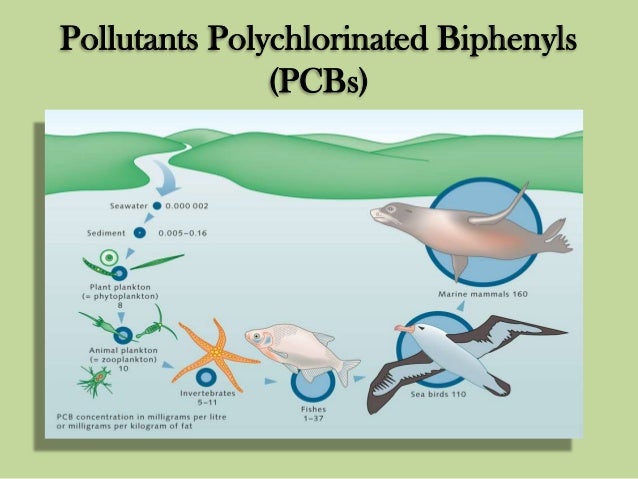
Banned pollutant PCB threatens Europe's whales

Scientists are warning that a banned pollutant could wipe out Europe's killer whales and dolphins.The use of the PCB chemical was prohibited from the 1980s but it still exists in the environment. (BBC News)


polychlorinated biphenyl (PCB) is a synthetic organic chemical compound ofchlorine attached to biphenyl, which is a molecule composed of two benzene rings. There are 209 configurations of organochlorides with 1 to 10 chlorine atoms. The chemical formula for a PCB is C12H10−xClx. Of the different PCB arrangements and orientations 130 are used commercially.
Polychlorinated biphenyls were widely used as dielectric and coolant fluids in electrical apparatus, cutting fluids for machining operations, carbonless copy paper and in heat transfer fluids. Because of PCBs' environmental toxicity and classification as a persistent organic pollutant, PCB production was banned by the United States Congress in 1979 and by the Stockholm Convention on Persistent Organic Pollutants in 2001. The International Research Agency on Cancer (IRAC), rendered PCBs as definite carcinogens in humans. According to the U.S. Environmental Protection Agency (EPA), PCBs cause cancer in animals and are probable human carcinogens.Many rivers and buildings including schools and other sites are contaminated with PCBs, and there have been contaminations of food supplies with the toxins.

Some PCBs share a structural similarity and toxic mode of action with dioxin. Other toxic effects such asendocrine disruption (notably blocking of thyroid system functioning) and neurotoxicity are known. The maximum allowable contaminant level in drinking water in the United States is set at zero, but because of water treatment technologies, a level of 0.5 parts per billion is the de facto level.
in Wikipedia

Wikipedia

Search results